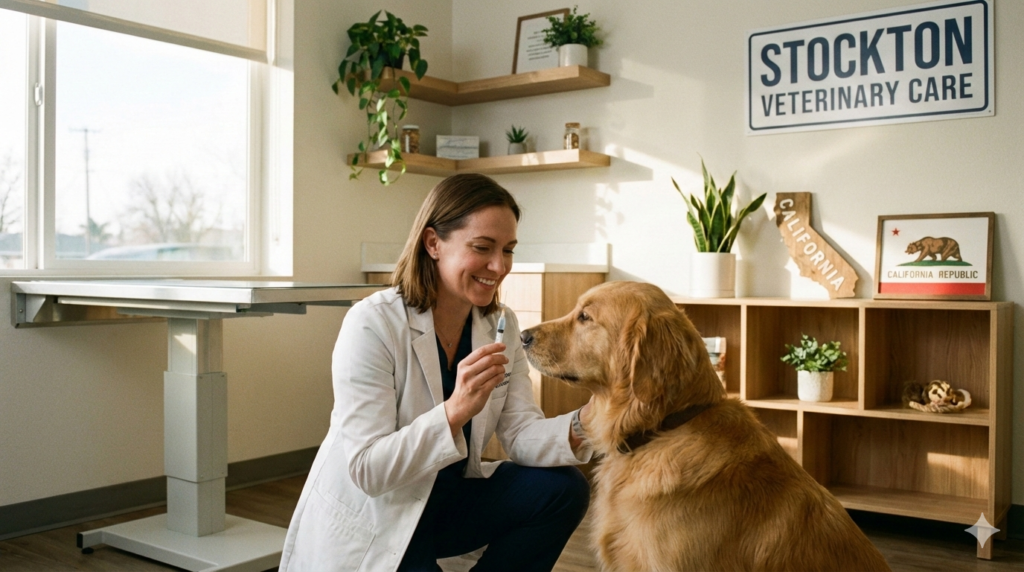
When a dog or cat becomes part of your household, routine vaccinations stop feeling like a checkbox and start feeling like a responsibility you take personally. And yet, when it’s time to search for an animal vaccine clinic near me, most pet owners hit the same wall: a long list of results, no clear way to compare them, and an appointment booked based on whoever showed up first on Google.
That search experience deserves better — and so does your pet.
This guide is written specifically for Stockton, CA pet owners. It covers the questions that actually matter before you book a vaccine visit, what local alternatives exist, how to read between the lines on vaccine safety, and why the clinic you choose for annual shots often becomes the clinic you rely on for everything else.
Why the “Nearest Clinic” Isn’t Always the Right Clinic
There’s a difference between a clinic that’s close and a clinic that’s right for your pet. Distance matters, especially when you have a nervous dog or a cat that hates car rides. But proximity alone shouldn’t be the deciding factor.
When Stockton residents search for a vet near me or a local animal vaccine clinic, they’re often surprised by how much variation exists in the quality of care, vaccine protocols, and staff experience — even between clinics that are just a few miles apart. A short drive to a clinic with thorough intake processes and experienced veterinary staff is almost always worth it over the most convenient option that rushes appointments.
Before you book, consider asking: Does this clinic keep complete vaccination records? Do they take time to review your pet’s health history before administering vaccines? Do they follow AAHA or AVMA guidelines for vaccine schedules?
These aren’t trick questions. They’re the baseline for responsible care.
What Questions Should You Ask Any Animal Vaccine Clinic?
Most pet owners walk into a vaccine appointment prepared to pay and leave. But a few well-placed questions can reveal a lot about whether a clinic operates with your pet’s wellbeing at the center.
Does the vet perform a physical exam before vaccinating?
This matters more than most people realize. A responsible veterinarian won’t administer vaccines to a pet that is already ill, running a fever, or showing signs of immune compromise. If a clinic offers “vaccines only” visits without a brief wellness check, that’s something worth thinking about.
What vaccine brands and adjuvants do you use?
Not all vaccines are identical. Some formulations use adjuvants (immune-stimulating additives) that work well for certain species but can cause reactions in others, particularly in cats. A clinic that can answer this question fluently is one that thinks carefully about vaccine safety as a clinical matter, not just an administrative one.
Do you follow a core vs. non-core vaccine framework?
Core vaccines — like rabies, distemper, parvovirus, and FVRCP for cats — are recommended for virtually all pets. Non-core vaccines, like leptospirosis or bordetella, depend on your pet’s lifestyle, environment, and risk exposure. A good clinic explains this distinction rather than defaulting to a one-size-fits-all bundle.
How do you handle vaccine reactions?
Adverse reactions are rare, but they happen. Knowing that a clinic has protocols in place, keeps emergency medications on hand, and will instruct you on post-vaccination monitoring is the kind of reassurance that actually means something.
What does my pet’s vaccination record look like going forward?
If your pet’s vaccine history lives only in someone’s filing cabinet, that’s a problem when you travel, board, or change vets. Clinics that maintain clear digital or printed records that you can actually access are easier to work with long term.
Understanding Vaccine Safety: What the Research Actually Says
Vaccine hesitancy isn’t just a human health phenomenon — it’s become a real conversation among pet owners too. Some of the concern is warranted: over-vaccination is a documented issue in veterinary medicine, and responsible clinics acknowledge it.
The solution isn’t avoiding vaccines. It’s working with a veterinarian who tailors schedules to your individual pet rather than applying a blanket annual protocol to every animal that walks through the door.
For example, most adult dogs with a verified vaccination history don’t need boosters for distemper, parvovirus, and adenovirus every single year. Current guidelines from the American Animal Hospital Association suggest three-year intervals for many of these after initial puppy series and first adult boosters are complete. Rabies intervals depend on the specific product used and your local legal requirements — in California, those requirements are specific and must be followed.
Cats have their own considerations. Feline leukemia virus (FeLV) vaccine, for instance, is generally recommended only for cats with outdoor access or multi-cat household exposure. Indoor-only cats may not need it at all.
This is why a real exam and a real conversation about your pet’s life — not just their birthday — matters at every vaccine visit.
The “Just Animals Vaccine Clinic” Comparison: What to Look For in Local Alternatives
Stockton and the broader Central Valley are home to a range of vaccination options, from full-service hospitals to mobile and pop-up vaccine clinics. Organizations sometimes referred to informally by names like “just animals vaccine clinic” typically operate as lower-cost, limited-service options for pet owners who need vaccines without a full vet visit.
These options serve a real purpose, particularly for pet owners working within tight budgets. But there are trade-offs to understand before choosing them as your primary or only vaccination provider.
What mobile and vaccine-only clinics typically offer: Basic core vaccines (rabies, DHLPP for dogs, FVRCP for cats), often at lower walk-in rates, without requiring appointments. Some include microchipping and flea prevention products.
What they typically don’t offer: Physical health exams, medical record integration with a full-service clinic, follow-up care for reactions, or any diagnostic capacity if your pet seems unwell. If your pet shows signs of illness on vaccine day, most mobile clinics will turn you away and refer you elsewhere.
The important takeaway: If your pet is young, elderly, immunocompromised, or has any known health conditions, vaccine-only clinics without exam capabilities carry real risk. The few dollars saved upfront can become significant costs later if a pre-existing condition goes unnoticed because no one examined the animal.
A full-service veterinary clinic that bundles a wellness exam with each vaccine visit isn’t charging more for the sake of it — that exam is where problems get caught early.
A Real Stockton Story: When Skipping the Exam Mattered
Maria, a Stockton resident with a seven-year-old beagle named Rufus, had been taking him to a walk-in vaccine clinic for three years running. The appointments were quick, the vaccines were documented, and Rufus seemed fine.
Then one summer, Rufus started drinking more water than usual. She mentioned it casually to a friend whose dog had recently been diagnosed with diabetes. The friend urged her to see an actual veterinarian for Rufus’s next appointment rather than the vaccine pop-up.
The vet who examined Rufus at a full-service clinic flagged elevated blood glucose during a routine pre-vaccine check — something that would never have been caught at a vaccine-only visit. Rufus was diagnosed early, dietary changes were made, and the condition was managed before it became a crisis.
That story is neither rare nor dramatic. It’s what preventive care actually looks like in practice: not just shots administered on a schedule, but an informed professional examining the animal in front of them.
What to Expect at Fremont Animal Clinic in Stockton
Fremont Animal Clinic has been serving Stockton and surrounding communities since 1956. Located at 2223 E Fremont St, Stockton, CA 95205, the clinic offers full-service veterinary care — meaning your pet’s vaccines are administered in the context of a complete wellness visit, not in isolation.
When you bring your dog or cat in for vaccinations at Fremont Animal Clinic, a veterinarian reviews your pet’s health history, conducts a physical exam, and discusses which vaccines are appropriate for your pet’s age, lifestyle, and exposure risks. You leave with documentation you can actually use.
For pet owners who’ve been asking “is there a vet near me open now?” — the clinic is open Monday through Saturday, 8 am to 6 pm, and closed on Sundays. Same-day appointments are often available, which matters when you realize your pet’s rabies certificate expired before a boarding stay or a move.
The clinic also maintains an in-house pharmacy and in-house lab, meaning that if something does come up during a pre-vaccine exam, the team can act on it the same day rather than sending you somewhere else with a referral and a waiting game.
For detailed answers to common vaccine questions — including what to expect, how to prepare your pet, and what signs of reaction to watch for — visit the clinic’s dedicated vaccine FAQs page.
A Quick Cost Breakdown: What Goes Into a Vaccine Visit
Talking about vaccine costs without disclosing prices is still useful — because the line items themselves tell you something.
A typical vaccine visit at a responsible full-service clinic includes the cost of the exam itself, the specific vaccines administered, and any documentation fees. What varies between clinics is whether the exam is bundled or billed separately, whether the vaccine products are USDA-licensed and current, and whether the clinic uses refrigeration protocols that protect vaccine integrity from manufacturer to syringe.
Yes, some mobile clinics charge less. Part of that difference comes from scale and overhead — a pop-up clinic has fewer fixed costs. But part of it also comes from what’s not included: no exam, no follow-up, no capacity to handle a reaction, no long-term medical record relationship.
Think of the vaccine cost breakdown this way: you’re not paying for a shot. You’re paying for a medical professional to assess your pet, select the appropriate product, administer it correctly, monitor for immediate reactions, and document everything in a way that protects your pet’s health history over time.
That service has a legitimate value — even when it costs more than a Saturday morning pop-up.
FAQs: Animal Vaccines in Stockton
-
How often does my dog need vaccines?
Core vaccines like distemper and parvovirus follow puppy series schedules, with boosters at one year and typically every three years after that for adults. Rabies follows California state law — your vet will tell you exactly what’s required.
-
Can my cat get vaccines if they never go outside?
Mostly yes, for core vaccines — rabies is required by law regardless, and FVRCP is generally recommended. FeLV may not be necessary for truly indoor cats, but that’s a conversation to have with your vet based on your specific situation.
-
What if my pet had a reaction to a vaccine before?
Tell the clinic before the appointment, not after. Clinics that know about prior reactions can premedicate, use different formulations, or space out vaccines across multiple visits to reduce cumulative load.
-
Are there any vaccines I can skip?
That’s genuinely your vet’s call, not something to decide based on cost or convenience. What can be safely skipped depends on your pet’s age, health status, where they spend time, and what they’re exposed to.
-
Can I walk in without an appointment?
Fremont Animal Clinic accepts same-day appointments and can often accommodate urgent scheduling needs. Call (209) 465-7291 to check availability before you drive over.
How to Schedule a Vaccine Visit in Stockton
If you’re ready to stop searching and start with a clinic that treats every vaccine visit as a clinical encounter rather than a transaction, request an appointment with Fremont Animal Clinic online or call the team directly at (209) 465-7291.
The clinic is located at 2223 E Fremont St, Stockton, CA 95205, and is open Monday through Saturday from 8 am to 6 pm.
Whether your pet is due for puppy shots, overdue for a rabies booster, or you simply haven’t been happy with the level of care at your current provider, Fremont Animal Clinic offers the kind of relationship-based veterinary care that makes a real difference over the long life of a pet.
For pets that need more than vaccines — from urgent care to routine wellness — the same team is there Monday through Saturday, ready to help.
Fremont Animal Clinic | 2223 E Fremont St, Stockton, CA 95205 | (209) 465-7291 | Open Mon–Sat: 8 am – 6 pm | Sunday: Closed