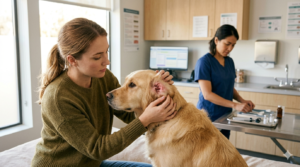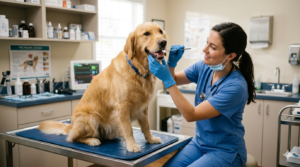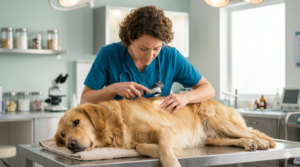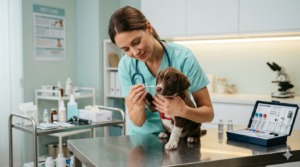

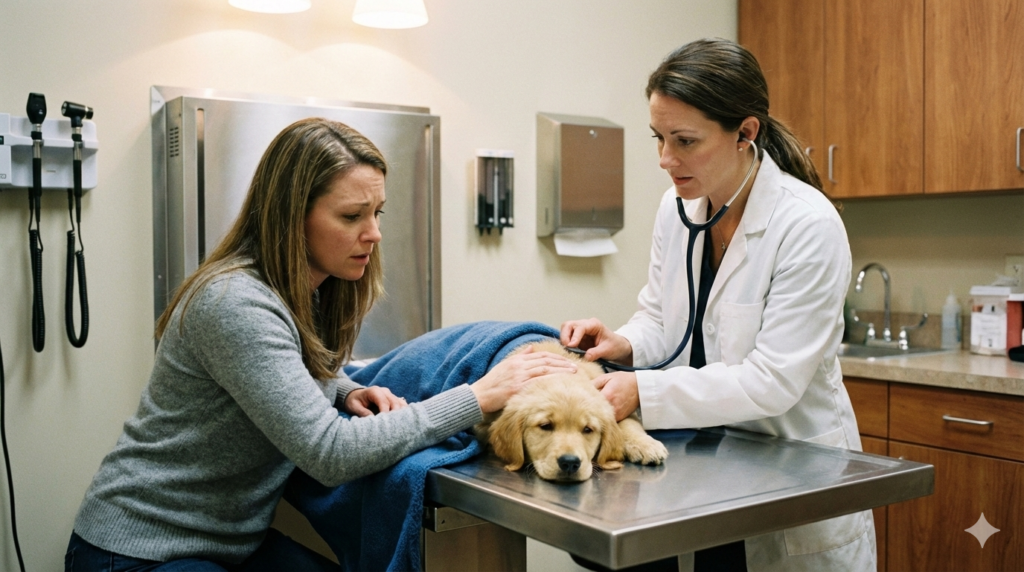
There is a moment most puppy owners don’t forget — the one where their pup, usually bouncing and chaotic and hard to keep still, just stops. Doesn’t want to eat. Doesn’t want to play. Just lies there, and something about the stillness feels wrong.
Sometimes it’s nothing. But if your puppy is under six months old, unvaccinated or only partially vaccinated, and showing even the mildest signs of GI distress alongside that lethargy, parvo belongs on your radar immediately. Not tomorrow. Not after you Google it for an hour. Right now.
This guide breaks down the signs and symptoms of parvo in puppies the way a parent actually needs to understand them — by timeline, by severity, and by what each stage means for your window to act. It also covers what happens if you wait, what treatment looks like, and how Stockton-area pet owners can connect with veterinary care quickly when it counts.
What Is Parvo, and Why Is It So Dangerous for Puppies?
Canine parvovirus (CPV-2) is a highly contagious viral disease that attacks rapidly dividing cells in the body. In puppies, that means two critical targets: the intestinal lining and, in severe cases, the bone marrow. The intestinal destruction causes vomiting, diarrhea, and dangerous dehydration. The bone marrow involvement suppresses immune response, leaving the puppy increasingly unable to fight the infection.
What makes parvo particularly terrifying for new puppy owners is the speed of deterioration. A puppy that appears only mildly off in the morning can crash into critical condition by evening if the virus has progressed past a certain point. That speed is not exaggerated — it is a documented clinical reality.
Parvo is also extraordinary in its environmental resilience. The virus can survive on surfaces, soil, clothing, and shoes for months to years. A puppy can contract it without ever leaving your yard if the virus was tracked in from outside. Dogs who recover from parvo shed it in their feces and can contaminate areas for weeks after they appear healthy.
Understanding all of this changes how quickly you respond when your puppy doesn’t seem right.
The 3 Kings of Parvo Awareness: Recognize, Timeline, Act
The most useful framework for any pet owner facing a potential parvo situation is this: recognize the earliest signs, understand how rapidly the timeline moves, and act before the critical window closes. Each one of these phases determines whether your puppy survives — and with how much lasting impact.
Stage 1: The Silent Phase (Days 1–4 After Exposure)
This is the incubation period, and it is deceptive. The virus has entered the body, is replicating aggressively, and is beginning to attack intestinal cells — but your puppy may show almost nothing outwardly wrong.
During this window, you might notice:
Subtle behavioral changes. Your puppy sleeps a little more than usual. Plays with slightly less intensity. These are easy to dismiss, especially in young dogs who have variable energy on any given day.
Mild appetite reduction. Not a full refusal to eat — just less enthusiasm. Takes a few seconds longer to approach the food bowl. Leaves a small amount behind.
Very mild stomach sensitivity. A soft stool here and there. Not alarming on its own.
The problem with Stage 1 is that nothing here screams emergency. Most owners attribute it to a minor upset stomach, a change in routine, or normal puppy variability. That’s understandable. But this is also the period when a puppy with a known exposure history — contact with unvaccinated dogs, trips to dog parks, a new home environment — should be watched with heightened attention.
Stage 2: Onset of Visible Symptoms (Days 4–6)
This is where the signs and symptoms of parvo in puppies become undeniable. The incubation period ends and the viral damage to the intestinal lining produces a cascade of symptoms that arrive quickly and worsen fast.
Vomiting. This is often the first prominent symptom. It typically begins as occasional retching and becomes frequent and forceful. The vomit may be yellow bile or foamy mucus. By the time vomiting is persistent, the puppy is already losing fluids rapidly.
Bloody diarrhea. This is the symptom most closely associated with parvo in clinical descriptions, and for good reason — it signals significant intestinal damage. The diarrhea typically has a distinctive, foul odor unlike normal GI upset. It may appear dark brown or have visible blood. Some owners describe it as having a particular smell they recognize immediately if they’ve encountered parvo before.
Lethargy. Not just tired — genuinely unresponsive to play, affection, or food that would normally produce immediate excitement. A parvo puppy often becomes progressively harder to rouse.
Loss of appetite. Complete. Not picking at food, not accepting treats. Full food refusal.
Fever. Body temperature typically rises above 104°F in early-mid stages. In late-stage severe cases, the temperature can drop below normal — which is a warning sign of collapse.
Dehydration. This progresses rapidly given the fluid losses from both ends. Signs include skin that doesn’t snap back quickly when gently pulled (poor skin turgor), dry gums, and sunken appearance around the eyes.
If your puppy is showing any combination of vomiting, diarrhea — especially bloody — and marked lethargy, this is a veterinary emergency. Not a situation to monitor at home overnight. An emergency.
Stage 3: Critical Progression (Days 6–10)
Without veterinary intervention, parvo progresses into a phase where the puppy’s body begins to fail in compounding ways.
The intestinal lining, severely damaged, can no longer act as an effective barrier. Bacteria from the gut begin entering the bloodstream — a complication called sepsis. The immune system, already suppressed by the virus’s attack on bone marrow, cannot mount an adequate response. Electrolyte imbalances from severe dehydration cause cardiac irregularities and muscle weakness. The puppy becomes too weak to stand.
Mortality rates for untreated parvo in puppies are cited in veterinary literature at between 68 and 92 percent. With appropriate veterinary supportive care started early, survival rates rise to between 68 and 92 percent in the other direction — most treated puppies survive if treatment begins before the critical collapse phase.
That gap — between nearly certain death untreated and a strong chance of survival with care — is entirely decided by timing. Hours matter in this disease more than almost any other condition a puppy can face.
What Parvo Treatment Actually Involves
There is no antiviral medication that kills parvovirus once it’s inside a puppy’s body. Treatment is supportive — meaning veterinary care focuses on keeping the puppy alive and stable while the immune system fights the virus itself.
At Fremont Animal Clinic’s parvo treatment program, care typically involves aggressive IV fluid replacement to counter dehydration and restore electrolyte balance, anti-nausea medication to control vomiting enough that the puppy can retain any fluids, antibiotics to prevent or treat secondary bacterial infections and sepsis, nutritional support as the puppy’s condition allows, and close monitoring of vital signs throughout the process.
The in-house diagnostic capabilities at Fremont Animal Clinic’s lab allow the team to run parvo antigen tests and complete blood panels on-site, which means the diagnostic process doesn’t add delays. When a puppy comes in showing parvo symptoms, the team can confirm the diagnosis and initiate treatment the same visit.
Treatment duration typically ranges from several days to over a week of hospitalization in moderate to severe cases. The first 24 to 48 hours are often the most critical.
A Stockton Family’s Experience: What “Catching It Early” Actually Looked Like
David and his family in south Stockton got a mixed-breed puppy in September — about four months old, partially vaccinated, and full of the kind of energy that makes you forget how small she still was.
Three weeks after bringing her home, she skipped breakfast. That afternoon she vomited once and seemed tired. David’s wife had grown up with dogs and said something felt different about this kind of tired — not playful-tired, more shut-down tired.
They called Fremont Animal Clinic that evening and described the symptoms. The staff recommended they bring her in first thing in the morning rather than wait to see if it resolved. The parvo antigen test came back positive within minutes of the sample being processed in the clinic’s in-house lab. Because they’d caught it at Stage 2 onset — before bloody diarrhea had begun and before significant dehydration — the puppy responded well to IV fluid support and supportive care.
She went home after four days. David said the thing that stuck with him was how the vet explained it afterward: “Another twelve hours and this conversation would have been harder to have.”
Why Puppies Are at Higher Risk Than Adult Dogs
Adult dogs with full vaccination histories carry substantial immunity to parvovirus. Puppies born to vaccinated mothers receive some passive immunity through maternal antibodies — but this protection wanes between six and sixteen weeks of age, creating a vulnerability window even in puppies who have started their vaccine series.
This is why the vaccine schedule for puppies requires multiple doses. A single shot at eight weeks does not produce full immunity. The full puppy series typically involves vaccines at eight, twelve, and sixteen weeks, with a booster at one year. Until the full series is complete, puppies remain partially vulnerable.
If your puppy has had one or two vaccines but not the full series, they are still at risk — less than an unvaccinated puppy, but meaningfully vulnerable if exposed.
The vaccinations page at Fremont Animal Clinic outlines the recommended schedule and what parents of young puppies should know about timing and the protection each dose provides. You can also find detailed guidance in the clinic’s vaccine FAQs.
Parvo Prevention: The Only Strategy That Actually Works
No home remedy, supplement, or dietary intervention prevents parvo. The only reliable protection is vaccination — and the only way to ensure your puppy’s vaccine series is on the right schedule is to work with a veterinarian who tracks it as part of ongoing preventive care.
Beyond vaccination, practical prevention includes keeping partially vaccinated puppies away from dog parks, pet stores, and areas where unknown dogs may have defecated. When you bring home a new puppy, clean floors and common areas with a diluted bleach solution, since parvo can survive standard household cleaners. Avoid secondhand items — leashes, toys, food bowls — from unknown dogs unless thoroughly disinfected.
If you have a puppy who hasn’t completed their full vaccine series and they’re showing any of the symptoms described above, please don’t search for home parvo treatments or wait to see if it resolves. The disease moves faster than your watchfulness can compensate for.
Emergency Actions: What to Do if You Suspect Parvo
Step 1: Call the clinic before you drive. When you suspect parvo, a quick call to Fremont Animal Clinic at (209) 465-7291 lets the team prepare for your arrival and gives you guidance on what to watch for during transport. You can also visit the urgent care page for more information on how the clinic handles urgent situations.
Step 2: Isolate your sick puppy from other dogs immediately. Parvo spreads through fecal-oral contact. Any other dogs in your home should be separated until the diagnosis is confirmed.
Step 3: Do not stop for food, water, or other errands. A puppy showing parvo symptoms at Stage 2 or beyond needs to be seen within hours, not later in the day.
Step 4: Bring vaccination records if you have them. This helps the vet assess the puppy’s immune status and calibrate care.
Fremont Animal Clinic — the trusted Fremont pet clinic serving Stockton since 1956 — is open Monday through Saturday, 8 am to 6 pm, at 2223 E Fremont St, Stockton, CA 95205. Same-day appointments are frequently available. Call (209) 465-7291 to reach the team directly.
For guidance on what constitutes a veterinary emergency and how to navigate urgent care situations, the team at Fremont Animal Clinic has also put together a detailed emergency vet resource covering Stockton and surrounding areas.
FAQs: Parvo in Puppies
-
Can a vaccinated puppy still get parvo?
A puppy that has completed the full vaccine series has strong but not absolute protection. Puppies mid-series are still at meaningful risk. Vaccination dramatically reduces both the likelihood of infection and the severity if it does occur.
-
How quickly does parvo progress from first symptoms?
In puppies, the transition from mild lethargy to severe dehydration and bloody diarrhea can happen within 24 to 48 hours. This is not a disease where waiting a day to see if it improves is a safe strategy.
-
Is there a way to test for parvo at home?
Rapid parvo antigen tests are sold for home use, but negative results can be unreliable, particularly in early infection. A negative home test with a symptomatic puppy does not rule out parvo — only in-clinic testing with proper interpretation does.
-
Can parvo be spread to humans?
No. Canine parvovirus does not infect humans. There is a separate parvovirus that affects humans (B19), but it is an entirely different virus with no connection to the canine strain.
-
How long is a recovered puppy contagious?
Recovered puppies continue to shed the virus in feces for up to six weeks after recovery. During this period, they should be kept away from unvaccinated or partially vaccinated dogs.
-
What is the survival rate with treatment?
When treatment begins in Stage 2, before collapse and sepsis, survival rates in well-managed cases are generally above 80 percent. The earlier treatment begins, the better the outcome.
One More Thing Before You Close This Tab
If you searched for “signs and symptoms of parvo in puppies” because your puppy is acting off right now — not because you were curious in advance — please stop reading and call a vet.
The information in this guide is meant to prepare you before a crisis, or help you recognize one in progress. It is not a substitute for examination and diagnostic testing. Parvo does not slow down while you research it.
Fremont Animal Clinic is reachable at (209) 465-7291, Monday through Saturday from 8 am to 6 pm. The clinic is at 2223 E Fremont St, Stockton, CA 95205. Schedule an appointment online or call directly for same-day availability.
Fremont Animal Clinic | 2223 E Fremont St, Stockton, CA 95205 | (209) 465-7291 | Mon–Sat: 8 am – 6 pm | Sunday: Closed