Three in the morning. Your dog is vomiting repeatedly, or your cat hasn’t moved from under the bed all evening and feels hot to the touch. Maybe your pet ate something they shouldn’t have, or took a fall that’s left them limping badly. These moments hit hard—part panic, part guilt, and entirely focused on one question: what do I do right now?
Pet emergencies don’t follow convenient schedules. They happen on holidays, late at night, during family gatherings, or right after your regular vet closes for the weekend. Understanding what constitutes a true emergency, knowing where to find help in the Fremont and Stockton area, and having a plan before crisis strikes can make the difference between a good outcome and a devastating one.
Recognizing True Emergencies: When Minutes Actually Matter
Not every concerning situation requires dropping everything for emergency care, but some absolutely do. The challenge lies in distinguishing between “this needs attention soon” and “this needs attention now.” Let’s be honest—as pet owners, we sometimes overthink minor issues while underestimating serious ones.
Signs That Demand Immediate Action
Difficulty breathing ranks among the most critical emergencies. If your pet is gasping, breathing with their mouth wide open when they normally wouldn’t, or making unusual sounds with each breath, time matters tremendously. Breathing problems can deteriorate quickly, and waiting even an hour can have serious consequences.
Unconsciousness or collapse, even if your pet “seems fine now,” warrants immediate evaluation. Animals who suddenly fall over, lose consciousness, or can’t stand properly might be experiencing heart problems, internal bleeding, or neurological issues. The fact that they seem better five minutes later doesn’t mean the danger has passed.
Severe bleeding that doesn’t stop with direct pressure for several minutes requires professional intervention. Small cuts might bleed impressively but often stop quickly with pressure. If blood is spurting, soaking through multiple layers of cloth, or continuing to flow freely after five minutes of firm pressure, your pet needs help.
Seizures lasting more than five minutes, or multiple seizures within a short period, constitute an emergency. A single brief seizure in a pet with known epilepsy might not require emergency care, but prolonged seizures or cluster seizures can cause brain damage and need immediate treatment.
Bloat, particularly in large, deep-chested dogs, represents one of veterinary medicine’s most time-sensitive emergencies. Dogs with bloat develop distended, hard abdomens, may try to vomit without producing anything, and often pace restlessly. This condition kills quickly without surgical intervention.
Trauma from car accidents, serious falls, or animal attacks always warrants emergency evaluation, even when injuries aren’t obviously severe. Internal damage might not show external signs immediately. Pets in shock can appear relatively normal for a period before deteriorating rapidly.
Toxin ingestion becomes more critical depending on what was consumed. Antifreeze, rat poison, chocolate, grapes, onions, xylitol, and many medications can be lethal. If you know or strongly suspect your pet ate something toxic, don’t wait for symptoms—contact emergency services immediately.
Urgent Situations That Need Prompt Care
Some situations fall into a middle category—serious enough to need veterinary attention within hours rather than days, but not immediately life-threatening if you take reasonable action quickly.
Persistent vomiting or diarrhea, especially with blood, can lead to dangerous dehydration. A dog who vomits once after eating grass probably isn’t an emergency. A pet who’s been vomiting every hour for six hours needs care, though you might have time to reach an urgent care facility during business hours rather than rushing to a 24-hour emergency hospital at midnight.
Eye injuries or sudden vision loss require prompt attention but usually allow a few hours to reach care. Eyes are delicate structures where delays can affect outcomes, but you generally have time to get to a facility during daytime hours if the injury occurs in the evening.
Straining to urinate, particularly in male cats, can become critical but often develops over hours. Male cats with urinary blockages need treatment within hours to prevent kidney damage and other complications, but this gives you time to reach appropriate care rather than requiring instant action.
Significant limping or apparent fractures certainly need attention, but unless accompanied by other symptoms like shock or severe bleeding, they generally allow time to reach care thoughtfully rather than frantically.
Finding Emergency Vet Care in the Fremont and Stockton Area
Geography matters when emergencies strike. Knowing your options before you need them prevents valuable time lost searching online while your pet suffers.
Business Hours Emergency Care
Fremont Animal Clinic at 2223 E Fremont St, Stockton, CA provides urgent care services Monday through Friday from 8 am to 6 pm and Saturday from 8 am to 6 pm. The facility handles many urgent situations during these hours, offering same-day appointments when medical needs warrant immediate evaluation.
Having access to urgent care during regular business hours proves invaluable for situations that develop during the day or early evening. Many pet emergencies happen during these times, and facilities equipped to handle urgent cases during normal operating hours often cost significantly less than overnight emergency hospitals while providing comparable care for non-critical situations.
The benefit of seeking urgent care at a facility like this versus a 24-hour emergency hospital becomes clear when you consider the resources available. The clinic operates a complete in-house lab for immediate diagnostics, maintains surgical capabilities for emergencies requiring intervention, and stocks an in-house pharmacy so treatment begins immediately rather than requiring prescription fills elsewhere.
After-Hours Considerations
The clinic closes evenings and Sundays, like most primary care veterinary facilities. For true emergencies during these times, the Stockton area has 24-hour emergency animal hospitals that provide overnight and holiday coverage. Knowing their locations and phone numbers before you need them saves precious time when seconds count.
Keep these resources readily available—programmed in your phone, written on your refrigerator, stored in your car. When crisis strikes, you don’t want to be frantically googling “emergency vet open now near Fremont” while your pet deteriorates.
What Actually Happens During an Emergency Vet Visit
Understanding the process helps manage expectations and reduces the stress of an already difficult situation. Emergency veterinary care follows different protocols than routine appointments, and knowing what to expect helps you work effectively with the medical team.
Triage: The First Critical Step
Emergency facilities use triage systems similar to human hospitals. The most critical cases receive attention first, regardless of arrival order. If you arrive with a dog who ate something questionable but appears stable, and another pet arrives in respiratory distress, that critical case goes back immediately. This isn’t rudeness—it’s appropriate medical prioritization.
Staff will ask specific questions about symptoms, when they started, and what might have caused them. Answer as completely and accurately as possible. “I don’t know” is better than guessing. If your pet ate something, bring the package or know the product name and amount consumed.
Initial Assessment and Stabilization
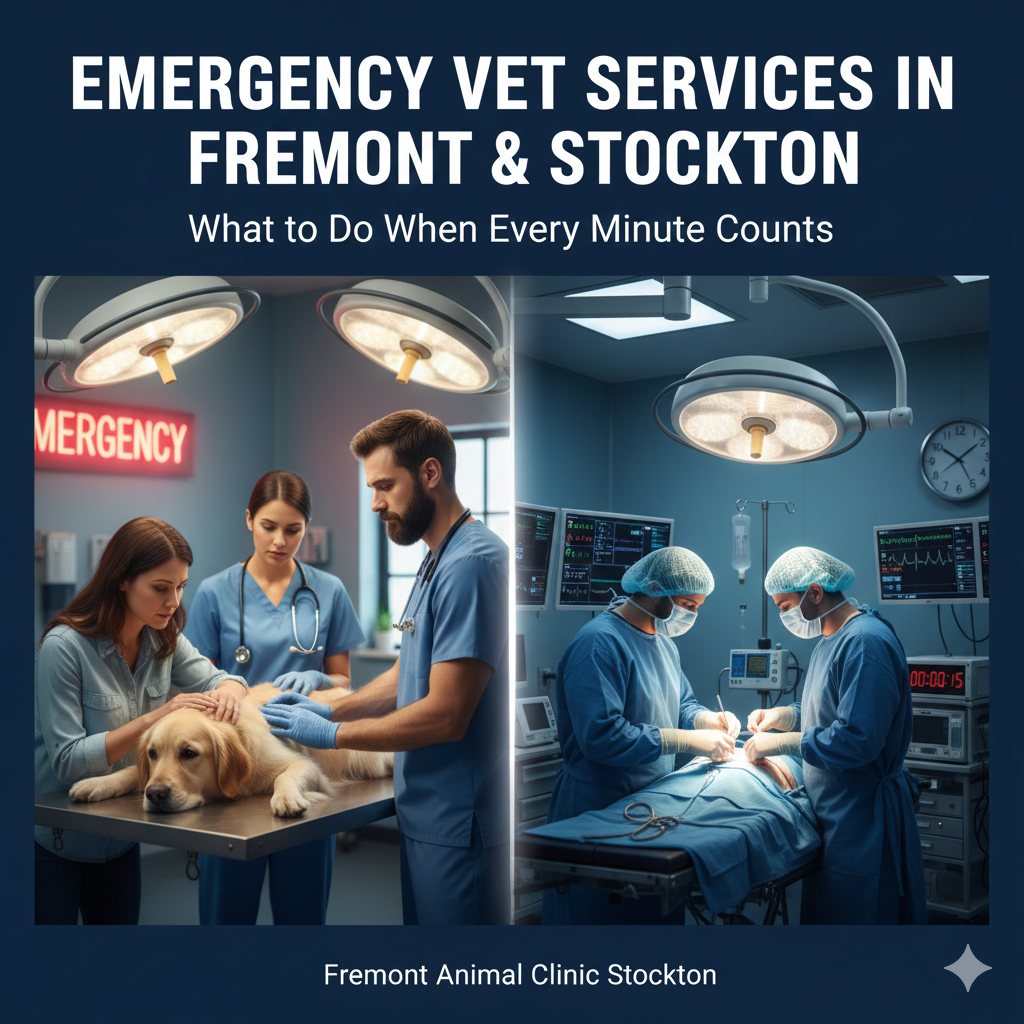
Critical patients receive immediate stabilization—oxygen therapy for breathing problems, intravenous fluids for shock or dehydration, pain medication for obvious discomfort. Diagnostics happen simultaneously or immediately after stabilization begins.
Blood work reveals information about organ function, blood sugar, electrolyte levels, and signs of infection or internal bleeding. Radiographs identify foreign objects, fractures, and internal abnormalities. These tools allow veterinarians to move beyond guessing and make informed treatment decisions.
The trauma care protocols focus on systematic evaluation to identify all problems, not just the most obvious one. A dog hit by a car might have an obviously broken leg, but thorough examination might also reveal internal bleeding or chest injuries that pose greater immediate threats.
Treatment and Monitoring
Treatment plans vary enormously based on diagnosis. Some pets need surgery immediately. Others require intensive monitoring and supportive care. Some respond to medication and can go home within hours. Emergency veterinarians explain findings clearly and discuss options honestly, including prognosis and realistic expectations.
Don’t hesitate to ask questions. What’s causing this? What are the treatment options? What happens if we choose option A versus option B? What’s the expected outcome? Veterinarians expect these questions and respect clients who want to understand what’s happening with their pets.
The Cost Reality of Emergency Care
Let’s address the elephant in the exam room—emergency veterinary care costs more than routine appointments. Sometimes significantly more. This financial reality creates difficult decisions during already stressful moments.
Emergency fees reflect the genuine costs of maintaining facilities staffed and equipped to handle crises. Overnight staffing, specialized equipment, immediate laboratory capabilities, and surgical readiness all carry substantial expenses. During business hours, urgent care at facilities like Fremont Animal Clinic often costs considerably less than after-hours emergency hospitals for comparable services, making timing considerations relevant when dealing with urgent but not immediately critical situations.
Many emergency facilities require payment at time of service. Some accept payment plans, and pet insurance increasingly covers emergency care. Credit cards designed specifically for veterinary care, like CareCredit, provide options for managing unexpected expenses. Discussing financial constraints honestly with the veterinary team allows them to work within realistic parameters while still providing appropriate care.
Real Scenarios: Learning from Common Emergencies
Let’s walk through some actual situations to illustrate how these principles apply in practice.
The Vomiting Dog
Sarah’s Labrador, Max, started vomiting around dinner time. Initially just once or twice, nothing terribly alarming for a dog known to occasionally eat things he shouldn’t. But by 10 pm, Max had vomited six times, seemed lethargic, and was breathing more rapidly than normal. His gums looked pale instead of their normal pink.
This represented a judgment call. Max wasn’t collapsing or having difficulty breathing, but the progression concerned Sarah. She called an emergency vet, described the symptoms, and was advised to bring Max in. Good decision—Max had bloat in its early stages. Caught early, treatment was straightforward. Hours later would have meant a life-threatening crisis.
The lesson? Progressive worsening matters more than initial severity. A pet getting worse deserves immediate evaluation, even if each individual symptom seems manageable.
The Limping Cat
James noticed his cat, Luna, limping Saturday afternoon. She’d been fine that morning, but now held her right rear leg up and cried when he tried to examine it. Luna still ate treats, used her litter box, and seemed mentally normal aside from obvious pain.
This wasn’t immediately life-threatening, but it needed attention. James called Fremont Animal Clinic and got a same-day urgent appointment. Luna had a deep abscess from a bite wound, likely from another cat. Treatment started immediately—antibiotics, pain medication, wound care. Waiting until Monday would have meant unnecessary suffering and potentially worse infection.
The lesson? Not every urgent situation is an emergency, but pain and sudden lameness warrant prompt care. During business hours, urgent care appointments often provide appropriate attention without emergency hospital costs.
The Toxin Ingestion
Maria came home to find her dog had gotten into a bottle of ibuprofen. She wasn’t sure how many pills were missing—maybe five or six. The dog seemed completely normal, playing and wagging as usual.
Maria did exactly the right thing—she called immediately despite the lack of symptoms. Based on the dog’s weight and potential ibuprofen dose, the veterinary team advised bringing him in right away. They induced vomiting, administered activated charcoal, and started protective medication. The dog never developed symptoms because treatment began before toxins could cause damage.
The lesson? With toxin ingestion, act before symptoms appear. Once symptoms develop, damage is often already occurring.
Creating Your Personal Emergency Action Plan
Hope for the best, plan for the worst. Having a clear action plan before emergencies strike removes the paralysis of decision-making during crisis.
Information to Keep Accessible
Write down or program into your phone: your regular veterinarian’s number, at least two 24-hour emergency hospitals with addresses, and the ASPCA Animal Poison Control Center number. Keep your pet’s medical history accessible—vaccination records, chronic conditions, current medications, known allergies. In emergencies, this information proves invaluable.
The Emergency Kit
Assemble a pet first aid kit containing gauze pads, adhesive tape, hydrogen peroxide (for inducing vomiting if advised by a veterinarian), a digital thermometer, and your veterinarian’s contact information. Include a muzzle even for friendly dogs—injured, frightened animals may bite defensively. Keep a secure carrier easily accessible for cats.
Transportation Planning
Know how you’ll transport your pet in an emergency. Injured pets need secure containment during transport. Large dogs might need blankets for makeshift stretchers. Cats should go in carriers even during emergencies—loose, frightened cats become projectiles in moving vehicles and might escape when you open car doors.
Preventing Common Emergencies
While not all emergencies are preventable, many common ones stem from situations owners can control.
Home Safety
Pet-proof your home as you would for a toddler. Secure medications where curious noses can’t reach them. Keep household chemicals, automotive fluids, and cleaning products behind closed doors. Remove toxic plants or place them completely out of reach. Secure garbage cans and compost bins.
The preventive care approach emphasizes identifying and addressing health problems before they become emergencies. Regular wellness examinations catch early signs of conditions that might otherwise progress to crisis points. Vaccinations prevent diseases that could otherwise cause emergency situations. Parasite prevention stops toxicity from excessive flea treatments or heartworm disease complications.
Supervision and Training
Many traumatic injuries happen because of inadequate supervision. Dogs run into streets, jump from inappropriate heights, or get into fights with wildlife. Teaching reliable recall commands, maintaining secure fencing, and supervising outdoor time prevent many trauma cases.
Dietary indiscretion—eating garbage, roadkill, or other inappropriate items—ranks among the most common emergency causes. Training solid “leave it” and “drop it” commands, combined with environmental management, dramatically reduces these incidents.
Knowing Your Pet’s Normal
You can’t identify abnormal without knowing normal. What’s your pet’s typical resting respiratory rate? Their normal gum color? Their usual energy level and appetite? Familiarity with your pet’s baseline allows you to recognize subtle changes that might indicate developing problems.
The Question of Insurance and Financial Planning
Pet insurance has evolved from a novelty to a legitimate financial planning tool. Emergency situations often generate bills running hundreds to thousands of dollars. Insurance doesn’t make care free, but it can make expensive treatments affordable by covering 70-90% of costs after deductibles.
Not every pet needs insurance, but it particularly benefits younger pets who have decades ahead where emergencies might occur, breeds prone to specific conditions, and owners who might struggle to pay large unexpected veterinary bills. Monthly premiums represent known, manageable expenses. Five-thousand-dollar emergency bills do not.
Alternatives to insurance include dedicated savings accounts specifically for veterinary emergencies. Financial advisors sometimes recommend setting aside at least $1,000 for unexpected pet medical costs, adjusting upward for larger or multiple pets.
When to Call Ahead Versus Just Arriving
During business hours, calling ahead helps urgent care facilities prepare for your arrival and provide guidance on whether you should come immediately or take preliminary steps first. The staff at (209) 465-7291 can answer questions about whether your pet’s symptoms constitute an urgent situation requiring same-day attention.
For obvious life-threatening emergencies—severe trauma, unconsciousness, difficulty breathing—don’t delay getting into the car. Have someone else call en route if possible. Minutes count more than phone conversations when dealing with critical situations.
After hours, calling 24-hour emergency facilities before driving accomplishes several things. They can confirm they have space to see your pet immediately. They might provide first aid instructions for the drive. They prepare staff for your arrival, streamlining the admission process.
The Emotional Component Nobody Discusses Enough
Pet emergencies terrify people. The fear of losing a beloved companion, the stress of sudden decisions, the financial pressure, and the guilt about what you might have prevented all combine into overwhelming emotional experiences.
Give yourself permission to feel these emotions without judgment. You’re not overreacting by being scared. You’re not weak for crying in the emergency waiting room. You’re not a bad pet owner because your dog ate something toxic or your cat developed an unexpected illness.
Veterinary teams understand this emotional component. They’ve seen thousands of frightened, crying, overwhelmed pet owners. Many chose their profession specifically because they want to help during these difficult moments. Don’t feel embarrassed to show emotion or ask for support.
Looking Beyond the Immediate Crisis
After emergency treatment stabilizes your pet, focus shifts to recovery and preventing recurrence. Follow discharge instructions carefully. Administer medications as directed. Attend follow-up appointments. These steps matter as much as the emergency treatment itself.
If surgery was required, the surgery protocols include detailed post-operative care instructions. Pain management continues at home. Activity restriction might be necessary. Incision monitoring catches infection signs early. Your pet’s recovery depends heavily on home care quality.
Final Thoughts on Emergency Preparedness
Nobody wants to think about their pet experiencing a medical emergency. The mental exercise feels unpleasant, almost like inviting bad luck. But preparedness doesn’t cause emergencies—it simply means you’ll handle them more effectively when they occur.
The pet owners who navigate emergencies most successfully aren’t necessarily those with the most resources or knowledge. They’re the ones who stay calm enough to act decisively, have thought through their options in advance, and trust their instincts about when situations need professional intervention.
Your relationship with a reliable veterinary facility that provides urgent care services during business hours gives you options when problems develop. Knowing that same-day appointments are available for urgent situations during the week and Saturdays removes some of the pressure of distinguishing between “is this urgent enough for emergency care” and “should I wait.”
The Fremont and Stockton community benefits from having both emergency options for critical after-hours situations and urgent care access during business hours for the many situations that need prompt but not emergency-level intervention. Understanding which scenario you’re facing, knowing where to find appropriate care, and having a plan reduces the chaos when those inevitable concerning moments arise.
Need urgent care for your pet during business hours? Contact Fremont Animal Clinic at (209) 465-7291 for same-day appointments when your pet needs prompt medical attention. Located at 2223 E Fremont St, Stockton, CA 95205, the facility provides comprehensive urgent care services Monday through Friday and Saturday from 8 am to 6 pm.