
Your puppy skipped breakfast this morning. By noon, she threw up twice. Now she’s curled in the corner of the kitchen, barely lifting her head when you call her name. You pull out your phone and type something along the lines of “signs of parvo in puppies” — and what comes back terrifies you.
Canine parvovirus, commonly called parvo, remains one of the most aggressive viral infections a dog can face. It moves fast, hits hard, and targets the lining of the intestines along with the immune system itself. Puppies between six weeks and six months old carry the highest risk, though unvaccinated adult dogs are far from immune. The survival rate without professional veterinary intervention is painfully low — but with early detection and proper treatment, the odds shift dramatically in your dog’s favor.
That early detection almost always begins with a parvo test. And if you’ve never been through this experience before, the uncertainty of not knowing what happens during the test can add an extra layer of stress to an already frightening situation.
This guide walks you through the entire in-clinic parvo test process — from the moment you walk through the door to the point where your veterinarian discusses results and next steps. Whether you’re dealing with a sick puppy right now or simply want to be prepared, understanding how this diagnostic works can help you make faster, more confident decisions when time matters most.
What Exactly Is Canine Parvovirus?
Before diving into the testing process, it helps to understand what your vet is actually looking for. Canine parvovirus (CPV) is a highly contagious virus that attacks rapidly dividing cells in a dog’s body. The intestinal lining takes the biggest hit, which is why parvo symptoms tend to show up first as gastrointestinal problems — vomiting, severe diarrhea (often bloody), loss of appetite, and lethargy that goes well beyond normal tiredness.
The virus also suppresses white blood cell production, leaving infected dogs vulnerable to secondary bacterial infections that can become life-threatening on their own. Parvo spreads through direct contact with infected feces, contaminated soil, surfaces, food bowls, leashes, and even the shoes of people who’ve walked through contaminated areas. The virus is remarkably resilient and can survive in the environment for months, sometimes over a year in shaded areas.
What makes parvo particularly dangerous is its speed. A puppy can go from playful and energetic to critically ill in less than 48 hours. That timeline is why veterinarians take every potential parvo case seriously — and why the parvo test is often one of the first things performed when a young dog presents with compatible symptoms.
Recognizing When Your Dog Needs a Parvo Test
Not every bout of vomiting or loose stool means parvo. Dogs eat things they shouldn’t all the time, and mild stomach upset resolves on its own more often than not. But certain patterns should raise red flags, especially in puppies or dogs without complete vaccination histories.
The earliest signs tend to be subtle. Your dog might seem less interested in food, a little quieter than usual, or slightly warm to the touch. Within hours, these vague symptoms can escalate. Repeated vomiting that doesn’t stop, watery diarrhea that may contain blood or have a distinctive foul smell, visible abdominal discomfort, and rapid dehydration all point toward something more serious than a simple upset stomach.
Age and vaccination status matter enormously here. A fully vaccinated three-year-old Labrador who vomits once after eating grass is a different clinical picture than an eight-week-old puppy with an incomplete vaccine series who’s been vomiting for several hours. Both deserve attention, but the puppy’s situation carries a level of urgency that demands same-day veterinary evaluation.
If your dog — particularly a young puppy — is showing any combination of these symptoms, don’t wait to see how things develop overnight. Contact your veterinarian or an urgent care facility right away. The difference between a good outcome and a devastating one often comes down to hours, not days.
The In-Clinic Parvo Test Process: Step by Step
Walking into a veterinary clinic with a potentially parvo-positive dog involves a fairly specific sequence of events. Here’s what typically happens behind the scenes and what you’ll experience as the pet owner.
Arrival and Triage
Most clinics, including Fremont Animal Clinic in Stockton, will ask you to wait in your car or in a separate area when parvo is suspected. This isn’t about being unfriendly — it’s an infection control measure. Parvo is extraordinarily contagious, and keeping a potentially infected dog away from the general waiting area protects other patients, particularly puppies who may be there for vaccinations and haven’t yet completed their full series.
A staff member will come to you, gather initial information about your dog’s symptoms, timeline, age, and vaccination history, and bring your dog directly to an isolation area or exam room that can be thoroughly disinfected afterward.
Physical Examination
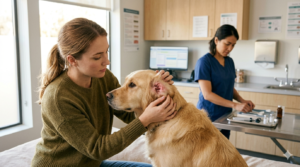
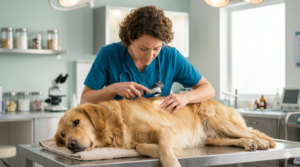
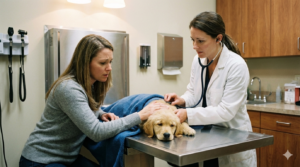
Your veterinarian will perform a focused physical exam, checking your dog’s hydration status (skin turgor, gum color, capillary refill time), temperature, heart rate, and abdominal tenderness. Dehydration and fever are common findings in parvo-positive dogs. The vet will also assess your dog’s overall demeanor — a puppy who’s limp and unresponsive is in a very different place clinically than one who’s still alert despite feeling rough.
This initial assessment helps the veterinarian gauge severity and begin forming a treatment plan before test results are even back.
Collecting the Sample
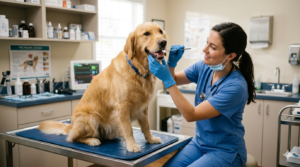
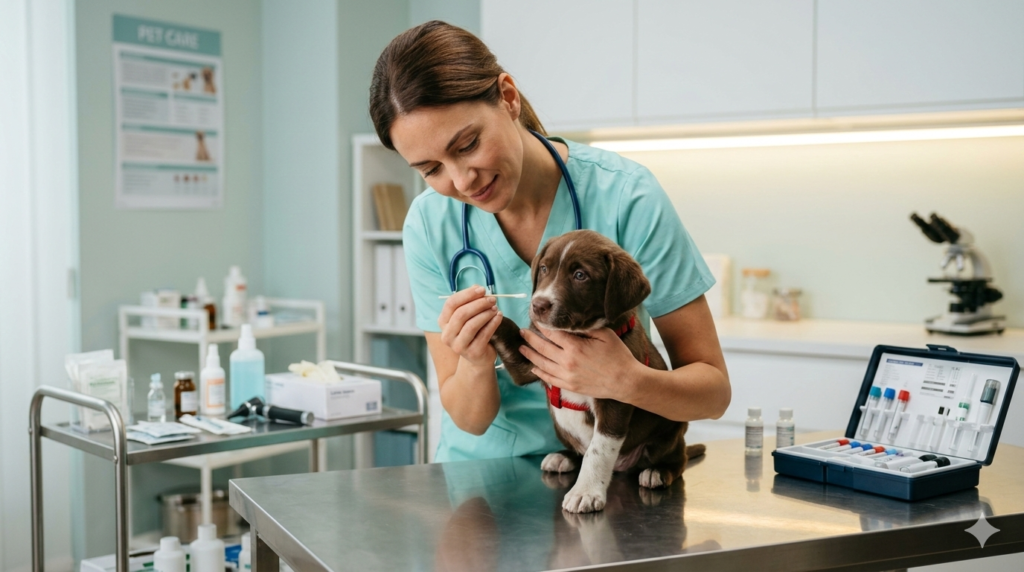
The parvo test itself requires a small fecal sample. In most cases, the veterinarian or a veterinary technician will collect this using a fecal swab — a small cotton-tipped swab inserted gently into the rectum. This takes only a few seconds and, while not exactly pleasant for the dog, isn’t particularly painful. Some dogs barely react; others squirm a bit.
If the dog has been having diarrhea, there’s often fresh stool available on the fur around the hindquarters or in the carrier, which can also be used. The key is getting a fresh sample that contains enough material for the test to work properly.
Running the SNAP Test (ELISA Antigen Test)
The most widely used in-clinic parvo test is the SNAP test, which is technically an enzyme-linked immunosorbent assay, or ELISA. It detects parvovirus antigens — proteins from the virus itself — in the fecal sample.
Here’s what the process looks like from a practical standpoint. The fecal sample is mixed with a special solution included in the test kit. This mixture is then added to the SNAP device, which is a small plastic cassette roughly the size of a credit card. The solution flows through the device, and within approximately eight to ten minutes, the results appear as colored dots on the test window.
One dot is a control — it confirms the test ran correctly. If a second dot appears in the sample window, the test is positive for parvovirus antigen. No second dot means negative. It’s a straightforward, binary reading that doesn’t require sophisticated laboratory equipment, which is one reason veterinary clinics can run it in-house rather than sending samples to an outside lab.
At clinics like Fremont Animal Clinic, which maintains an in-house laboratory, results are available within minutes. That speed matters. When a puppy is actively dehydrating from vomiting and diarrhea, waiting days for test results from an external lab isn’t clinically acceptable.
Interpreting the Results
A positive SNAP test in a symptomatic dog is considered highly reliable. The test has strong specificity, meaning false positives are relatively uncommon. When a sick puppy tests positive, treatment typically begins immediately.
However, there are a few nuances worth understanding. Dogs that were recently vaccinated with a modified-live parvovirus vaccine (within the previous five to twelve days) can shed enough vaccine-strain virus in their stool to trigger a positive result. Your veterinarian will ask about recent vaccination history to account for this possibility.
False negatives, while less common than people assume, can occur. A dog in the very earliest stages of infection may not yet be shedding enough virus to reach the test’s detection threshold. If clinical suspicion remains high despite a negative result — meaning the dog looks, acts, and presents like a classic parvo case — your vet may recommend retesting in 24 to 48 hours or proceeding with treatment based on clinical judgment alone.
Additional Diagnostics
The parvo SNAP test rarely stands alone. Most veterinarians will also run a complete blood count (CBC) to check white blood cell levels. A dramatic drop in white blood cells (leukopenia) is a hallmark of parvovirus infection and supports the diagnosis while also giving the vet critical information about the dog’s ability to fight secondary infections.
Blood chemistry panels may be run to evaluate organ function, electrolyte levels, and blood sugar — all of which influence treatment decisions. These blood tests are processed quickly in clinics with in-house labs, giving the veterinary team a comprehensive clinical picture within the same visit.
How Accurate Is the In-Clinic Parvo Test?
This is one of the most common questions pet owners ask, and it’s a fair one. You want to know whether you can trust what the test is telling you.
The SNAP ELISA test has a sensitivity generally reported in the range of 80 percent and a specificity that exceeds 95 percent in most clinical studies. In practical terms, that means the test is very good at correctly identifying dogs that genuinely have parvo (few false positives), and reasonably good at catching active infections (some false negatives are possible, particularly very early in the disease).
Veterinarians don’t rely on the SNAP test in isolation. They combine test results with the dog’s clinical presentation, history, blood work findings, and vaccination status to make a diagnosis. A positive test in a sick, unvaccinated puppy with low white blood cells is about as definitive as veterinary diagnostics get for this disease.
For cases where the SNAP test is inconclusive or where a definitive confirmation is needed, PCR (polymerase chain reaction) testing is available through reference laboratories. PCR is more sensitive and can detect smaller amounts of viral DNA, but it requires sending samples out and waiting for results — which is why most clinics use the SNAP test for initial, in-clinic decision-making and reserve PCR for follow-up confirmation if necessary.
What Happens After a Positive Parvo Test?
A confirmed parvo diagnosis shifts the focus immediately to treatment. There is no antiviral medication that kills parvovirus directly. Instead, parvo treatment is supportive — it keeps the dog alive and stable while their immune system fights the virus.
Hospitalization and IV Fluid Therapy
Most parvo-positive dogs require hospitalization. The cornerstone of treatment is aggressive intravenous fluid therapy to combat the severe dehydration caused by vomiting and diarrhea. Electrolyte imbalances are corrected, and blood sugar is monitored and supplemented as needed. Puppies in particular can become hypoglycemic rapidly, which adds another layer of danger.
Anti-Nausea and Anti-Diarrheal Medications
Controlling vomiting is essential — both for comfort and because persistent vomiting prevents the dog from retaining any oral nutrition or medication. Injectable anti-emetic drugs are administered to reduce nausea and allow the gastrointestinal tract to begin recovering.
Antibiotics for Secondary Infections
Because parvovirus decimates white blood cell populations, infected dogs become highly susceptible to bacterial infections. Broad-spectrum antibiotics are typically started as a preventive measure, especially when white blood cell counts are critically low. The damaged intestinal lining can allow gut bacteria to enter the bloodstream (a condition called sepsis), which is one of the leading causes of death in parvo cases.
Nutritional Support
Early nutritional support, once vomiting is controlled, plays a role in intestinal recovery. Small, frequent meals of bland, highly digestible food are introduced gradually.
Monitoring
Hospitalized parvo patients are monitored around the clock. Vital signs, hydration status, vomiting and diarrhea frequency, and blood parameters are tracked to guide treatment adjustments. The first 48 to 72 hours are typically the most critical period.
A Case That Stuck With Us
Dr. Sahi at Fremont Animal Clinic recalls a family from the north side of Stockton who brought in a ten-week-old German Shepherd puppy named Bruno last spring. The puppy had been purchased from a local seller who claimed he’d received his first round of shots — but the family had no paperwork to verify it.
Bruno started vomiting on a Tuesday afternoon. By Wednesday morning, the diarrhea was bloody and he wouldn’t stand up. The family called the clinic at 8 a.m. and was told to come straight in. The team isolated Bruno immediately, ran the SNAP test, and had a positive result within ten minutes. His white blood cell count came back severely depressed.
Because the family acted within 18 hours of the first vomiting episode, Bruno was still hydrated enough to respond well to IV fluid therapy. He spent four days in the hospital, slowly improving each day. By day three, he was keeping down small amounts of food. On day five, he went home.
Bruno’s family came back two weeks later for a recheck and to start his proper vaccination series. His recovery was complete. The vet told them afterward that another full day of waiting would have put Bruno in a much more precarious position — the kind of conversation no one wants to have.
Why Vaccination Remains the Best Prevention
There is no home remedy, supplement, or over-the-counter product that protects against parvo. Vaccination is the only reliable prevention, and it’s one of the most effective vaccines in all of veterinary medicine when administered on the proper schedule.
Puppies typically receive their first parvovirus vaccine between six and eight weeks of age, with boosters every three to four weeks until they’re around sixteen weeks old. This multi-dose series is necessary because maternal antibodies passed from the mother can interfere with the vaccine’s ability to stimulate the puppy’s own immune response. The booster schedule ensures that protection kicks in once those maternal antibodies fade.
Adult dogs need regular boosters as well. While immunity from a complete puppy series is robust, it isn’t permanent without reinforcement. Your veterinarian can recommend a booster schedule based on your dog’s risk factors and lifestyle through a preventive care plan.
Until your puppy has completed their full vaccine series, keep them away from dog parks, pet stores, and areas where unfamiliar dogs may have eliminated. Clean your home with a diluted bleach solution (one part bleach to thirty parts water), which is one of the few household disinfectants that reliably kills parvovirus.
Frequently Asked Questions
-
How long does a parvo test take to show results?
The in-clinic SNAP test produces results in approximately eight to ten minutes. Combined with sample collection and the physical exam, most pet owners have a definitive answer within 30 minutes of arriving at the clinic.
-
Can I buy a parvo test kit and use it at home?
Over-the-counter parvo test kits do exist, but their accuracy in untrained hands is significantly lower than when performed in a clinical setting. Improper sample collection, storage issues, and misinterpretation of results are common problems. More importantly, even if the test is accurate, a positive result still requires immediate veterinary treatment that cannot happen at home.
-
My puppy just got vaccinated. Could that cause a false positive?
Yes. Modified-live parvovirus vaccines can cause fecal shedding of vaccine-strain virus for up to five to twelve days post-vaccination. If your puppy develops symptoms shortly after vaccination, inform your veterinarian about the timing so they can factor it into their interpretation.
-
How much does a parvo test typically involve?
The SNAP test itself is one component of the diagnostic workup. Most veterinarians will also perform a physical exam and recommend blood work (CBC and possibly a chemistry panel) to get the full clinical picture. The combination provides the most accurate diagnosis and guides treatment decisions.
-
Is parvo contagious to humans or cats?
Canine parvovirus does not infect humans. Cats have their own form of parvovirus (feline panleukopenia), which is caused by a closely related but different virus. However, humans can carry canine parvovirus on their clothing, shoes, and hands and unknowingly spread it to other dogs.
-
What breeds are most susceptible to parvo?
While any unvaccinated dog can contract parvo, certain breeds appear to face higher risk. Rottweilers, Doberman Pinschers, American Pit Bull Terriers, German Shepherds, and English Springer Spaniels are among the breeds commonly cited in veterinary literature as being more susceptible, though the reasons aren’t entirely understood.
-
Can an adult dog get parvo even if vaccinated?
It’s uncommon but not impossible. Vaccine breakthrough can occur, particularly if booster shots have lapsed or if the dog’s immune system is compromised. Keeping vaccinations current dramatically reduces the risk.
When to Act — Not Wait
If there is one takeaway from this entire guide, let it be this: parvo rewards urgency and punishes hesitation. Every hour that passes between the onset of symptoms and the start of treatment matters. The dogs who survive parvo are overwhelmingly the ones whose owners recognized something was wrong early and got them to a veterinarian before severe dehydration and secondary infections had time to take hold.
If your puppy or dog is showing signs of parvo — even if you’re not sure — err on the side of caution. A parvo test takes minutes. The peace of mind from a negative result is worth the trip. And if the result comes back positive, you’ve just given your dog the best possible chance at survival by not waiting.
Fremont Animal Clinic is open Monday through Saturday, 8 a.m. to 6 p.m., and is located at 2223 E Fremont St, Stockton, CA 95205. To schedule an appointment or discuss concerns about your pet’s health, call (209) 465-7291. The clinic’s in-house diagnostic laboratory allows the team to run parvo tests and blood work on-site, so you’re never left waiting days for answers during a situation where every hour counts.