
Every dog scratches. Every cat grooms. That part is completely normal. But there’s a line between ordinary scratching and the kind of relentless, obsessive skin irritation that signals something deeper is going on — and most pet owners cross that line without realizing it until the problem has already spiraled.
If you’ve been watching your dog chew at their paws until they’re raw, or your cat has licked a bald patch into their belly, or the ear infections keep coming back no matter what you try, those aren’t quirks. Those are symptoms. And they’re your pet’s way of telling you that their skin — the largest organ in their body — needs professional attention from a veterinary clinic near you in Stockton that understands dermatology.
The tricky part about skin problems in pets is that they’re rarely straightforward. A dog that won’t stop scratching might be dealing with environmental allergies, a food sensitivity, a bacterial infection, a fungal overgrowth, or some combination of all four at once. Without the right diagnostic approach, owners end up cycling through over-the-counter shampoos and internet remedies while their pet’s condition quietly worsens. So let’s talk about what’s actually happening when your pet can’t stop scratching, what the common culprits are, and when it’s time to stop guessing and get real answers.
What’s Behind All That Scratching? The Most Common Causes
When a pet scratches excessively, the instinct is to look for fleas. And sometimes, that’s exactly the problem. But more often than not — especially with chronic or recurring symptoms — the scratching is a surface-level response to something much more complex happening underneath.
Environmental Allergies (Atopic Dermatitis)
This is probably the single most common reason pets end up needing veterinary dermatology services, and it’s also one of the most frustrating to manage. Atopic dermatitis happens when a pet’s immune system overreacts to everyday environmental triggers — pollen, dust mites, mold spores, grass. In Stockton, where the Central Valley climate brings dry summers, agricultural dust, and heavy pollen seasons, environmental allergies in pets are especially prevalent.
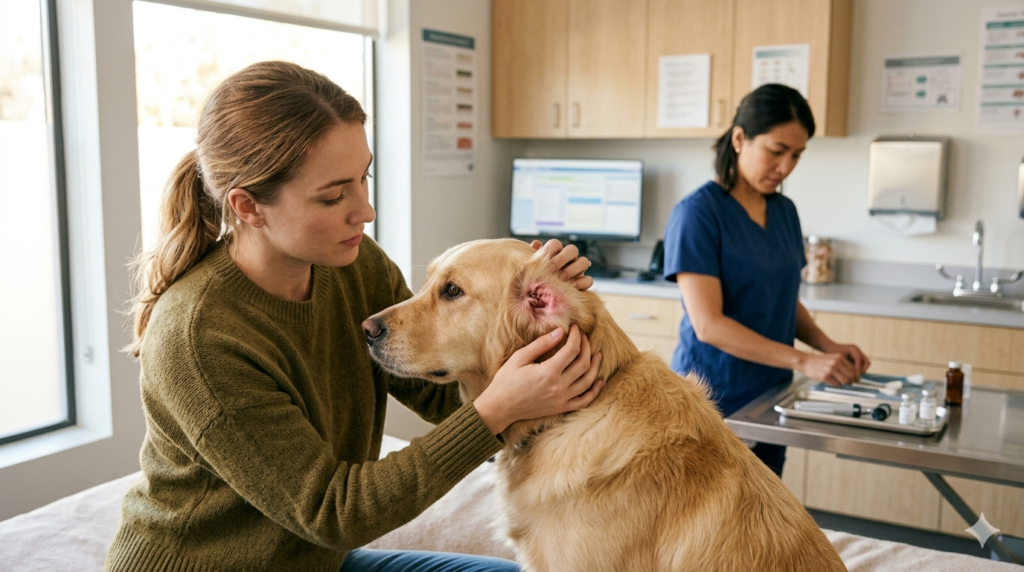
The symptoms tend to show up in predictable spots. Dogs with atopic dermatitis often scratch at their ears, lick their paws obsessively, rub their face on carpet, or develop redness in the armpits and groin. Cats might overgroom their belly or inner thighs until the fur thins dramatically. The frustrating reality is that these allergies can’t be cured — only managed. But with the right diagnostic workup and a tailored treatment plan, most pets can live comfortably.
Food Allergies and Sensitivities
Food allergies account for a smaller percentage of skin issues than most people assume, but when they’re the culprit, they’re persistent. The most common food allergens in dogs are proteins — beef, chicken, dairy, and eggs top the list. In cats, fish and dairy are frequent offenders.
What makes food allergies difficult to pin down is that the symptoms often look identical to environmental allergies. Same scratching, same ear infections, same red irritated skin. The only reliable way to diagnose a food allergy is through an elimination diet trial lasting eight to twelve weeks — no shortcuts, no blood tests that give definitive answers. It requires patience and strict adherence, which is why having guidance from a veterinary dermatology specialist makes such a difference.
Bacterial and Yeast Infections
Sometimes the scratching isn’t about allergies at all. Bacterial infections (pyoderma) and yeast overgrowth can cause intense itching, flaking, odor, and discomfort on their own. These infections frequently develop as secondary problems — a pet with allergies scratches until the skin barrier breaks down, and bacteria or yeast move in to take advantage of the compromised surface.
You’ll often notice a distinct smell with yeast infections. It’s musty, almost like old bread. The skin may appear greasy, thickened, or darkened in chronic cases. Bacterial infections tend to produce pustules, crusty patches, and hair loss. Both conditions respond well to targeted treatment, but only if they’re correctly identified first. Generic anti-itch medications might reduce scratching temporarily while the underlying infection continues to spread.
Parasites Beyond Fleas
Fleas are the obvious suspect, but they’re not the only parasites that cause severe skin reactions. Sarcoptic mange (caused by mites) produces extreme itching that’s often worse than anything allergies cause. Demodectic mange, which is more common in young dogs, leads to patchy hair loss and scaly skin. Ear mites — particularly in cats — cause relentless head shaking and dark, crusty debris inside the ear canals.
A thorough veterinary dermatology examination includes skin scrapings and cytology that can identify these parasites even when they’re not visible to the naked eye. Without these tests, mange and mites can be easily mistaken for allergies, leading to months of misdirected treatment.
The Warning Signs That Mean It’s Time to See a Specialist
Not every itch needs a dermatologist. A dog that scratches behind their ear a few times after a walk probably just had a blade of grass tickle them. But there are clear patterns that should prompt you to move beyond home remedies and seek veterinary dermatology services.
The Problem Keeps Coming Back
This is the biggest red flag. Your vet prescribed antibiotics for a skin infection six weeks ago, and the infection cleared up — but now it’s back. Or your dog’s ears looked great after a round of medicated drops, and three weeks later they’re inflamed again. Recurring infections almost always point to an underlying cause that hasn’t been addressed. Treating the infection without identifying the trigger is like mopping a floor while the faucet’s still running.
Over-the-Counter Products Aren’t Working
You’ve tried the oatmeal shampoo. The coconut oil. The grain-free food. The supplement with omega fatty acids. Maybe some of these helped a little, temporarily. But the scratching came back because none of those approaches diagnose anything — they’re broad guesses aimed at a problem that requires specific answers. When home remedies and general products stop making a difference, it’s time for diagnostic tools like skin scrapings, cytology, cultures, and allergy testing that a preventive veterinary care team can coordinate with dermatology services.
Your Pet’s Skin Has Visibly Changed
Healthy skin is smooth, supple, and uniform in color. When you start seeing darkened patches, thickened or leathery areas, open sores that won’t heal, chronic flaking, or hair that’s thinning in odd patterns, those are signs of chronic inflammation that’s been active long enough to physically alter the skin’s structure. These changes don’t reverse on their own. They need professional intervention to stop the progression and, where possible, restore normal skin function.
The Scratching Is Affecting Quality of Life
This one matters more than people give it credit for. If your dog can’t sleep through the night because they’re scratching and chewing. If your cat has groomed themselves to the point of self-injury. If your pet seems depressed, withdrawn, or agitated because of constant discomfort — that’s suffering. And it’s entirely treatable in the vast majority of cases. Waiting longer only extends the discomfort and makes the eventual treatment more involved.
What Happens During a Veterinary Dermatology Visit
Walking into a dermatology appointment doesn’t need to feel like a mystery. Here’s what the process typically looks like, and why each step matters.
Detailed History Review
The veterinarian will ask a lot of questions — and that’s a good sign. When did the scratching start? Is it seasonal or year-round? Where on the body does your pet scratch most? What food are they eating? Have they been on flea prevention consistently? Have there been any recent changes in environment, products, or routine? These details shape the entire diagnostic approach because skin conditions in pets are deeply contextual.
Physical Examination of the Skin
A thorough dermatology exam goes well beyond a quick glance. The veterinarian examines the skin systematically — checking between toes, inside ears, under the chin, along the belly, around the tail base, and in skin folds. They’re looking for distribution patterns, because where the lesions appear often points directly to the cause. Flea allergy dermatitis, for example, concentrates around the lower back and tail base. Atopic dermatitis tends to affect the face, ears, paws, and ventral body.
Diagnostic Testing
Based on the exam findings, the veterinarian may recommend one or more diagnostic tests. Skin scrapings detect mites and other parasites. Cytology (looking at cells under a microscope) identifies bacterial or yeast infections. Fungal cultures rule out ringworm. Allergy testing — either through blood panels or intradermal testing — helps identify specific environmental triggers. In some cases, biopsy is recommended to rule out autoimmune conditions or unusual infections. Each test serves a specific purpose, and combined, they build a clear picture of what’s driving your pet’s skin problems.
Treatment Plan
Once the diagnosis is established, treatment becomes targeted rather than generic. This might include prescription medications — oral antibiotics for bacterial infections, antifungals for yeast, immunosuppressive drugs for severe allergic flare-ups. Medicated shampoos and topical treatments address surface-level issues. For long-term allergy management, immunotherapy (allergy shots or sublingual drops) can actually retrain the immune system to tolerate triggers instead of overreacting to them. An in-house veterinary pharmacy makes it easier to start treatment immediately rather than waiting for prescriptions to arrive from external sources.
Penny’s Story: When Scratching Turned Out to Be More Than Just Dry Skin
Penny was a four-year-old French Bulldog living in Stockton whose owner brought her in after months of dealing with chronic ear infections and paw licking. The owner had already tried multiple ear cleaners, switched Penny to a limited-ingredient diet on her own, and was applying a coconut oil mix to the paws nightly. Nothing was making a lasting difference.
During the dermatology workup, skin cytology revealed a significant yeast overgrowth in both ears and between the toes. But that wasn’t the whole story. The distribution of Penny’s symptoms — ears, paws, groin redness, face rubbing — pointed strongly toward underlying atopic dermatitis. The yeast wasn’t the disease; it was the consequence of chronic allergic inflammation that had weakened her skin’s natural defenses.
The team started Penny on a targeted antifungal protocol to clear the active yeast infection, then transitioned to an allergy management plan that included a prescription immunomodulatory medication to control the underlying immune response. Within three weeks, the ear infections stopped recurring. Within six weeks, the paw licking had dropped by about ninety percent. Penny’s owner later mentioned that she hadn’t realized how much energy Penny had been spending on being uncomfortable — because once the itching stopped, Penny became noticeably more playful and engaged.
Cases like Penny’s are common. The pattern is almost always the same: a pet owner tries everything they can think of at home, gets frustrated when nothing sticks, and then discovers that a proper diagnostic approach could have saved months of discomfort. Penny’s situation also illustrates the connection between comprehensive veterinary services and better outcomes — when diagnostics, pharmacy, and follow-up care all happen under the same roof, treatment moves faster and more consistently.
Home Care Tips That Actually Support Skin Health
Professional dermatology care is the foundation, but what you do at home between visits makes a real difference in how well your pet’s skin holds up long-term.
Maintaining consistent flea and tick prevention is non-negotiable, even if fleas aren’t the primary problem. Flea bites trigger inflammatory cascades in allergic pets that can undo weeks of progress. In Stockton’s warm climate, parasites remain active for most of the year, so year-round prevention matters.
Bathing with the right products helps — but the wrong products make things worse. Avoid human shampoos, heavily fragranced pet shampoos, and anything that strips natural oils from the coat. If your veterinarian has prescribed a medicated shampoo, follow the contact time instructions carefully. Most medicated shampoos need to sit on the skin for ten to fifteen minutes to be effective, and rinsing too early reduces the benefit significantly.
Diet plays a supporting role too. Omega-3 fatty acids from fish oil have genuine anti-inflammatory properties that benefit skin health. They’re not a cure for allergies, but they improve skin barrier function and can reduce the severity of flare-ups when used alongside other treatments. A well-rounded approach to pet wellness in Stockton that includes nutrition, parasite prevention, and regular veterinary oversight gives your pet’s skin the best possible foundation.
Don’t Wait Until the Scratching Gets Worse
Skin problems in pets are progressive. What starts as mild seasonal itching can escalate into chronic infections, permanent skin changes, and a pet that’s miserable for months out of every year. The earlier you get a proper diagnosis, the more options you have — and the faster your pet gets relief.
If your pet’s scratching has gone from occasional to constant, if the infections keep circling back, or if you’ve simply run out of ideas on your own, it’s time to talk to a veterinary dermatology specialist who can actually figure out what’s going on.
Fremont Animal Clinic in Stockton offers comprehensive dermatology for pets near you, backed by in-house diagnostics and a team that takes skin conditions seriously. We’re located at 2223 E Fremont St, Stockton, CA 95205. Call (209) 465-7291 to schedule a dermatology consultation and get your pet the relief they deserve.
Frequently Asked Questions About Pet Dermatology
-
What does a veterinary dermatology specialist do for pets?
A veterinary dermatology specialist diagnoses and treats skin, ear, coat, and allergy conditions in dogs and cats. This includes chronic itching, recurring infections, hair loss, hot spots, food sensitivities, environmental allergies, and autoimmune skin disorders. Using advanced diagnostic tools like skin scrapings, cytology, cultures, and allergy testing, they identify the root cause rather than simply masking symptoms. The goal is always a long-term management plan that keeps your pet comfortable and prevents flare-ups from returning.
-
How do I know if my pet’s scratching is a sign of allergies?
Allergic scratching tends to follow specific patterns. Dogs with allergies often focus on their ears, paws, face, armpits, and groin. Cats typically overgroom their belly and inner thighs. If the itching is seasonal, environmental allergens like pollen and mold are likely culprits. Year-round scratching with concurrent ear infections may suggest food allergies or a combination of triggers. A dermatology workup with allergy testing provides the clearest answers and guides effective treatment.
-
Are skin infections in pets contagious to other animals or humans?
Most bacterial and yeast skin infections in dogs and cats are not contagious to humans or other pets. These infections typically arise from the pet’s own normal skin flora overgrowing due to underlying issues like allergies. However, certain conditions such as ringworm (a fungal infection) and sarcoptic mange (caused by mites) can spread between animals and occasionally to people. Accurate diagnosis through a veterinary dermatology exam determines whether isolation or household treatment precautions are necessary.
-
Can food changes alone fix my pet’s skin problems?
Diet changes help in cases where a true food allergy exists, but they won’t resolve environmental allergies, parasitic infections, or bacterial and yeast overgrowth. A proper elimination diet trial requires eight to twelve weeks of feeding a single novel protein under veterinary guidance. Simply switching brands or going grain-free without systematic testing rarely produces lasting improvement. Working with a dermatology veterinary specialist ensures you’re addressing the actual cause rather than making educated guesses.
-
How long does it take to see improvement after starting dermatology treatment?
Results vary depending on the diagnosis. Active bacterial or yeast infections often show visible improvement within two to three weeks of targeted treatment. Allergic conditions managed with immunomodulatory medications may take four to eight weeks for full effect. Immunotherapy (allergy desensitization) is a longer commitment — typically showing meaningful improvement over three to twelve months. Your veterinarian will set realistic expectations based on your pet’s specific condition and treatment plan.
-
What should I look for when searching for a pet dermatologist near me?
Choose a veterinary clinic that offers in-house diagnostic capabilities including skin scrapings, cytology, cultures, and allergy testing. Look for a team experienced in managing chronic skin conditions — not just treating acute flare-ups. On-site pharmacy access speeds up treatment, and a clinic that emphasizes follow-up care and long-term management plans will deliver better outcomes than one focused solely on single-visit solutions. Reading reviews from other Stockton pet owners helps gauge real-world experience.
-
Does pet insurance cover veterinary dermatology visits and treatment?
Most pet insurance plans cover dermatology consultations, diagnostic testing, prescription medications, and allergy management as long as the condition is not classified as pre-existing. Coverage specifics vary between providers and plan levels, so reviewing your policy details or contacting your insurer directly is recommended. Investing in dermatology care early — before conditions become chronic — often results in lower overall treatment costs and better long-term outcomes for your pet.