
There’s a particular kind of frustration that comes with watching your dog scratch the same spot behind her ear for the fifth time in an hour. Or noticing that your cat has licked a raw patch on his belly that wasn’t there last week. You try switching foods. You give more baths. You buy the expensive shampoo the pet store recommended. And somehow, the scratching continues.
Skin problems are among the most common reasons pet owners seek veterinary care, and they’re also among the most commonly mismanaged at home. That’s not a criticism — it’s the nature of dermatology in animals. The surface symptoms that you can see (the redness, the flaking, the hair loss) are almost never the full story. Underneath the visible irritation, there’s usually an underlying trigger that requires proper diagnostics to identify and a targeted treatment plan to resolve.
This guide covers the most frequently seen skin conditions in dogs and cats, the diagnostic process that a veterinary dermatology team follows to get to the root cause, and what treatment and long-term management actually look like when your pet’s skin won’t cooperate.
Why Skin Conditions in Pets Are So Tricky to Pin Down
If your dog had a broken leg, the problem would be obvious. An X-ray confirms it, a splint or surgery fixes it, and recovery follows a predictable path. Skin conditions don’t work that way.
A dog who scratches obsessively might have food allergies. Or environmental allergies. Or a flea allergy triggered by a single bite. Or a yeast infection secondary to one of those allergies. Or a bacterial infection on top of the yeast infection. Or mange. Or an autoimmune disorder. Or some combination of several of these at once.
The skin is the body’s largest organ, and it reacts to an enormous range of internal and external triggers. Two dogs can present with nearly identical symptoms — same redness, same hair loss pattern, same level of itching — and have completely different underlying causes requiring completely different treatments. This is exactly why over-the-counter remedies and internet advice so often fail. They treat what’s visible on the surface without investigating what’s actually driving the problem.
It’s also why veterinary dermatology exists as a focused discipline within veterinary medicine. When a general physical exam and first-line treatments aren’t resolving the issue, a deeper diagnostic approach is needed — and that’s where dermatology-specific training, tools, and protocols make the difference.
The Most Common Skin Conditions in Dogs
Dogs develop skin problems more frequently than almost any other category of health concern. Breed, environment, diet, age, and genetics all play a role. Here are the conditions that veterinarians in Stockton and the broader Central Valley see on a regular basis.
Allergic Dermatitis
Allergies are, without question, the most common driver of chronic skin issues in dogs. They fall into three main categories: environmental allergies (called atopic dermatitis), food allergies, and flea allergy dermatitis. Each produces intense itching, but the patterns differ.
Environmental allergies tend to flare seasonally — though in California’s Central Valley, where pollen counts remain elevated for much of the year, many dogs experience near-constant symptoms. Grasses, tree pollens, mold spores, and dust mites are the usual suspects. Dogs with atopic dermatitis often chew at their paws, scratch at their ears and face, and develop redness in the groin and armpit areas.
Food allergies cause year-round itching that doesn’t respond to seasonal allergy medications. The most common dietary triggers in dogs are proteins — beef, chicken, dairy, and wheat. Diagnosing food allergies requires a strict elimination diet conducted over eight to twelve weeks under veterinary supervision. There is no reliable blood test for food allergies in dogs, despite what some commercial labs market.
Flea allergy dermatitis is triggered not by fleas themselves but by proteins in flea saliva. A single flea bite can send a sensitized dog into a scratching frenzy that lasts days, and the fleas themselves may be nearly impossible to find on the animal. Year-round flea and tick prevention is the only reliable way to manage this condition.
Bacterial Skin Infections (Pyoderma)
Pyoderma refers to bacterial infection of the skin and is extremely common in dogs, particularly those with allergies. It typically presents as red bumps, pustules, circular patches of hair loss with a crusty border, and sometimes a foul odor. Pyoderma is rarely a primary condition — it’s almost always secondary to something else, such as allergies, hormonal imbalances, or immune suppression.
Treating the infection with antibiotics addresses the immediate problem, but without identifying and managing the underlying cause, it comes back. Over and over. This cycle of recurring infections is one of the most frequent reasons dog owners end up seeking specialized dermatology pet care.
Yeast Infections (Malassezia Dermatitis)
Malassezia is a type of yeast that lives naturally on dog skin. In healthy dogs, the immune system keeps it in check. When something disrupts that balance — allergies, excessive moisture, immune compromise — the yeast population explodes. The result is greasy, smelly skin, dark discoloration (especially in the ear canals, between the toes, and in skin folds), and significant itching.
Dogs with floppy ears are particularly prone to yeast overgrowth in the ear canals, which is one reason ear infections and dermatological issues are so closely linked. Addressing ear infections without also investigating the skin component often leads to recurrence.
Mange (Demodectic and Sarcoptic)
Demodectic mange is caused by Demodex mites, which are present on virtually all dogs in small numbers. In puppies or immunocompromised adults, mite populations can surge, causing localized or generalized hair loss, scaling, and sometimes secondary infection. It’s not contagious to humans.
Sarcoptic mange (scabies) is a different story. Caused by Sarcoptes scabiei mites, it produces intense itching, crusty lesions, and hair loss — and it absolutely can spread to humans and other animals. Sarcoptic mange requires aggressive treatment and environmental decontamination.
Hot Spots (Acute Moist Dermatitis)
Hot spots appear seemingly overnight — a sudden, red, oozing, painful patch of skin that the dog won’t stop licking or chewing. They’re most common in dogs with thick coats and are often triggered by moisture trapped against the skin, an insect bite, or a minor wound that the dog aggravates through self-trauma.
While hot spots themselves are relatively straightforward to treat (clipping the area, cleaning, topical medication, and sometimes oral antibiotics), they tend to recur if the underlying trigger isn’t addressed.
Common Skin Conditions in Cats
Cats develop skin conditions too, though they manifest differently and are sometimes harder to detect because cats are expert groomers who may hide evidence of irritation.
Feline Allergic Dermatitis
Cats suffer from the same three allergy categories as dogs — environmental, food, and flea-related — but they express them differently. Rather than the classic redness and scratching pattern, cats with allergies may develop miliary dermatitis (tiny, grain-like scabs scattered across the body), symmetrical hair loss from over-grooming, or eosinophilic plaques and granulomas (raised, red, ulcerated lesions that look alarming but respond well to targeted treatment).
Many cat owners don’t realize their cat has a skin condition because the primary symptom is over-grooming, which can look like normal grooming behavior until bald patches start appearing.
Ringworm (Dermatophytosis)
Despite the name, ringworm isn’t a worm — it’s a fungal infection. Cats are common carriers and can spread dermatophytes to other pets and to humans. Classic signs include circular patches of hair loss, crusty or scaly skin, and broken hairs. Some cats carry the fungus without showing any visible symptoms, making them silent sources of household infection.
Diagnosis requires a fungal culture, not just a visual inspection, because several other conditions mimic ringworm’s appearance. This is one area where in-house diagnostics make a real difference — prompt identification means faster treatment and less risk of spreading.
Chin Acne
Feline acne shows up as blackheads, swelling, or crusty bumps on the chin and lower lip. It’s more common than most cat owners expect and can range from mild comedones that barely cause concern to severe, painful bacterial infections requiring sustained treatment. Plastic food and water bowls are a known contributing factor — switching to ceramic or stainless steel often helps as part of the management plan.
How a Veterinary Dermatology Exam Works
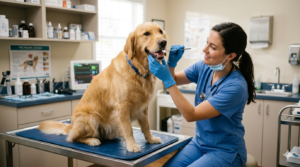
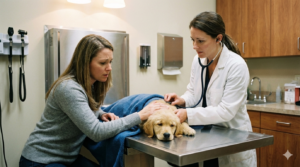
When standard treatments fail or symptoms keep returning, a thorough dermatological workup is the next step. Here’s what the diagnostic process typically involves at a clinic with dedicated dermatology services.
Detailed History Taking
The exam starts before the vet touches the animal. A complete history covers when symptoms first appeared, whether they’re seasonal or year-round, what the pet eats, what preventive medications they’re on, whether other animals or humans in the household are affected, and what treatments have already been tried. This information alone narrows the differential diagnosis significantly.
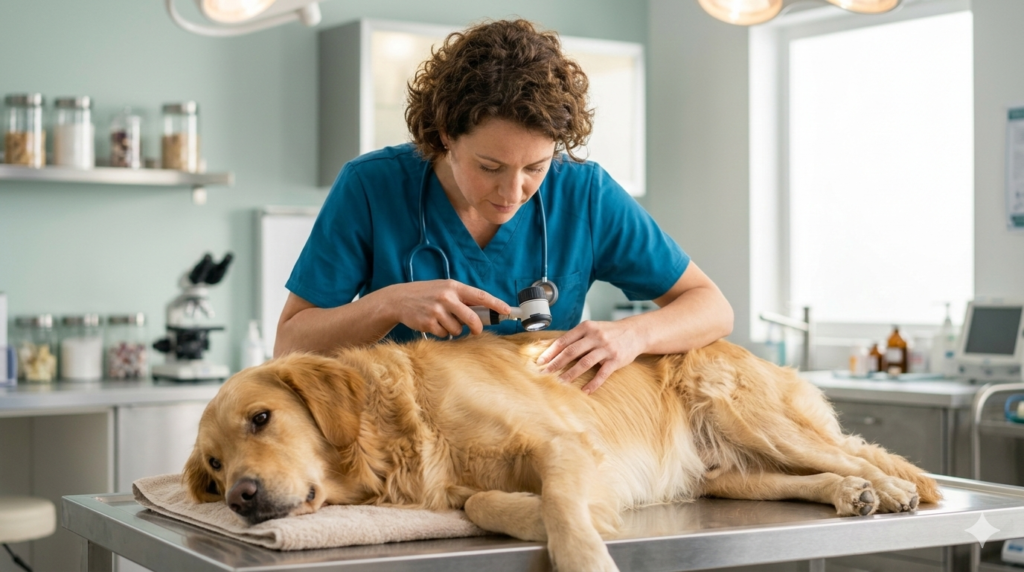
Physical Examination of the Skin and Coat
The veterinarian examines the entire body — not just the obvious problem areas. Distribution patterns of hair loss, redness, scaling, and lesions provide diagnostic clues. Symmetrical hair loss suggests hormonal or allergic causes. Localized lesions in specific body regions point toward parasites or focal infections. The condition of the ear canals, paw pads, nail beds, and skin folds all contribute to the clinical picture.
Diagnostic Testing
This is where dermatology moves beyond guesswork. Common diagnostics include skin scrapings to check for mites, cytology (examining stained samples under a microscope to identify bacteria, yeast, or inflammatory cells), fungal cultures for ringworm, bacterial culture and sensitivity testing when infections don’t respond to standard antibiotics, and intradermal allergy testing or serum allergy panels when atopic dermatitis is suspected.
Blood work may also be recommended to rule out hormonal conditions like hypothyroidism or Cushing’s disease, both of which can manifest through skin and coat changes.
At Fremont Animal Clinic in Stockton, many of these diagnostics are performed on-site the same day, which means treatment decisions don’t have to wait for outside lab results. That matters when your pet is uncomfortable and the itching has been going on for weeks.
A Case That Illustrates Why Diagnostics Matter
A couple from the Brookside neighborhood in Stockton brought in their four-year-old French Bulldog, Mango, after nearly six months of recurring skin infections. Mango had been to two other clinics during that time. Each visit followed the same script — antibiotics for two weeks, temporary improvement, then the infections came right back within a month.
When the team at Fremont Animal Clinic examined Mango, they started with a full skin cytology. The yeast population on Mango’s belly and between her toes was off the charts. Skin scrapings were negative for mites. The team suspected an underlying allergy driving the cycle, so they started Mango on a strict novel-protein elimination diet while simultaneously treating the active yeast and bacterial infections.
Eight weeks into the elimination diet, Mango’s skin had improved by roughly seventy percent. When her original food was reintroduced as a challenge, the itching returned within days — confirming a food allergy to chicken, which had been the primary protein in every food she’d ever eaten.
Mango was switched to a fish-based diet permanently, and her recurring infections stopped. The entire diagnostic and trial process took about three months, but it ended a cycle that had been repeating for years. Her owner mentioned during the follow-up that the hardest part was being patient with the elimination diet — but that the results made it worth every careful week.
Treatment Options for Pet Skin Conditions
Treatment depends entirely on the diagnosis, which is why proper diagnostics aren’t optional — they’re the foundation everything else sits on.
For allergic conditions, treatment may involve immunotherapy (allergy injections or sublingual drops designed to desensitize the immune system over time), prescription medications like Apoquel or Cytopoint that target itch-specific pathways, dietary management for food allergies, and environmental modifications to reduce allergen exposure.
For infections, targeted antimicrobial therapy based on culture results ensures the right medication is used from the start, reducing the risk of resistance and shortening recovery time. Medicated shampoos, mousse treatments, and topical therapies play supporting roles.
For parasitic conditions, prescription-strength parasite control — not the over-the-counter products from the grocery store — is essential. Mange treatment varies depending on the mite species involved and may require multiple treatments over several weeks.
Long-term management plans for chronic conditions often include scheduled preventive care rechecks to monitor skin health and catch flare-ups early, dietary optimization, environmental management (air purifiers, frequent bedding changes, paw wiping after walks), and consistent parasite prevention.
When to See a Dermatology Veterinary Specialist
Not every itchy dog needs a full dermatological workup. Some cases resolve with a course of medication and never recur. But there are clear situations where more specialized attention is warranted.
Consider seeking out a dermatology veterinary specialist or a clinic with dedicated dermatology capabilities when your pet’s skin condition has persisted for more than four to six weeks without improvement, when infections keep returning despite proper antibiotic courses, when multiple treatments have been tried without success, when your pet has been diagnosed with allergies but isn’t responding to standard management, or when you notice any unusual lumps, masses, or lesions that change in appearance over time.
Stockton’s Central Valley climate adds its own layer of complexity. The warm temperatures, agricultural dust, grass pollens, and flea pressure that characterize this region mean that many dermatological conditions here are more persistent and harder to manage without a systematic approach. Pets in this area often need year-round allergy management rather than seasonal intervention.
Frequently Asked Questions
-
What’s the difference between a regular vet visit and a veterinary dermatology exam?
A general wellness exam covers your pet’s overall health. A dermatology exam is a focused evaluation of the skin, coat, ears, and nails using specialized diagnostic tools like skin scrapings, cytology, and allergy testing. The goal is to identify the root cause of skin symptoms rather than just treating what’s visible.
-
Can I treat my dog’s skin condition at home with over-the-counter products?
For mild, one-time issues like a minor hot spot, basic first aid may suffice. But for chronic, recurring, or worsening skin conditions, home treatment usually delays proper diagnosis and allows the underlying problem to progress. Many over-the-counter products mask symptoms without addressing causes.
-
How long does it take to diagnose a skin allergy in a pet?
Environmental allergies can sometimes be identified through allergy testing in a single visit. Food allergy diagnosis requires an elimination diet trial lasting eight to twelve weeks. The timeline depends on the suspected trigger and how the pet responds to the diagnostic process.
-
Are certain dog breeds more prone to skin problems?
Absolutely. Bulldogs, French Bulldogs, Labrador Retrievers, Golden Retrievers, German Shepherds, West Highland White Terriers, and Shar-Peis are among the breeds with higher predispositions to allergies and skin conditions. That said, any breed — including mixed breeds — can develop dermatological issues.
-
Do cats need dermatology care as often as dogs?
Cats develop skin conditions at a lower rate than dogs, but when they do, the conditions tend to be underdiagnosed because cats hide symptoms through grooming. If you notice excessive grooming, bald patches, scabs, or skin lesions on your cat, a veterinary evaluation is worthwhile.
-
Is veterinary dermatology covered under pet insurance?
Most comprehensive pet insurance plans cover diagnostic testing and treatment for skin conditions, though specifics vary by policy and provider. Wellness-only plans typically do not. Check with your insurance provider regarding dermatology-related claims.
The Bottom Line on Pet Skin Health
Your pet’s skin tells a story, but reading it accurately requires more than a visual inspection. The itch that won’t stop, the infection that keeps coming back, the bald spot that slowly expands — these symptoms are signals, not diagnoses. Getting to the actual diagnosis takes the right combination of clinical experience, diagnostic tools, and patience.
If your dog or cat is dealing with a skin condition that hasn’t responded to basic treatment, or if you’re caught in a cycle of temporary fixes that never hold, it may be time for a thorough dermatological evaluation.
Fremont Animal Clinic is open Monday through Saturday, 8 a.m. to 6 p.m., at 2223 E Fremont St, Stockton, CA 95205. Call (209) 465-7291 to schedule an appointment. The clinic’s in-house diagnostic laboratory handles skin scrapings, cytology, cultures, and blood work on-site — so your pet can be evaluated, diagnosed, and started on a treatment plan without the delays of outside referrals.