Published by Fremont Animal Clinic · Stockton, California Category: Pet Care & Veterinary Guidance · Reading time: ~9 minutes
Finding the right vet in Stockton CA isn’t something most pet owners think about until they suddenly need one at 4 p.m. on a Tuesday, holding a limping dog or a cat that hasn’t eaten in two days. By then, the choice is rushed. A better approach is to pick your veterinary team before you need them, the same way you’d choose a family doctor. A good match makes every visit smoother—from routine check-ups to the harder moments no one wants to plan for.
This guide walks you through exactly what to look for, what to ask, and how to tell the difference between a clinic that’ll treat your pet like a number and one that actually knows their name.
Why Choosing the Right Vet Matters More Than Most People Realize
Your veterinarian isn’t just someone you call when something’s wrong. They become the person who catches early signs of kidney disease before your cat shows symptoms, who knows your dog is nervous during nail trims, and who remembers that your rescue pup has a thing about men in hats. That kind of continuity changes outcomes.
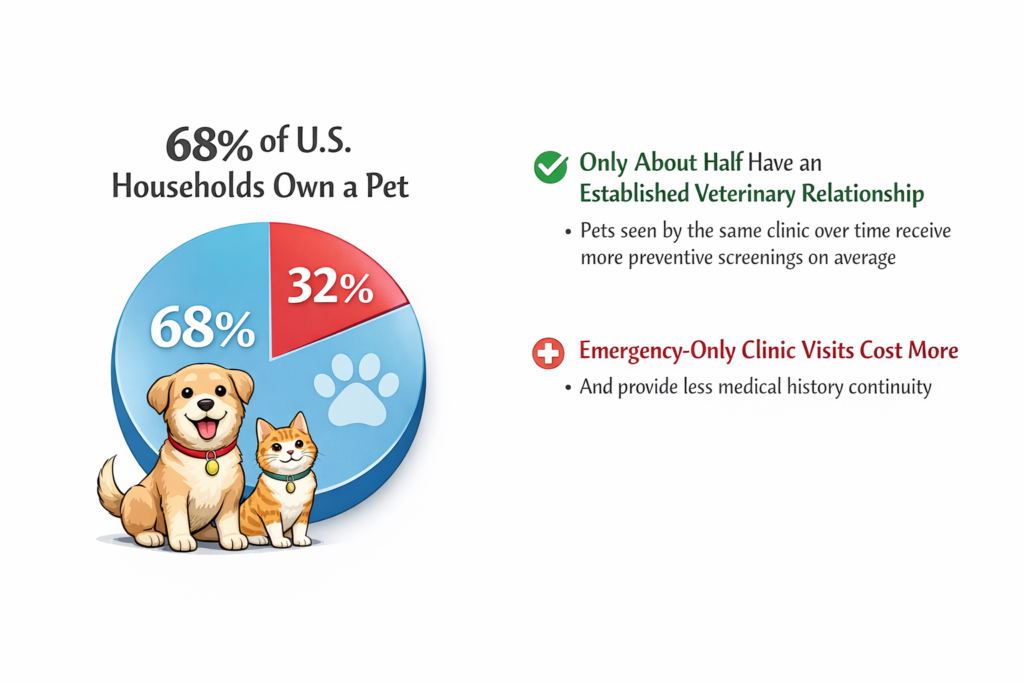
A 2023 report from the American Veterinary Medical Association found that pets with a consistent primary care veterinarian had significantly higher rates of preventive screening, earlier disease detection, and better long-term survival for chronic conditions. Bouncing between urgent-care clinics might fix the immediate problem, but it rarely catches what’s coming next.
What to Look For When Choosing a Veterinarian
Every clinic has a website. Not every clinic has the substance to back it up. Here’s what actually matters when you’re narrowing down your options.
Veterinary Credentials and Team Experience
Start with licensing. Every practicing veterinarian in California must be licensed by the Veterinary Medical Board, so that’s the baseline—not a selling point. What you actually want to dig into is the team’s years of practice, continuing education, and any additional certifications (like Fear Free, low-stress handling, or board-certified specialties).
Ask how long the lead veterinarian has been at that clinic. A practice with 10+ years of stable leadership tends to run tighter protocols and retain experienced technicians. Ask about their support staff, too—registered veterinary technicians (RVTs) are the backbone of patient monitoring, anesthesia, and post-op care.
Range of Services Under One Roof
Basic clinics handle wellness visits and vaccines. Full-service clinics handle everything from routine care to in-house diagnostics, surgery, dental procedures, dermatology, and trauma response. The difference becomes obvious the moment your pet needs something beyond a check-up.
If you’re evaluating the veterinary care services at Fremont Animal Clinic or any other practice, look for: wellness exams, vaccinations, in-house lab and pharmacy, pet surgery stockton ca, dental care, urgent care, and chronic disease management. Practices that refer out for every procedure will cost you time, money, and continuity.
Emergency Availability
Ask bluntly: What happens if my pet has an emergency during your open hours? What about after?
Some clinics triage walk-ins the same day. Others book you out two weeks. If you’re searching “emergency vet stockton” at 10 a.m. expecting help and the first available appointment is next Monday, that’s a gap worth knowing about before you’re in crisis mode.
A strong general-practice clinic should be able to handle urgent midday situations—sudden vomiting, wound care, eye injuries, suspected toxin ingestion—without sending you to a distant specialty hospital. For true after-hours emergencies, they should also give you a clear referral plan to a 24-hour facility.
Specialty Capabilities Beyond the Basics
Not every general practice performs surgery in-house. Fewer still handle orthopedic work. If you have a large-breed dog, a hunting dog, or an active rescue, orthopedic surgery animals stockton ca capabilities may matter more than you think. Cruciate ligament tears alone affect a significant share of large breeds over their lifetime, according to Cornell University College of Veterinary Medicine. Having a clinic that can diagnose and repair without a referral saves time when it counts.
Communication, Honesty, and Bedside Manner
Watch how the staff talks to you on your first call. Are they rushed? Do they explain things clearly? Do they answer questions without making you feel dumb for asking?
The best practices treat you like a partner in your pet’s care. The worst treat every question like an inconvenience. Pay attention to whether the vet walks you through options—including the cheaper ones—instead of pushing one path. That honesty compounds over years of visits.
Facility, Equipment, and Cleanliness
Stop in before you commit. Most clinics welcome short tours if you call ahead. You’re looking for:
- A clean, odor-controlled lobby
- Separate waiting areas for dogs and cats (ideal, not required)
- Visible infection-control practices
- Modern digital radiography, ultrasound, and anesthesia monitoring
- An in-house pharmacy so you can leave with medications the same day
- Calm, engaged staff—not frazzled or distracted
Technology matters, but so does the human feel. A spotless lobby with cold staff tells you one story. A slightly worn lobby with warm, attentive people tells you another. Pets notice both.
Questions Worth Asking Before You Book
Before your first appointment, call ahead and ask:
- How long have your veterinarians practiced here?
- Do you perform surgery and dental work on-site, or refer out?
- What’s your protocol for urgent midday cases?
- How do you monitor pets under anesthesia?
- Do you offer senior wellness or chronic disease management plans?
- What’s your approach to pain management after procedures?
- Can I meet the veterinarian for a short consultation before becoming a client?
The answers reveal how the practice actually operates—not just how it markets itself.
General Practice vs. Specialty Hospital: Which One Fits You
Most pet owners only need a general practice. Specialty hospitals exist for a reason, but they’re built for referrals, not relationships.
| Factor | General Vet Clinic | Specialty Animal Hospital |
|---|---|---|
| Best for | Routine care, preventive health, most surgeries | Complex referrals, rare conditions, advanced imaging |
| Cost | Generally more affordable | Typically higher per visit |
| Continuity of care | Strong—same team over time | Limited—usually single-case basis |
| Wait times | Same-week or same-day typical | Appointment-only, often weeks out |
| Relationship with your pet | Builds over years | Case-specific |
| Emergency handling | Urgent daytime cases | Complex trauma and 24/7 in select centers |
For 90% of pets, a well-equipped general practice handles everything they’ll ever need, referring to specialists only for rare situations. That’s the ideal setup—continuity with a safety net.
Red Flags That Should Make You Walk Away
Not every clinic earns your trust. Watch for these warning signs:
- Refusal to let you tour the facility before becoming a client
- Vague answers about credentials or staff experience
- Pushy upselling of services your pet doesn’t need
- Repeated staff turnover (check online reviews over time)
- Reluctance to explain costs before procedures
- Persistent bad-smell, visible dirt, or chaotic front desk
- Negative reviews describing rushed visits or missed diagnoses
One red flag isn’t a dealbreaker. A pattern is.
A Real Story: How the Right Choice Changed Everything
Milo, a 7-year-old neutered Pit Bull mix, had been limping on and off for months. His family had taken him to a budget walk-in clinic twice. Both times he was sent home with anti-inflammatories and a vague “probably a soft tissue strain” note. The limp kept coming back.
When they finally switched to an established local practice, a thorough orthopedic exam and digital radiographs revealed a partial cruciate ligament tear—plus early arthritis in both hips. The new team explained the options honestly: conservative management wouldn’t hold long-term, but surgical repair had a strong success rate for a dog his age.
Milo had stabilization surgery six weeks later. Pre-op bloodwork, multimodal pain management, continuous anesthesia monitoring, and a staged physical therapy plan followed. Ten weeks post-op, he was walking two miles a day without a limp. His family later said the hardest part wasn’t the surgery—it was realizing how long he’d been in pain before anyone actually looked for the cause.
The right vet finds what the wrong vet misses.
Why Local Pet Owners Stay with Fremont Animal Clinic
Our practice has served the Stockton community for nearly seven decades, and that longevity isn’t an accident. Families stay because the team knows their pets by name, explains every option clearly, and handles the hard conversations as carefully as the routine ones. You can read more about the services, technology, and advanced pet care at Fremont Animal Clinic and what makes a full-service facility different from a basic exam-room practice.
For a deeper look at what earns that long-term trust, our guide on why Fremont Animal Clinic is one of the most trusted vets in Stockton covers the team, the standards, and the patient outcomes that define the clinic’s reputation.
If you’re still weighing your options, call us at (209) 465-7291 or visit us at 2223 E Fremont St, Stockton, CA 95205. Whether you’re a first-time pet parent or transitioning from another practice, we’re happy to answer questions before you commit.
Frequently Asked Questions
-
How do I know if a vet is qualified to treat my pet?
Every licensed veterinarian in California must pass the North American Veterinary Licensing Examination and maintain continuing education. Beyond that, look for years of practice, specialty certifications, accreditation from the American Animal Hospital Association, and strong staff retention. A qualified vet explains their reasoning clearly, answers your questions without defensiveness, and builds a treatment plan based on your pet’s individual history rather than a generic protocol.
-
What should I do if my pet has an emergency during clinic hours?
Call the clinic first rather than driving over unannounced. That brief call lets the team prepare, alert the veterinarian, and clear exam space before you arrive. Describe the symptoms clearly—vomiting, bleeding, breathing issues, suspected toxin exposure, collapse, or trauma. Established clinics generally triage urgent cases ahead of scheduled appointments. For after-hours emergencies, always have the number of a 24-hour animal hospital saved in your phone before you ever need it.
-
How often should my pet see the vet for wellness exams?
Healthy adult dogs and cats typically need annual wellness exams with vaccination updates, parasite prevention, and a basic physical. Puppies and kittens need visits every three to four weeks until their vaccine series completes. Senior pets—generally dogs over seven years and cats over ten—benefit from twice-yearly exams because early detection of kidney, heart, dental, and joint issues dramatically improves long-term outcomes and quality of life.
-
Should I choose a vet close to home or one with better reviews farther away?
Both matter, but proximity becomes critical in emergencies. A highly-reviewed clinic 45 minutes away is no help when your dog ingests chocolate at dinnertime. A reasonable compromise: prioritize a well-reviewed clinic within 15 to 20 minutes of your home for primary care, and identify a backup 24-hour emergency hospital for after-hours crises. The best setup combines a strong local relationship with a clear emergency referral plan you’ve already mapped out.
-
Can I switch vets if I’m not happy with my current one?
Absolutely, and you don’t need to explain yourself. Request a copy of your pet’s medical records from your current clinic—federal and state rules require them to release records to you. Most practices email records directly to the new clinic within a few business days. Your pet’s history, vaccination timeline, and any ongoing treatment transfer cleanly so the new team can pick up where the old one left off without missing critical details.
The right veterinarian isn’t just someone who treats your pet when something goes wrong—they’re someone you trust to catch what’s coming next.