Published by Fremont Animal Clinic · Stockton, California Category: Pet Health & Surgery · Reading time: ~9 minutes
When you’re weighing pet surgery in Stockton CA, the first question most owners ask isn’t “which surgeon?”—it’s “does my pet actually need this?” That moment of worry is completely normal. Surgery is a big decision, and not every lump, limp, or bout of vomiting ends on an operating table. But when it does, knowing what your options are, what each procedure involves, and how it’s performed makes everything easier. This guide walks through the main types of surgery we handle at our Stockton clinic, who they’re for, and what recovery tends to look like in real life.
Whether your dog just tore a cruciate ligament chasing a ball, your cat swallowed something she shouldn’t have, or your puppy is due for a routine procedure, there’s a good chance one of the categories below applies to you.
Why Pets End Up Needing Surgery
Surgery isn’t the first line of treatment for most conditions—medications, diet changes, and rest usually come first. But there are situations where no amount of waiting will fix the problem. A mass keeps growing. A broken bone won’t heal on its own. An obstructed intestine can’t pass what’s stuck. In those cases, a skilled surgical team becomes the difference between a long recovery and a much shorter, more uncertain one.
According to the American Veterinary Medical Association, nearly one in three dogs and cats will need some form of surgical intervention at least once in their lifetime. That number climbs as pets age—seniors frequently develop tumors, dental disease, and joint problems that respond best to surgical care.
The Main Categories of Pet Surgery We Perform
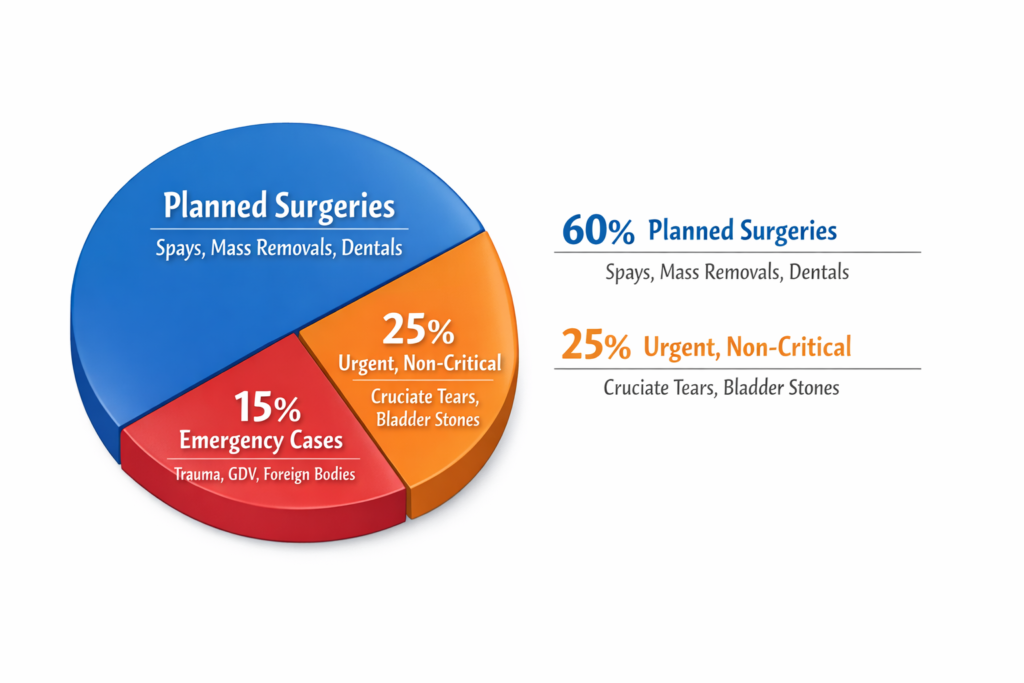
At our clinic, surgeries generally fall into six working categories. Some pets will only ever need one. Others—particularly senior dogs and cats—may need two or three different kinds over a lifetime.
Soft Tissue Surgery
Soft tissue procedures are by far the most common surgeries in small-animal medicine. They cover anything that doesn’t involve bone or joint work. Think mass removals, bladder stone extractions, gastrointestinal repairs, splenectomies, cherry eye corrections, hernia repairs, and wound reconstructions.
Most soft tissue cases are either scheduled in advance or escalated urgently after an exam. A dog that came in for a swollen abdomen may need exploratory surgery the same day. A cat with a slow-growing lump on her flank may be booked two weeks out. Recovery typically runs two to three weeks with activity restriction and suture care at home.
Orthopedic and Joint Surgery
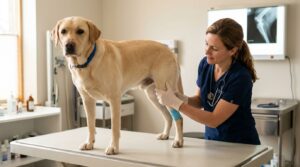
Orthopedic work deals with bones, joints, ligaments, and tendons. This is the field that handles orthopedic surgery animals stockton ca cases like fractures, ACL/CCL (cruciate ligament) tears, hip dysplasia, luxating patellas, and spinal issues. Cruciate ruptures in particular are one of the most frequent orthopedic surgeries performed on dogs in the United States—especially in larger breeds like Labradors, Rottweilers, and Golden Retrievers.
Procedures range from straightforward fracture stabilization with pins or plates, to more complex work like TPLO (tibial plateau leveling osteotomy), femoral head ostectomy for hip dysplasia, or arthroscopy for joint exploration. Recovery for orthopedic patients is longer—usually six to twelve weeks—with strict rest, rehabilitation, and staged return to activity.
Cancer and Mass Removal Surgery
Not every lump is cancer, but every lump deserves attention. Surgical biopsy and excision remain the gold standard for diagnosing and treating most solid tumors in pets. Whether it’s a mast cell tumor on a Boxer’s leg, a mammary mass on an older unspayed female, or an intra-abdominal growth on a senior cat, removal with clean margins often gives the best long-term outcome.
The American College of Veterinary Surgeons notes that early surgical intervention significantly improves prognosis for many common pet cancers, particularly when paired with histopathology and follow-up care. Cryosurgery is another tool we use for small skin masses and select growths, offering a less invasive alternative for appropriate cases.
Emergency and Trauma Surgery
Some surgeries can’t wait. Dogs hit by cars, cats who fall from windows, pets that swallowed a sock or a bone—these are the cases where hours matter. Emergency surgery addresses hemorrhage control, splenic ruptures, intestinal obstructions, bladder ruptures, diaphragmatic hernias, and gastric dilatation-volvulus (GDV, or “bloat”) in deep-chested dogs.
For time-critical situations, our emergency vet stockton team performs rapid triage, stabilization, and surgical intervention during clinic hours. Owners in the Central Valley searching an emergency vet near me at 2 p.m. on a weekday can often be seen the same day without the cost and travel of a specialty ER.
Spay and Neuter Procedures
Spay and neuter surgeries are the most common planned procedures in any general-practice clinic. Spaying (ovariohysterectomy) removes the ovaries and uterus in females; neutering (castration) removes the testicles in males. Both are performed under general anesthesia with full monitoring and take most pets home the same day.
Beyond preventing unwanted litters, these surgeries reduce the risk of mammary cancer, pyometra (a life-threatening uterine infection), testicular cancer, and several behavior-driven problems. The AAHA spay/neuter guidelines offer breed- and size-specific timing recommendations worth discussing with your veterinarian.
Dental Surgery
Dental surgery is the most underestimated category on this list. By age three, more than 80% of dogs and 70% of cats show signs of dental disease, according to the Veterinary Oral Health Council. Periodontal infections don’t stay in the mouth—they seed bacteria into the bloodstream and contribute to heart, kidney, and liver disease over time.
Dental surgery at a general-practice level includes professional cleaning under anesthesia, dental radiographs, tooth extractions, and oral mass biopsies. Pets typically go home the same day and return to normal eating within three to seven days.
Anesthesia and Patient Monitoring: The Quiet Half of Every Surgery
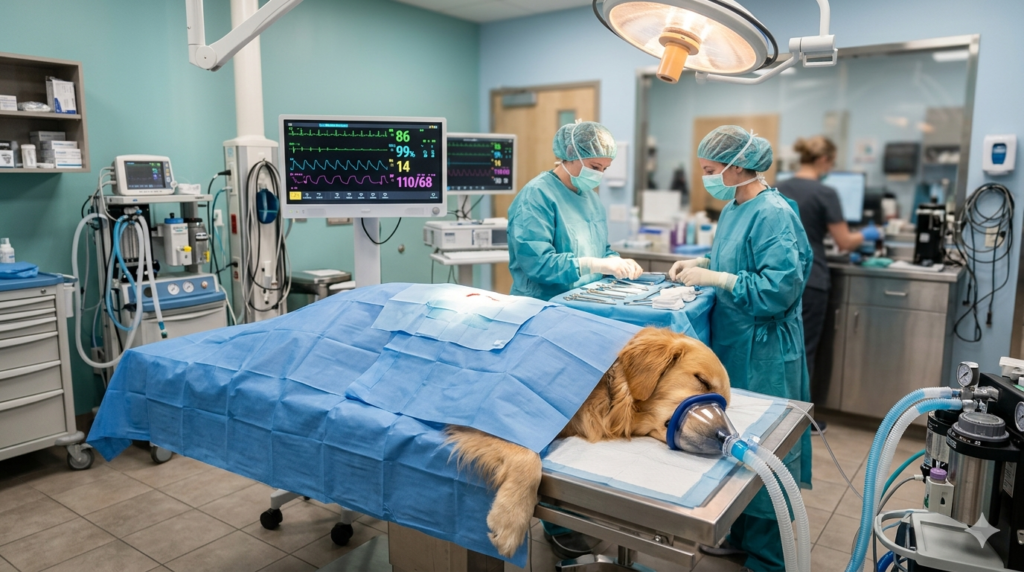
Most pet owners focus on the surgical procedure itself. We focus just as hard on what happens around it. Modern animal monitoring during surgery stockton ca standards require continuous tracking of heart rate, respiratory rate, blood pressure, blood oxygen (SpO2), end-tidal CO2, and body temperature throughout every anesthetic event.
Before anesthesia even begins, patients receive a physical exam and pre-anesthetic bloodwork. Protocols are tailored to the pet’s age, breed, weight, and medical history—a senior Chihuahua with a heart murmur is not managed the same way as a young Labrador. Warming blankets, IV fluid support, and dedicated veterinary technicians stay with the patient from induction to full recovery.
This is also why choosing a full-service clinic matters. Facilities that handle surgery in-house, from bloodwork to pharmacy to recovery, tend to catch small problems before they become big ones.
How Do You Know When Your Pet Actually Needs Surgery?
Owners often ask whether they’re overreacting or waiting too long. A few signs usually warrant a surgical consultation:
- A lump that’s growing, firm, or changing color—especially on older pets
- Persistent lameness lasting more than a week despite rest
- Chronic vomiting or diarrhea with weight loss
- Straining to urinate or defecate that doesn’t resolve
- Visible trauma, bleeding, or broken teeth after an accident
- A distended, painful abdomen that appeared suddenly
- Loss of appetite combined with lethargy for 48+ hours
If any of these describe your pet right now, don’t wait for your next wellness exam. Call us at (209) 465-7291 for same-day triage.
What to Expect Before, During, and After
The Day Before Surgery
You’ll be asked to withhold food from the evening prior (water is usually fine up until morning). Sedatives, long-term medications, and any known allergies should be reviewed with the team. For complex cases, an evening pre-op sedative may be prescribed to reduce anxiety.
The Day Of
Your pet checks in during morning intake, receives a final physical exam, and has an IV catheter placed. Anesthesia is induced with tailored medications, and the surgical site is clipped and sterilely prepped. Procedures typically run from 30 minutes (a straightforward neuter) to three or more hours (complex orthopedic repairs).
Recovery at Home
Most patients go home the same evening unless they require overnight observation. You’ll leave with pain medications, an e-collar (“cone”), wound care instructions, and a follow-up schedule. Activity restriction is the single hardest part of recovery for most families—and the single most important one for good outcomes.
A Real Case from Our Surgical Team
Bella, a 9-year-old spayed Labrador mix, came in last fall for progressive right-hind lameness her owners had chalked up to “old age.” On exam, the drawer sign was positive—she’d torn her cranial cruciate ligament. Radiographs also showed early arthritis and a small benign-looking mass on her opposite flank that her family hadn’t noticed.
We scheduled her for a combined procedure: stabilization of the torn ligament along with excisional biopsy of the skin mass during the same anesthetic event. Doing both at once spared Bella a second round of anesthesia and shortened total recovery time. Pre-op bloodwork, full multimodal pain management, and continuous monitoring guided the procedure from start to finish.
Ten weeks later, she was swimming again at her owners’ pond. The mass came back benign. Her owners later wrote, “We almost waited another six months—don’t make that mistake.”
Comparison Table: Common Pet Surgeries at a Glance
| Surgery Type | Common Reasons | Typical Urgency | Average Recovery |
|---|---|---|---|
| Soft Tissue | Masses, hernias, bladder stones, GI foreign bodies | Scheduled or urgent | 2–3 weeks |
| Orthopedic | CCL tears, fractures, hip dysplasia, luxating patella | Scheduled; urgent if acute | 6–12 weeks |
| Cancer / Mass Removal | Skin tumors, mammary masses, splenic tumors | Varies by diagnosis | 2–4 weeks |
| Emergency / Trauma | Hit-by-car, GDV, severe lacerations, intestinal blockage | Same day / immediate | Variable |
| Spay / Neuter | Routine reproductive, preventive health | Scheduled | 10–14 days |
| Dental Surgery | Extractions, periodontal disease, oral masses | Scheduled | 3–7 days |
Why Local Surgical Care Matters
Searching for an animal surgery near me isn’t just about convenience—it genuinely affects outcomes. Local care means faster follow-ups if something looks off after discharge. It means a surgeon who already knows your pet’s history from wellness visits. It means not putting an already-stressed animal through a two-hour drive to a specialty referral center when the same procedure can safely happen in town.
For Central Valley families, Stockton-based surgical care also means a familiar team that speaks your language (literally—bilingual staff help a lot of our Spanish-speaking clients feel more comfortable through tough decisions) and a location you can reach during a crisis without navigating Bay Area traffic.
Related Reading
If you want a broader look at how our team approaches advanced care, diagnostics, and in-house capabilities, our guide on the services and technology inside our clinic walks through what makes a full-service facility different from a basic exam-room practice.
Frequently Asked Questions
-
How do I know if my pet truly needs surgery or if medication can solve it?
That’s a call your veterinarian makes after a physical exam, diagnostic imaging like X-rays or ultrasound, and bloodwork. Some conditions—minor skin infections, early arthritis, simple gastritis—respond well to medication alone. Others, like torn ligaments, obstructive masses, or bladder stones, won’t resolve without surgery. We always walk owners through both paths, including expected outcomes, costs, and risks, so you can decide what feels right for your family.
-
Is anesthesia safe for older pets and brachycephalic breeds?
Modern veterinary anesthesia is remarkably safe when protocols are individualized. Senior pets and flat-faced breeds like Bulldogs, Pugs, and Persian cats do require extra precautions—pre-anesthetic bloodwork, tailored drug selection, close airway monitoring, and slower recovery. With proper screening, most senior pets tolerate anesthesia without issue. Age alone is not a disease, and many older patients do better after surgery than they did suffering silently beforehand.
-
How long does recovery take after pet surgery?
Recovery length depends on the procedure. A routine neuter usually means 10 to 14 days of restricted activity. Soft tissue surgeries average two to three weeks. Orthopedic procedures like cruciate repair can take six to twelve weeks with rehabilitation. Dental surgery is often the fastest, with pets eating soft food within 24 hours and fully recovered in under a week. Every patient goes home with a written recovery timeline specific to their procedure.
-
What happens if complications develop after surgery?
Minor swelling, mild bruising, and reduced appetite for 24 hours are normal. Concerning signs include bleeding through bandages, fever, persistent vomiting, a surgical site that opens, or sudden lameness after initial improvement. If anything feels off, call us first—most issues are easier to manage early. For urgent surgical concerns after discharge, our clinic schedules recheck appointments the same or next day whenever possible.
-
Do you handle joint replacement or only routine orthopedic work?
Our team performs a wide range of orthopedic procedures including fracture repair, cruciate stabilization, FHO for hip dysplasia, patellar luxation correction, and other joint-related surgeries. Highly specialized procedures such as total hip replacement are typically performed at dedicated orthopedic referral hospitals, and we’ll coordinate a referral whenever that level of specialization gives your pet a better outcome.
Surgery is never something you hope for, but when it’s the right call, having a local, experienced team changes the whole experience—for you and for your pet.