Finding the right vet near me is one of the first and most important decisions a pet owner makes, and in a city the size of Stockton the choices can feel overwhelming. Whether you searched for a veterinarian near me, a trusted animal hospital, or a clinic that can see your pet when something is wrong, this checklist breaks the decision into clear, practical criteria so you can choose with confidence for your dog or cat.
Why Your Choice of Vet Matters
Picking a veterinary practice is not a small errand. The clinic you choose becomes your partner for vaccinations, wellness checks, dental care, and the harder moments when your pet is sick or injured. The American Veterinary Medical Association suggests using the same care and criteria you would when selecting a physician or dentist, weighing location, services, and the team you feel comfortable building a long-term relationship with. Continuity is the quiet advantage here. When one team knows your pet’s full history, they spot subtle changes faster and make better decisions. That is why so many Stockton families put real thought into the search rather than simply booking the closest option that appears when they type “vets near me” into a phone.
The Full Checklist for Choosing a Vet Near You
Use these six criteria to compare any clinic on your shortlist. Strong practices tend to score well across all of them, not just one or two.
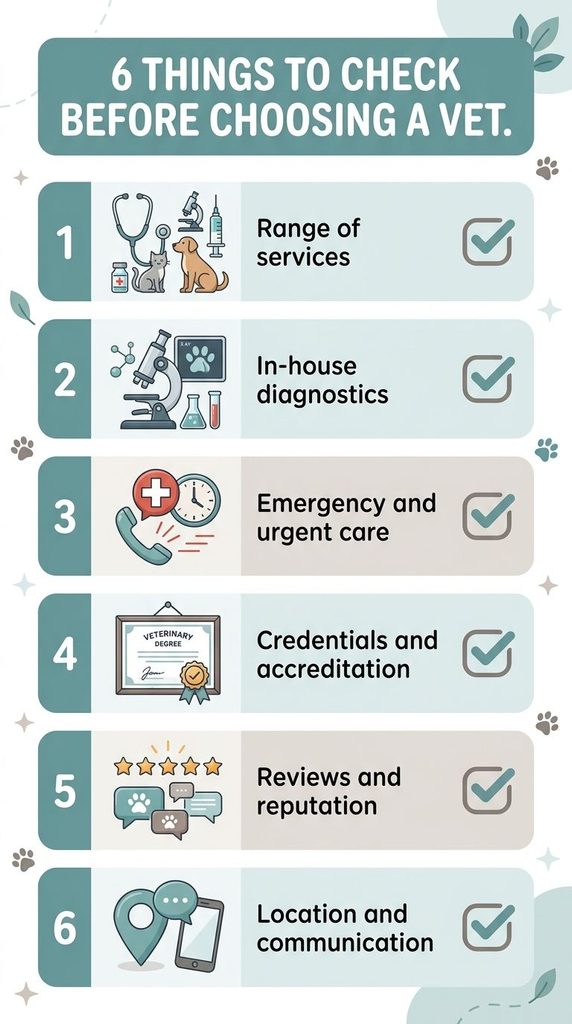
1. Range of Services Offered
Start with breadth. A full-service animal hospital handles wellness, dental, surgery, and urgent needs under one roof, while a limited clinic refers you elsewhere for anything beyond the basics. Look for a practice that offers:
- Routine preventive care and wellness exams for every life stage
- Vaccinations tailored to your pet’s age, lifestyle, and exposure risk
- Dental care, surgery, and chronic disease management
- Specialized services such as veterinary dermatology for skin, ear, and allergy problems
Having these available in one location means fewer trips across town and a smoother experience when your pet’s needs change.
2. In-House Diagnostics and Equipment
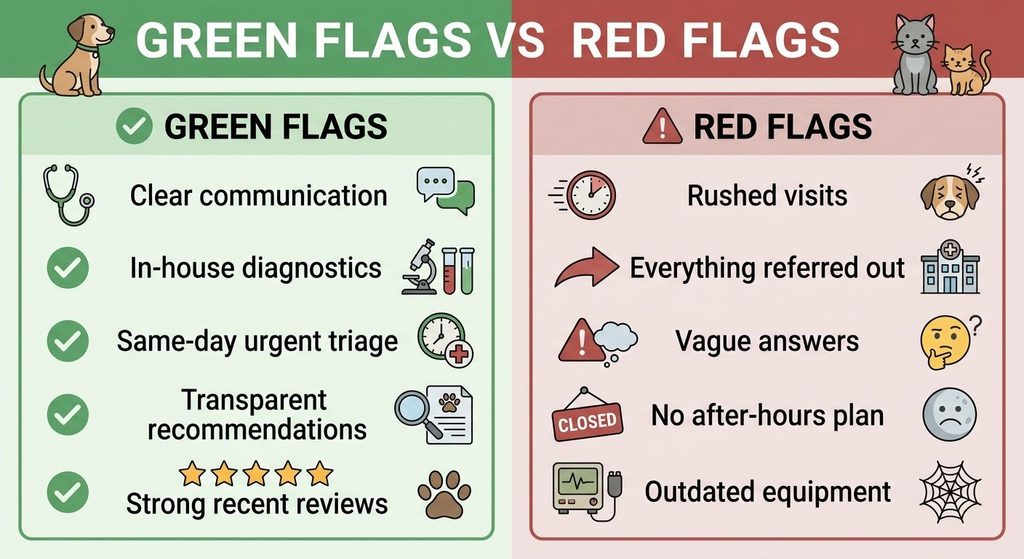
This is where clinics quietly differ. When a practice has to send blood work to an outside lab, results can take days. When tests run on-site, you often get answers during the same visit, which matters most during urgent situations. Ask whether the clinic has an in-house lab and imaging like x-ray and ultrasound. Faster diagnostics mean faster treatment decisions and less waiting during stressful moments.
3. Emergency and Urgent Care Availability
Emergencies rarely happen at convenient times. Ask how the clinic handles urgent cases during open hours and what it recommends for nights and weekends. Some searches for a walk in vet near me or a vet open near me lead owners to practices that triage same-day concerns, while others refer most emergencies to a dedicated hospital. Either arrangement can work, as long as you know the plan before you need it. Clarify who covers the practice when your regular veterinarian is unavailable.
4. Credentials, Accreditation, and Team Experience
Any licensed veterinarian can open a practice, so licensing is a floor, not a ceiling. Accreditation from the American Animal Hospital Association is a voluntary, third-party benchmark that evaluates a hospital against national standards for anesthesia, pain management, and record keeping. Not every excellent clinic is accredited, so its absence is not a red flag on its own. Still, it is worth asking how a practice maintains its standards, how long it has served the community, and who leads the veterinary team.
5. Reviews, Reputation, and Referrals
Online reviews give you a window into other owners’ real experiences. Read across Google, Yelp, and Facebook, and look for consistent patterns around communication, wait times, and follow-up rather than reacting to any single comment. Word-of-mouth referrals from neighbors, groomers, and local rescue groups carry weight too. A clinic that has earned steady praise as a reliable animal clinic near me over many years usually reflects a culture of care that new marketing cannot fake. For a deeper local comparison, our guide to the veterinarians near me in the Stockton area is a helpful starting point.
6. Location, Access, and Communication
Practical details shape whether you actually keep up with care. Consider drive time, parking, appointment availability, and how the team communicates. Do they explain findings in plain language? Can you reach them easily with follow-up questions? A convenient local veterinarian near me who also communicates clearly makes it far easier to stay consistent with the wellness visits that protect your pet’s long-term health.
Full-Service Hospital or Limited Clinic: How They Compare
Not every clinic is built the same way. The table below shows how a full-service animal hospital near me generally compares with a limited-service clinic so you can match the option to your needs.
| Consideration | Full-Service Animal Hospital | Limited-Service Clinic |
|---|---|---|
| Range of care | Wellness, dental, surgery, urgent care, and diagnostics in one place | Focused on a few services, refers out for the rest |
| Diagnostics | In-house lab and imaging for same-visit answers | Often sends samples to an outside lab |
| Continuity | One team knows your pet’s full history | Records may be split across several providers |
| Emergency handling | Stabilizes urgent cases during open hours | May redirect most urgent cases elsewhere |
| Best suited for | Owners wanting long-term, all-in-one care | One-time or single-service needs |
For a closer look at what a modern, well-equipped practice actually looks like behind the scenes, our overview of the clinic’s services, technology, and advanced pet care walks through the tools and workflow that separate a full-service hospital from a basic clinic.
Questions to Ask on Your First Visit
A short introductory appointment tells you more than any website. Come prepared with a few direct questions:
- What services do you handle in-house, and what do you refer out?
- Do you run lab work on-site, and how quickly are results available?
- How are urgent concerns handled during and after open hours?
- Who covers appointments when my regular veterinarian is away?
- How do you prefer to communicate results and follow-up plans?
A Stockton Owner’s Story: Finding the Right Fit
When Maria moved to Stockton with her senior Labrador, Rocky, and a young cat, she started the way most people do, typing a quick search for a dog vet near me and scanning the first few results. Instead of booking blindly, she used a checklist much like this one. She chose a full-service practice with an in-house lab, and it paid off within months. During a routine wellness exam, Dr. Satwinder Sahi noticed a small change in Rocky’s bloodwork that on-site testing confirmed the same day, allowing early treatment before it became serious. Because both of her pets were seen at the same hospital, their histories stayed in one place, and Maria never had to repeat herself across clinics. Her experience is a good reminder that the effort of choosing carefully upfront pays dividends for years.
Making Your Decision
Once you have compared your shortlist against these criteria, trust what the visits and reviews tell you. The right partnership with a veterinarian is built on regular checkups that catch problems early, clear communication, and a team you feel comfortable calling when something seems off. It also helps to educate yourself from trusted, non-commercial sources such as the canine health resources published by university veterinary centers. When you finally settle on the right vet near me, you are not just booking a single appointment; you are choosing the medical home that will guide your dog or cat through wellness, illness, and every stage in between. Families across Stockton trust the team at Fremont Animal Clinic, 2223 E. Fremont St., and you can reach the clinic at (209) 465-7291 to schedule an introductory visit and see how it measures up to your checklist. To explore everything a full-service practice offers, browse the clinic’s full range of veterinary services for the animal hospital near me in your neighborhood.
Frequently Asked Questions
-
How do I find the best vet near me in Stockton?
Start by listing full-service clinics within a reasonable drive, then compare them on services, in-house diagnostics, emergency coverage, and reviews. Read recent Google and Yelp feedback, check how long the practice has served the community, and call to ask about the team’s experience. A short introductory visit tells you a lot about communication and cleanliness. The right fit balances medical capability with a team you trust for the long term.
-
What services should a good vet clinic offer?
A strong general practice covers wellness exams, vaccinations, dental care, in-house diagnostics, surgery, and urgent care under one roof, plus specialized services like dermatology when needed. Having these available in one place means fewer referrals across town and better continuity of care. Ask whether lab work runs on-site, since same-visit results speed up treatment. Breadth of services is one of the clearest signals that a clinic can support your pet through every life stage.
-
How important are reviews when choosing a veterinarian?
Reviews offer a useful window into other owners’ experiences, especially patterns around communication, wait times, and follow-up care. Look for consistent themes rather than reacting to any single comment, and weigh recent reviews more heavily. Ratings across Google, Yelp, and Facebook together give a fuller picture than one platform alone. Pair online reputation with credentials and an in-person visit, since reviews reflect experience but not always medical quality on their own.
-
Should I choose a vet based on price alone?
Cost matters, but choosing a vet on price alone can backfire. A clinic that runs diagnostics on-site or catches problems early during wellness visits often saves money over time compared with repeated referrals or delayed care. Many owners search for an affordable vet near me, which is reasonable, yet the better question is overall value: capability, communication, and continuity. Focus on a practice that meets your pet’s medical needs and earns your long-term trust.
-
Does my vet need to be AAHA accredited?
Accreditation is not required, but it is a meaningful third-party signal. AAHA-accredited hospitals are evaluated against national standards for anesthesia, pain management, diagnostics, and record keeping that go beyond basic state licensing. Many excellent clinics are not accredited, so its absence does not mean poor care. Still, asking whether a practice is accredited, or how it maintains its standards, is a fair and informative question when choosing where to bring your pet.
-
When should I switch to a new veterinarian?
Consider switching if you consistently feel rushed, cannot get clear explanations, face long waits for urgent concerns, or the clinic refers out for routine procedures a full-service practice should handle. Trust and communication matter as much as medical skill. Before moving, request your pet’s full records so the new team has complete history. Finding the right long-term fit is worth the effort, since continuity of care improves outcomes across your pet’s life.
The best vet is the one your pet already knows and your family already trusts, long before an emergency ever tests the relationship.