

Common pet poisons are rarely found in a locked cabinet labeled with a skull and crossbones. Most of the time, they are sitting on a kitchen counter, growing in a backyard flower bed, or parked in the garage next to the lawnmower. Fremont Animal Clinic sees a steady stream of Stockton pets each year who got into something they should not have, and in nearly every case, the family had no idea the item was dangerous until it was too late.
This guide walks through the most common toxic exposures we see in the Central Valley, the warning signs to watch for, and what to do in the first few minutes after a suspected poisoning.
Common Pet Poisons Found in the Kitchen
The kitchen is one of the highest-risk rooms in the house, mostly because dogs are opportunistic counter surfers and cats are drawn to anything that smells sweet or fatty.
Chocolate Toxicity in Dogs
Chocolate contains theobromine and caffeine, two compounds dogs metabolize far more slowly than humans. Dark chocolate and baking chocolate carry the highest concentration and pose the greatest risk, while milk chocolate requires a larger amount to cause serious harm. Symptoms typically include restlessness, vomiting, an elevated heart rate, and in severe cases, tremors or seizures. The size of the dog and the amount and type of chocolate ingested both matter significantly when estimating risk.
Xylitol Poisoning in Dogs
Xylitol is an artificial sweetener found in sugar-free gum, some peanut butters, baked goods, and toothpaste. In dogs, it triggers a rapid, dangerous drop in blood sugar and can cause liver failure even in small amounts. Xylitol poisoning in dogs is one of the fastest-moving emergencies we treat, sometimes producing symptoms within thirty minutes of ingestion, including weakness, disorientation, and collapse.
Grapes and Raisins Toxic to Dogs
Grapes and raisins toxic to dogs is a reality that still surprises many pet owners, since the exact toxic compound remains unidentified by veterinary researchers. What is well documented is the outcome: even a small quantity can trigger acute kidney failure in some dogs, while others show no reaction at all, making it impossible to predict which dogs are vulnerable. Because there is no way to know in advance, any ingestion of grapes or raisins warrants a call to your veterinarian.
Common Pet Poisons in the Garden and Yard
Central Valley landscaping often includes ornamental plants that look harmless but carry serious risk, particularly for households with cats.
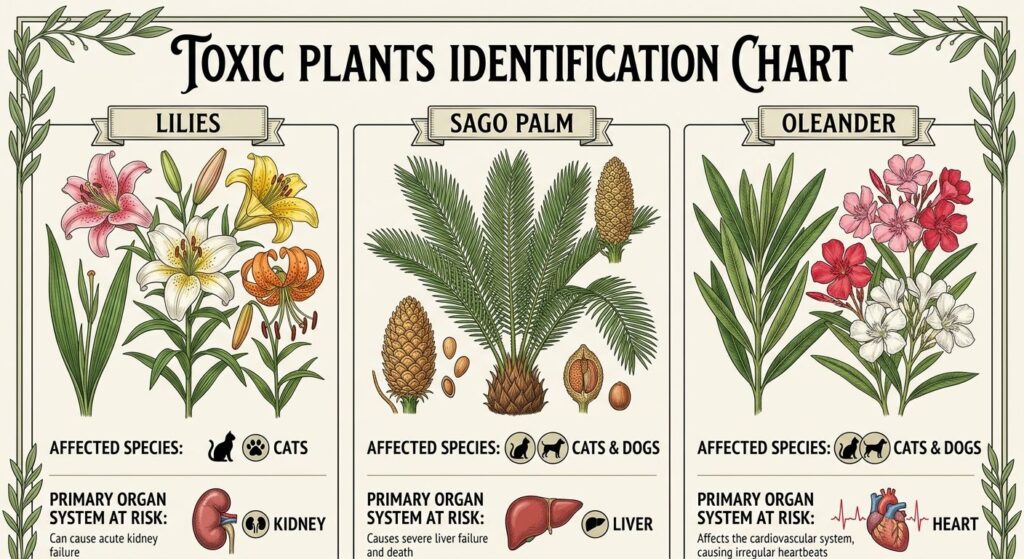
Lilies Toxic to Cats
Lilies toxic to cats represent one of the most severe plant exposures in veterinary medicine. Every part of the plant, including the pollen and the water in a vase, can cause acute kidney failure in cats. Even minimal exposure, such as grooming pollen off fur, has been linked to life-threatening kidney damage. Dogs are far less sensitive to lilies, but cat-owning households should avoid keeping any lily species indoors or in reach of the yard.
Sago Palm Poisoning Dogs
Sago palms are a popular ornamental plant in Stockton landscaping, and every part of the plant is toxic, with the seeds carrying the highest concentration of toxin. Sago palm poisoning dogs experience typically involves vomiting and lethargy within hours, progressing to liver failure if untreated. This is considered one of the most dangerous common landscaping plants for dogs in California.
Oleander Poisoning Dogs
Oleander is a common hedge and roadside plant throughout the Central Valley, prized for its drought tolerance. Every part of the plant contains cardiac glycosides that affect heart rhythm. Oleander poisoning dogs experience can progress quickly from vomiting and drooling to irregular heartbeat and collapse, making it a true emergency rather than a wait-and-see situation.
Common Pet Poisons Around the House and Garage
Beyond food and plants, several household and garage products send Stockton pets to the clinic every year.
Snail Bait Poisoning Dogs
Snail and slug bait containing metaldehyde is widely used in Central Valley gardens during the wet season, and it is highly attractive to dogs due to its sweet smell. Snail bait poisoning dogs experience typically develops within an hour and can include severe muscle tremors, seizures, and a dangerously elevated body temperature. This is considered a true veterinary emergency requiring immediate treatment.
Rodenticide Poisoning in Dogs
Rat and mouse bait comes in several different active ingredients, and the treatment approach depends entirely on which type was ingested. Some formulations interfere with blood clotting and cause internal bleeding days after exposure, while others affect the brain or calcium levels much more rapidly. Rodenticide poisoning in dogs is particularly dangerous because symptoms can be delayed, which is why bringing the product packaging to your veterinary visit is critical for identifying the correct treatment.
Antifreeze Poisoning in Pets
Antifreeze has a sweet taste that both dogs and cats find appealing, even in tiny amounts spilled in a driveway or garage floor. Antifreeze poisoning in pets is caused by ethylene glycol, which converts into crystals that cause severe, often irreversible kidney damage. Early signs can resemble drunkenness, including wobbling and disorientation, followed by a deceptive period of apparent improvement before kidney failure sets in. Time is critical, since treatment is most effective within the first few hours of exposure.
Marijuana Ingestion in Dogs
With legal cannabis products more widely available in California, marijuana ingestion in dogs has become an increasingly common presentation at veterinary clinics. Edibles pose an added risk because they often also contain chocolate or xylitol. Affected dogs typically show wobbliness, dribbling urine, extreme sedation, or sensitivity to light and sound. While rarely fatal on its own, marijuana ingestion can cause dangerously low heart rate and body temperature in large doses and always warrants veterinary evaluation.
Signs of Poisoning in Dogs and Cats to Watch For
Recognizing the signs of poisoning in dogs and cats quickly can make a meaningful difference in outcome. Watch for:
- Sudden vomiting or dog vomiting and diarrhea that starts abruptly without an obvious cause
- Tremors, twitching, or seizures
- Excessive drooling or foaming at the mouth
- Wobbling, disorientation, or apparent drunkenness
- Rapid or irregular heartbeat
- Pale or yellow-tinted gums
- Sudden lethargy or collapse
- Loss of appetite paired with restlessness
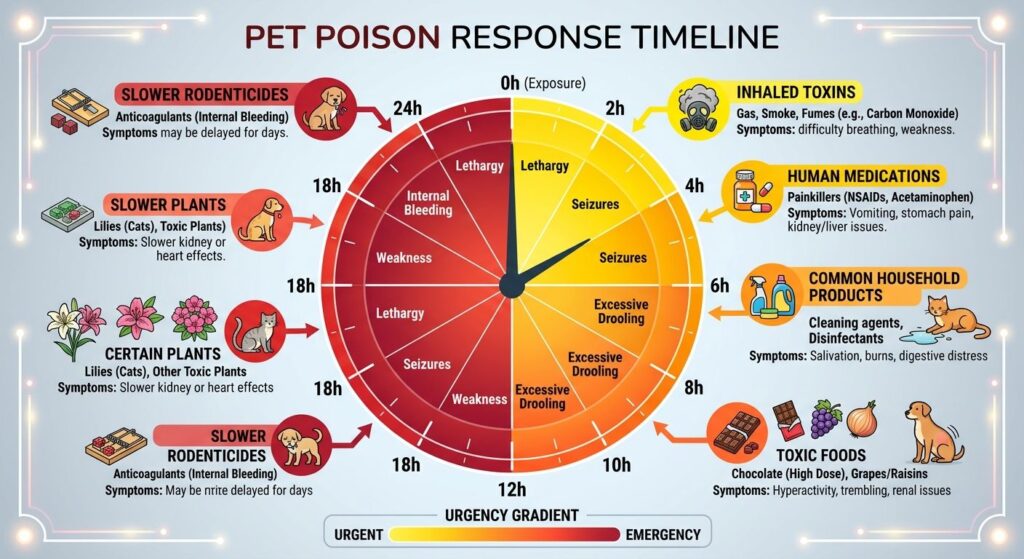
Comparing Common Poison Categories
| Poison Category | Typical Onset | Primary Organ Affected | Urgency Level |
|---|---|---|---|
| Chocolate and caffeine | 1 to 4 hours | Heart, nervous system | Urgent |
| Xylitol | 30 minutes to 1 hour | Liver, blood sugar | Emergency |
| Grapes and raisins | Hours to 2 days | Kidneys | Urgent |
| Lilies (cats only) | Hours to 3 days | Kidneys | Emergency |
| Sago palm | 1 to 12 hours | Liver | Emergency |
| Oleander | 1 to 4 hours | Heart | Emergency |
| Snail bait | 30 minutes to 2 hours | Nervous system | Emergency |
| Rodenticide | Hours to several days | Blood clotting, nervous system | Emergency |
| Antifreeze | 30 minutes to several hours | Kidneys | Emergency |
| Marijuana | 30 minutes to 3 hours | Nervous system | Urgent |
Real Patient Story: Max’s Chocolate Emergency
Max, a five-year-old beagle mix, found an unattended box of dark chocolate truffles left on a counter during a family gathering. Within two hours, his owners noticed him panting heavily, pacing restlessly, and trembling. They called Fremont Animal Clinic immediately and were able to describe the type and approximate amount of chocolate consumed, along with Max’s weight.
Because the family acted quickly and brought Max in the same afternoon, our veterinary team was able to induce vomiting and administer activated charcoal before the toxin fully absorbed into his system. Max was monitored for cardiac symptoms for several hours and recovered fully by the next morning. His case is a clear example of how quickly identifying the exposure and calling right away, rather than waiting to see if symptoms worsened, changed the outcome.
What to Do If You Suspect Poisoning
If you believe your pet has ingested something toxic, staying calm and acting quickly gives your veterinary team the best chance of helping.
- Remove your pet from the source of the poison immediately
- Collect the packaging, plant material, or any vomit for identification, since this speeds up treatment decisions
- Do not induce vomiting or give home remedies unless specifically instructed by a veterinarian, since some substances cause more damage coming back up
- Call your veterinarian, ASPCA Animal Poison Control, or Pet Poison Helpline right away
- Note the time of exposure and your pet’s approximate weight, since both affect treatment calculations
Some poisoning cases, particularly those involving ingested foreign material or severe internal damage, require emergency pet surgery to remove the substance or repair internal injury. Acting within the first hour after exposure gives your veterinary team the widest range of treatment options.
When to Seek Emergency Care in Stockton
Not every exposure requires a middle-of-the-night emergency room visit, but many do. If your pet is showing any of the signs of poisoning in dogs and cats listed above, do not wait for symptoms to worsen.
During business hours, Fremont Animal Clinic provides pet urgent care near me services for Stockton families dealing with a suspected poisoning, along with in-house diagnostics to assess organ function quickly. For trauma or rapidly progressing symptoms such as seizures or collapse, our team also provides emergency vet near me stabilization support. If you are searching for an emergency vet in Stockton outside our regular hours, our guide on choosing a trusted local vet outlines what to look for and what to expect from after-hours referral options.
Central Valley pet owners dealing with seasonal outdoor hazards may also find our guide on foxtails and other outdoor risks useful, since spring and summer bring both plant toxins and physical injury risks at the same time. For broader guidance on recognizing when a symptom needs same-day attention, our complete pet care guide for Stockton families covers additional warning signs worth knowing.
Ultimately, understanding common pet poisons and acting on the earliest warning signs is one of the most effective ways to protect your dog or cat from a preventable emergency.
Frequently Asked Questions
-
What are the most common pet poisons in Stockton households?
The most frequent exposures we treat include chocolate, xylitol found in sugar-free gum and peanut butter, grapes and raisins, and household medications left within reach. Seasonally, snail bait and toxic garden plants like sago palm and oleander become more common as Central Valley families spend more time outdoors and gardening in spring and summer months.
-
What are the first signs of poisoning in dogs?
Early signs often include sudden vomiting, drooling, tremors, wobbliness, or a rapid change in behavior such as restlessness or unusual quietness. Some poisons cause immediate symptoms within thirty minutes, while others, like certain rodenticides, may not produce visible signs for a day or two. Any sudden, unexplained change in behavior after possible exposure warrants a call to your veterinarian.
-
Are lilies really that dangerous to cats?
Yes. Lilies toxic to cats are considered one of the most severe plant exposures in veterinary medicine, capable of causing acute kidney failure from even minimal contact, including pollen on fur. There is no safe amount of lily exposure for cats, so households with cats should avoid keeping any lily species indoors or in bouquets brought into the home.
-
Can dogs recover from eating rat poison?
Recovery from rodenticide poisoning in dogs depends heavily on which active ingredient was ingested and how quickly treatment begins. Some formulations respond well to prompt veterinary intervention, including vitamin K therapy for blood-clotting types, while others require more intensive supportive care. Bringing the product packaging to your veterinary visit significantly improves the speed and accuracy of treatment.
-
Is marijuana ingestion in dogs an emergency?
Marijuana ingestion in dogs is rarely fatal on its own, but it still warrants prompt veterinary evaluation, particularly if the dog consumed an edible product that may also contain chocolate or xylitol. Affected dogs can become dangerously sedated with a low heart rate and body temperature, so monitoring at a veterinary clinic is recommended rather than waiting it out at home.
-
What should I do first if my pet eats something toxic?
Remove your pet from the source, collect any packaging or plant material for identification, and call your veterinarian or a pet poison control hotline right away. Do not attempt to induce vomiting at home without professional guidance, since some substances cause additional harm if brought back up. Acting within the first hour gives your veterinary team the most treatment options.
Knowing the common pet poisons in your own home and yard is one of the simplest ways to prevent an emergency before it starts.