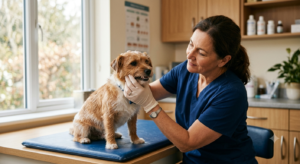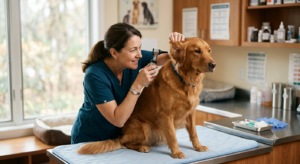
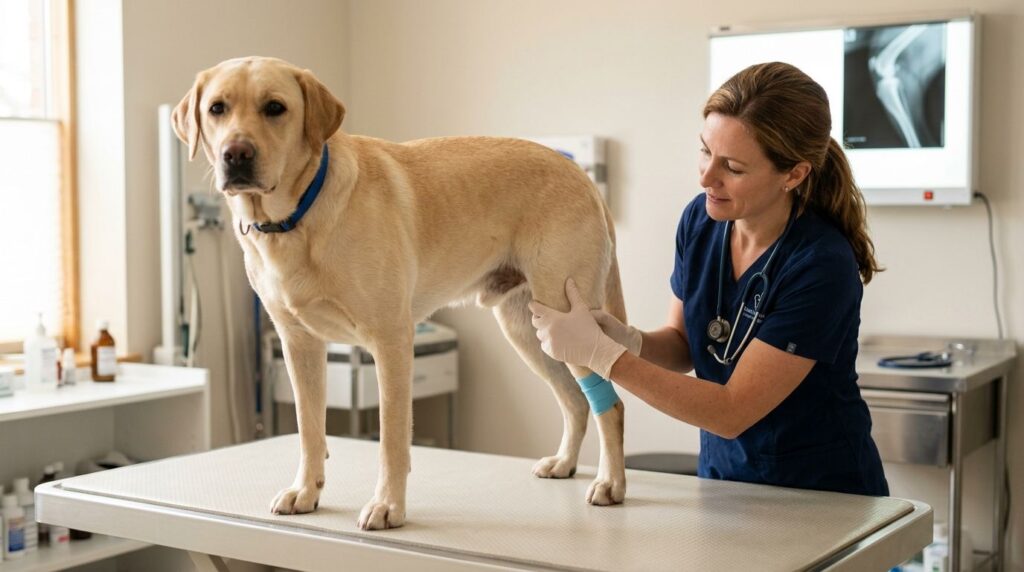
Pet orthopedic surgery covers the repair of bones, joints, ligaments, and tendons when injury or disease changes the way your dog moves. A limping dog is one of the most common reasons families look for a veterinarian near me in Stockton, and the cause often traces back to a torn ligament, a broken bone, or a joint that has quietly worn down over years. This guide walks through the conditions we treat most, how they are diagnosed, the procedures that fix them, and what recovery actually looks like once your dog is home.
What Orthopedic Surgery Treats
Orthopedic work is the branch of veterinary surgery focused on the musculoskeletal system: the skeleton and everything that holds it together and moves it. That includes fracture repair, ligament and tendon reconstruction, joint stabilization, correction of developmental deformities, and removal of bone tumors. Some cases arrive as emergencies after a car accident or a bad fall. Others build slowly, starting as an occasional limp that owners assume is a pulled muscle. Both belong in the same specialty because both come down to restoring structure and function to a limb.
Most orthopedic procedures happen under general anesthesia with continuous monitoring of heart rate, blood pressure, and oxygen levels. Advanced imaging, usually digital x-rays and sometimes CT, maps the problem before a single incision is made. The goal is never just to close a wound. It is to give the leg back its job.
Common Orthopedic Conditions in Dogs
Cranial Cruciate Ligament (ACL/CCL) Tears
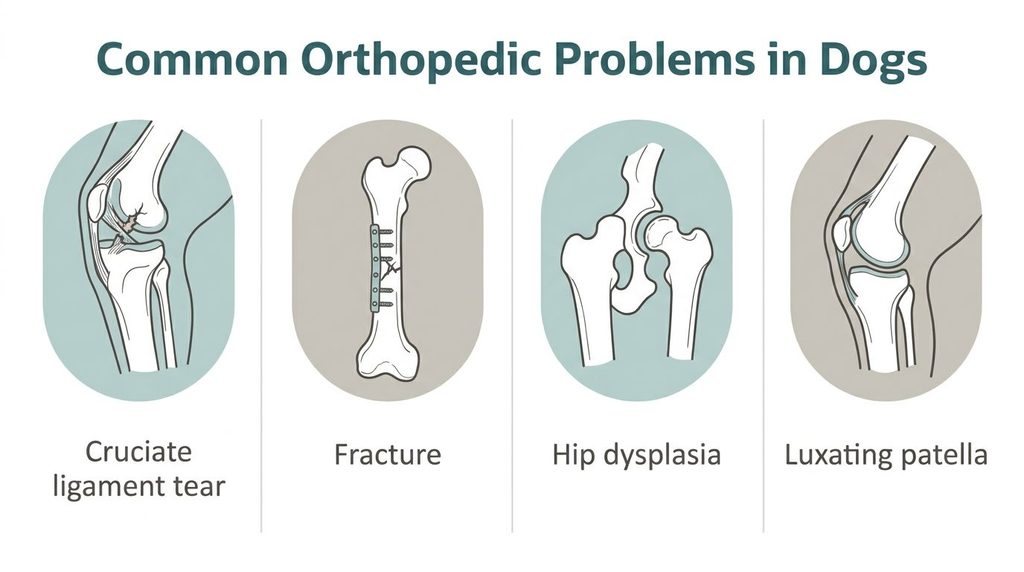
The canine equivalent of a human ACL injury is a torn cranial cruciate ligament, and it is the single most frequent orthopedic problem we see in dogs. Unlike the sudden sports tear most people picture, the majority of canine cruciate ruptures come from slow degeneration of the ligament that finally gives way during ordinary activity. The American College of Veterinary Surgeons notes that partial tears almost always progress to full ruptures over time, which is why early evaluation matters so much. Larger breeds like Labradors, Rottweilers, and Golden Retrievers are overrepresented, though any dog can be affected. The warning signs are hard to miss: sudden hind-leg lameness, trouble rising, and a clear reluctance to bear weight on one back leg.
Fractures and Trauma Injuries
Broken bones in dogs usually follow trauma, whether a car strike, a fall from height, or a rough collision at the park. Fractures range from clean breaks that heal with a plate and screws to shattered, multi-piece injuries that need careful reconstruction. Open fractures, where bone has pierced the skin, are surgical emergencies because of the infection risk. If your dog has just been injured and cannot use a limb, that is the moment to call an emergency vet near me rather than wait and watch.
Hip Dysplasia
Hip dysplasia is an inherited condition where the hip joint forms loosely, so the ball and socket grind instead of gliding smoothly. Over the years that looseness produces arthritis, pain, and a distinctive sway or bunny-hop gait. Cornell’s Riney Canine Health Center explains that predisposed breeds should be screened for hip laxity early, since several joint-preserving procedures work best before severe changes set in. For advanced cases, surgical options range from femoral head removal to total hip replacement.
Luxating Patella
A luxating patella is a kneecap that slips out of its groove, and it is common in small and toy breeds. Owners often describe a dog that skips for a few steps, then walks normally once the kneecap pops back into place. Mild grades may be managed without surgery, but higher grades cause ongoing lameness and cartilage damage. The ACVS reports that more than ninety percent of owners are satisfied with their dog’s progress after corrective surgery.
Other Joint and Bone Problems
Elbow dysplasia, osteochondritis dissecans, spinal disc disease, and bone tumors round out the orthopedic caseload. Each follows its own path, but the theme stays consistent: a structural problem in the skeleton that surgery can often correct or relieve.
How We Diagnose Orthopedic Problems
Diagnosis starts with the story and the walk. A careful history tells us whether the limp came on suddenly or crept in over weeks, and watching your dog move reveals which limb is affected and which part of the stride hurts. Hands-on palpation checks for pain, swelling, instability, and telltale findings like cranial drawer motion in a cruciate-deficient knee. From there, radiographs confirm the picture. Because clean positioning needs a still patient, dogs are usually sedated for orthopedic x-rays. When more detail is required, CT or a referral for MRI fills in the gaps. Working with an experienced orthopedic surgeon near me means the diagnosis drives the surgical plan rather than the other way around.
Surgical Procedures and Techniques
Cruciate Repair: TPLO and TTA
For cruciate disease in medium and large dogs, the leading procedures reshape the mechanics of the knee instead of trying to replace the ligament outright. Tibial plateau leveling osteotomy (TPLO) and tibial tuberosity advancement (TTA) both change the angle of force across the joint so the knee stays stable during weight-bearing. Smaller dogs may do well with suture-based techniques that mimic the intact ligament. You can see how these fit alongside other operations in our overview of the types of pet surgery performed at the clinic.
Fracture Repair
Fracture repair uses internal fixation such as plates, screws, pins, and interlocking nails, or external fixators, depending on the break. The aim is rigid, stable alignment that lets bone heal in the correct position. Simple fractures may knit in a matter of weeks, while complex reconstructions take longer and need staged recheck x-rays to confirm healing.
Joint Surgery
Joint procedures include arthroscopy for a minimally invasive look inside and cleanup, femoral head ostectomy for painful hips, and joint replacement in select patients. These are the operations that separate a full-service surgical practice from a clinic that refers everything out. Our pet surgery in Stockton team handles a broad range of these procedures in-house.
Surgery or Conservative Management: How the Options Compare
Not every orthopedic problem goes straight to the operating table. Some dogs, especially small ones with partial injuries, improve with rest, weight control, and rehabilitation. The table below shows how the two paths generally compare.
| Consideration | Surgical Repair | Conservative Management |
|---|---|---|
| Best suited for | Complete tears, unstable fractures, higher-grade luxations, larger or active dogs | Partial injuries, mild grades, very small dogs, patients that cannot safely undergo anesthesia |
| Typical recovery | Six to twelve weeks of staged rehabilitation | Ongoing management over months, sometimes indefinitely |
| Long-term outcome | High rate of return to normal function | Variable, may leave residual lameness or progress to arthritis |
| Return to activity | Structured, predictable timeline | Slower and less certain |
| Main goal | Restore mechanical stability to the joint or bone | Control pain and slow progression |
Recovery and Aftercare
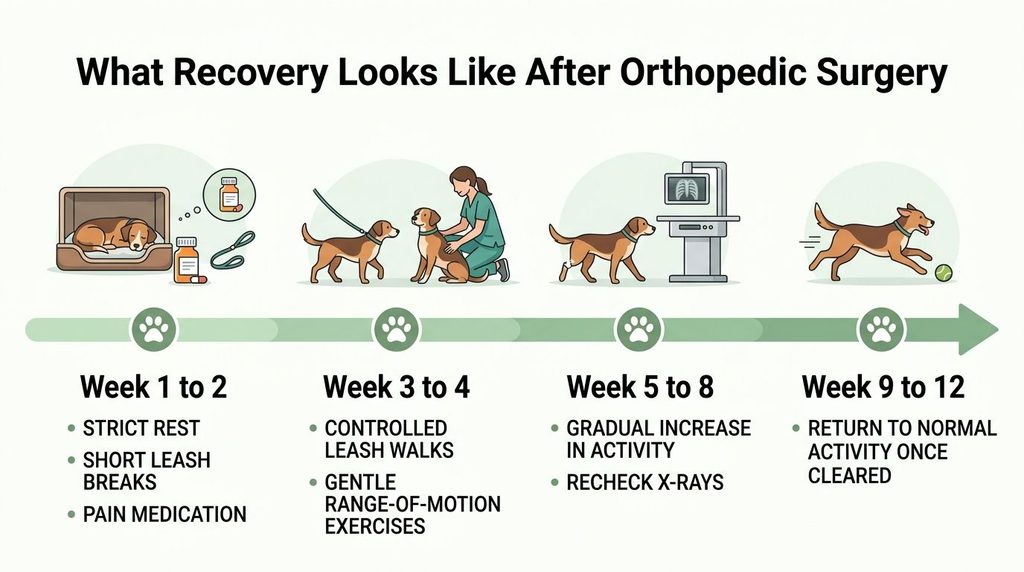
Recovery is where an orthopedic case is won or lost. Most patients need strict activity restriction for several weeks, controlled leash walks in place of free running, and a slow, staged return to normal life. Cruciate and fracture cases often run six to twelve weeks before full clearance. Pain management sits at the center of it all: the 2022 AAHA pain management guidelines place joint stabilization and rehabilitation among the most effective tools for chronic orthopedic pain, alongside physical modalities like laser therapy and controlled exercise. Keeping your dog lean protects both the repair and the other three legs. Every patient should go home with a written recovery timeline, and any sudden change, new swelling, or return of lameness is worth a same-day call. For the broader home-care habits that support healing, our complete guide to pet care in Stockton makes a useful companion read.
Patient Story: Bella’s Road Back
Bella, a six-year-old Labrador, came in barely touching her right hind leg to the ground after a weekend of enthusiastic fetch. Dr. Satwinder Sahi found a positive drawer sign on the exam, and radiographs confirmed a cranial cruciate rupture. Bella had a TPLO, went home later that week with a strict rest plan, and her family kept her to short leash walks and gentle range-of-motion work. By week eight she was trotting in the yard, and by her final recheck she was back to full activity with no visible limp. Her story is typical of what timely surgery paired with disciplined aftercare can do, and it is exactly the kind of outcome that keeps active dogs mobile well into their senior years.
When to See a Vet for Orthopedic Care
Persistent limping, reluctance to jump or climb stairs, a leg held off the ground, swelling around a joint, or a sudden yelp during play all deserve a professional look. Orthopedic problems rarely improve on their own, and early treatment usually means simpler surgery and a faster recovery. If you are weighing your options, our guide to choosing a trusted vet in Stockton can help you ask the right questions. For sudden, severe injuries, do not wait for a scheduled slot, since pet urgent care near me exists for exactly these moments. When your dog needs pet orthopedic surgery, the difference between a strong result and a lasting limp often comes down to how quickly the problem is diagnosed and how carefully the recovery is managed. Families across Stockton trust the team at Fremont Animal Clinic, 2223 E. Fremont St., to guide them through every step, and you can reach the clinic at (209) 465-7291 to start that conversation.
Frequently Asked Questions
-
How do I know if my dog needs orthopedic surgery?
Persistent limping, a leg held off the ground, difficulty rising, or reluctance to jump often point to an orthopedic issue rather than a simple strain. A veterinary exam with x-rays confirms whether the cause is a torn ligament, a fracture, or joint disease. Surgery becomes the recommendation when the joint is unstable or the bone cannot heal in proper alignment on its own. An early evaluation gives your dog the best odds of a complete recovery.
-
What is the recovery time after orthopedic surgery in dogs?
Recovery depends on the procedure. Cruciate repairs and most fractures need roughly six to twelve weeks of restricted activity, with controlled leash walks replacing free running until the vet clears your dog. Soft-tissue and minor joint procedures often recover faster. Throughout that window, weight control, pain medication, and gradual rehabilitation protect the repair. Rushing the process is the most common cause of setbacks, so following the written recovery plan closely produces the strongest result.
-
Is orthopedic surgery painful for dogs?
Modern veterinary orthopedics treats pain aggressively before, during, and after the procedure. Dogs are fully anesthetized for surgery and go home with a tailored pain-management plan that may combine anti-inflammatory medication, additional analgesics, and rehabilitation. Most dogs grow noticeably more comfortable within days as the underlying instability is corrected. Some soreness at the surgical site is normal early on, but ongoing or worsening pain should always prompt a call to your veterinary team.
-
Can a torn ACL in a dog heal without surgery?
A fully torn cranial cruciate ligament does not reattach or heal on its own. Small dogs with partial tears sometimes stabilize with strict rest, weight loss, and physical therapy, but larger and active dogs usually stay lame without surgical correction. Left untreated, an unstable knee develops arthritis and often damages the meniscus, which makes later surgery more complex. That is why prompt diagnosis matters, even when a conservative trial is worth attempting first.
-
What breeds are most prone to orthopedic problems?
Large and giant breeds such as Labradors, Rottweilers, German Shepherds, and Golden Retrievers face higher rates of cruciate disease and hip dysplasia. Small and toy breeds, including Chihuahuas, Pomeranians, and Yorkshires, are more prone to luxating patellas. Rapid-growing puppies of large breeds also carry risk for developmental joint disease. Genetics, body weight, and activity all play a part, so keeping any dog at a lean body condition helps protect its joints over a lifetime.
-
How soon should I bring my dog in after a limp starts?
A mild limp that resolves within a day of rest can be monitored, but any limp lasting more than 24 to 48 hours, or one paired with swelling, a held-up leg, or obvious pain, deserves a same-day visit. Sudden non-weight-bearing lameness after trauma is urgent. Catching orthopedic problems early usually means a simpler procedure and a shorter recovery, while waiting often lets a partial injury turn into a complete one.
At Fremont Animal Clinic, every limping dog gets the same goal: back on four steady legs, and back to the life they love.