Affordable puppy care comes down to one simple idea: the illnesses that cost new owners the most, like parvo, worm infections, and a lost dog with no ID, are almost always preventable when you know what is due and when. Whether you just brought home a rescue or are still choosing a name, finding a puppy vet near me and booking that first exam early is the single best step you can take. This guide lays out the whole first year in order, from the first checkup to the first birthday, so nothing sneaks up on you or your budget.
Why a First-Year Plan Is the Most Affordable Choice
Puppies are not small adult dogs. Their immune systems are still building, they pick up parasites easily, and they explore the world with their mouths. That combination makes the first twelve months the most important stretch of your dog’s health, and the period where skipped steps cause the biggest problems later.
A plan does two things for your budget. It spreads routine care across the year in small, expected visits, and it keeps preventable conditions from turning into emergencies. The difference shows up clearly when you compare the two approaches side by side.
| Planned First Year | Reactive First Year |
|---|---|
| Vaccine series completed on schedule | Gaps in boosters leave the puppy exposed to parvo and distemper |
| Deworming started early and repeated | Worm burden causes diarrhea, poor growth, and possible spread to people |
| Monthly parasite prevention from the start | Flea infestations and heartworm risk build quietly |
| Microchip placed and registered | A lost puppy with no permanent ID |
| Spay or neuter timed with your vet | Unplanned litters or rushed decisions later |
| Problems caught at routine visits | Problems found during an urgent visit |
New Puppy Checklist: What to Have Ready Before Day One
A little preparation before your puppy comes home saves stress and prevents the most common first-week accidents. Use this new puppy checklist as a starting point:
- Records from the breeder, shelter, or rescue: Vaccine dates, deworming history, and any medications given so far
- The same food your puppy was eating: Switch gradually over a week or so to avoid an upset stomach
- A properly sized crate: Big enough to stand and turn around, small enough to support house training
- Collar with an ID tag and a lightweight leash: Even before the microchip is placed
- Chew toys made for puppies: Safe outlets for teething
- Puppy-proofed rooms: Cords tucked away, trash secured, and medications, cleaning products, and common household poisons stored out of reach
- Completed paperwork: Filling out our new patient forms ahead of time shortens your first visit
Your Puppy’s First Vet Visit
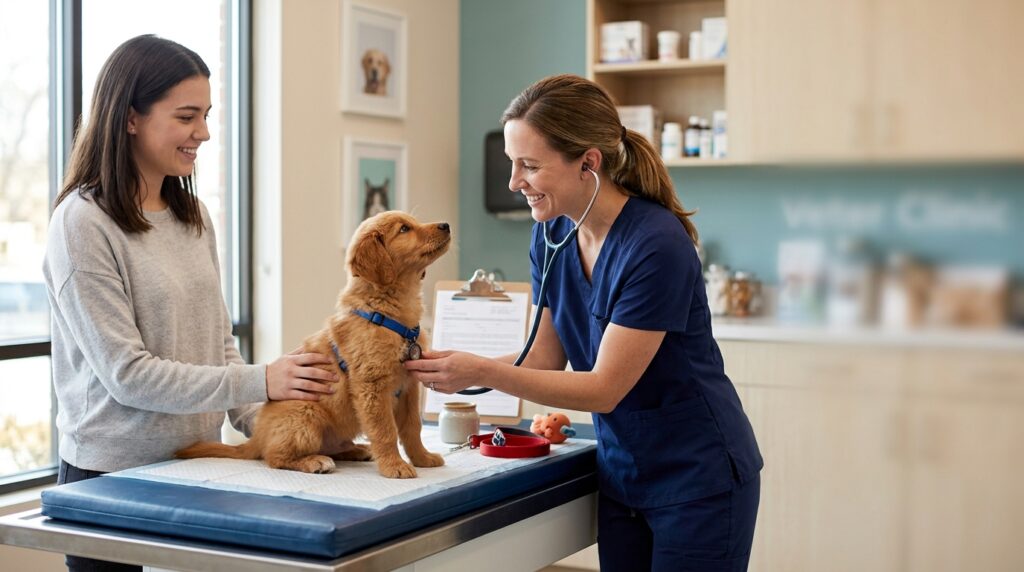
Plan your puppy first vet visit within the first few days of bringing your dog home, even if the breeder or shelter says the puppy is healthy. Early exams catch congenital issues, parasites, and infections before they have time to settle in.
What to Bring
- All vaccine and deworming records you received
- A fresh stool sample, collected within about 12 hours
- A list of questions about food, training, house-breaking, and behavior
- Your puppy on a leash or in a secure carrier
What the Veterinarian Will Check
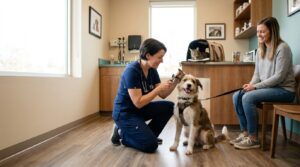
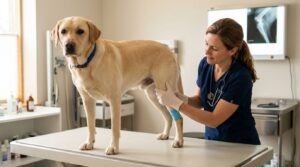
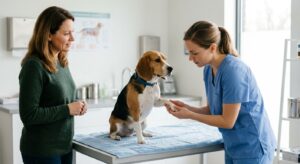
During the first exam, the doctor will weigh your puppy and check the eyes, ears, mouth, skin, coat, heart, lungs, abdomen, joints, and umbilical area. A fecal test checks for intestinal parasites. Based on your puppy’s age and history, the doctor will start or continue the vaccine series, give a deworming dose if needed, and map out the next several visits so you know exactly what is coming.
Month-by-Month First-Year Puppy Care Plan
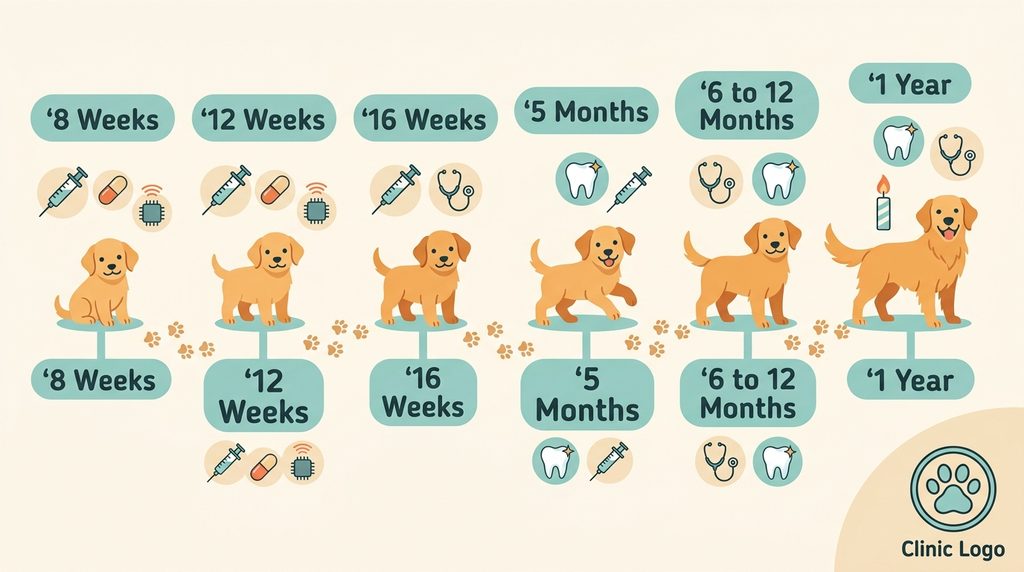
Every puppy is different, and your veterinarian will adjust the schedule to your dog’s age, breed, history, and lifestyle. The table below follows the general framework used by most general practices, based on the American Animal Hospital Association canine vaccination guidelines, which list distemper, adenovirus, parvovirus, leptospirosis, and rabies as core vaccines for dogs.
| Puppy Age | Vaccines | Parasite Care | Other Milestones |
|---|---|---|---|
| 6 to 8 weeks | First distemper and parvo combination | Deworming, fecal test | First exam, start socialization |
| 10 to 12 weeks | Second combination booster, first leptospirosis | Deworming, start monthly prevention | Microchip, house training |
| 14 to 16 weeks | Final combination booster, second leptospirosis, rabies | Monthly prevention continues | Puppy classes, handling practice |
| 4 to 6 months | Lifestyle vaccines if needed | Repeat fecal test | Teething, spay or neuter discussion |
| 6 to 12 months | None routinely due | Monthly prevention continues | Spay or neuter, adolescent training |
| 12 months | Boosters per your vet’s plan | Fecal and heartworm testing | First annual wellness exam |
8 Weeks: Coming Home
Most puppies arrive between 8 and 10 weeks old. Their first combination vaccine has usually been given, but protection is not complete yet. Maternal antibodies from the mother’s milk can block vaccines at this age, which is exactly why a series of boosters is needed rather than a single shot. Keep your puppy away from dog parks, pet store floors, and areas where unknown dogs gather until your vet says otherwise.
12 Weeks: The Middle of the Vaccine Series
A 12 week old puppy is usually due for the second combination booster and often the first leptospirosis dose. Leptospirosis spreads through the urine of wildlife and infected dogs, and standing water after rain or irrigation can carry it. This is also a good visit to place a microchip if it has not been done yet. If you are still comparing puppy shots near me, ask whether each vaccine is paired with a physical exam, because that is where small problems get caught.
16 Weeks: Finishing Core Vaccines and Rabies
By the time your puppy is 4 months old, the core series should be wrapping up with a final booster given at 16 weeks or later. California law requires rabies vaccination once a dog reaches three months of age, so the first rabies shot usually falls between 12 and 16 weeks. Once the series is complete and your vet gives the go-ahead, your puppy can start exploring more of Stockton with you. For a deeper look at why vaccines matter beyond the first year, read our vaccine guide.
5 to 6 Months: Teething, Growth, and Planning Ahead
A 5 months puppy is losing baby teeth and growing adult ones, chewing on everything in reach. Check the mouth weekly for retained baby teeth, which sometimes need to be removed. Now is the time to build dental care habits like gentle tooth brushing, since dogs that accept it young tolerate it for life. A repeat fecal test and a conversation about spay or neuter timing also belong at this stage.
6 to 12 Months: Adolescence
Between six months and a year, puppies hit adolescence. Energy spikes, training can seem to slip, and the urge to roam increases. Keep up monthly parasite prevention, stay consistent with training, and follow your vet’s guidance on spay or neuter timing, which often depends on breed size.
12 Months: The First Annual Wellness Exam
Your dog’s first birthday visit marks the shift from puppy care to adult preventive care. Expect a full exam, boosters as scheduled, heartworm and fecal testing, a weight check, and a discussion about switching from puppy food to adult food.
Puppy Deworming and Parasite Prevention
Nearly all puppies are born with or quickly pick up roundworms, passed from the mother before birth or through nursing. That is why puppy deworming starts early and repeats often. The Companion Animal Parasite Council guidelines recommend deworming puppies beginning at two weeks of age, repeating every two weeks until they move onto a monthly parasite preventive, and running several fecal tests during the first year.
Roundworms and hookworms can also infect people, especially young children who play in the yard. Monthly prevention protects your whole household, not just the dog.
Beyond worms, Stockton puppies need protection from:
- Fleas: Active nearly year-round in the Central Valley climate
- Ticks: Common in grassy areas, along levees, and near the Delta
- Heartworm: Spread by mosquitoes, and far easier to prevent than to treat
Your veterinarian will recommend a monthly product based on your puppy’s weight and age, then adjust the dose as your dog grows.
Parvo: The Preventable Emergency
Parvovirus is the illness we most want new owners to understand. It attacks the intestinal lining and immune system, spreads through infected stool, and survives in the environment for months. Puppies that have not finished their vaccine series are the most vulnerable.
When parvo strikes, it usually means isolation, IV fluids, anti-nausea medication, and days of intensive monitoring. Our parvo treatment team handles these cases, and we would much rather see your puppy for a booster than for a hospital stay.
Protect your puppy by:
- Completing every booster on time, not just the first one or two
- Avoiding high-traffic dog areas until your vet clears your puppy
- Asking visitors who own dogs to wash their hands and leave shoes at the door
- Calling the clinic right away if your puppy shows vomiting, diarrhea, or lethargy
If your puppy does get sick, a quick in-clinic parvo test can confirm or rule out the virus so treatment starts without delay.
Microchipping: A Small Step With a Big Payoff
Collars slip off and tags get lost. A microchip is a permanent ID about the size of a grain of rice, placed under the skin between the shoulder blades during a routine visit. The data on why it matters is striking. A large shelter study reported by the American Veterinary Medical Association found that microchipped dogs were returned to their owners at more than twice the rate of dogs without a chip.
The same study found a common weak point: chips that were never registered or had outdated contact information. Placing the chip is only half the job. Register it right away, and update it any time you move or change phone numbers. If you are looking to microchip pet near me, it can usually be done at the same visit as a vaccine booster.
Nutrition for a Growing Puppy
Puppies need food formulated for growth, with the right balance of protein, fat, calcium, and phosphorus. Large and giant breeds need a large-breed puppy formula, which controls growth rate and supports healthy joints.
A few practical guidelines:
- Feed three or four small meals a day until about six months, then move to two
- Measure each meal rather than leaving food out all day, and adjust portions as your puppy grows
- Keep treats to a small share of daily calories
- Use part of the daily kibble as training rewards
- Avoid grapes, raisins, chocolate, onions, garlic, xylitol, and other people foods to avoid feeding your pets listed by the ASPCA
Most dogs switch to adult food around their first birthday, while giant breeds may stay on puppy food longer. Your veterinarian will tell you when your dog is ready.
Spay and Neuter Timing
The right time to spay or neuter is no longer one-size-fits-all. Small and medium breeds are often fixed around six months, while some large and giant breeds benefit from waiting until their growth plates close. Your veterinarian will weigh breed, size, sex, and lifestyle to recommend the right window.
If you are still sorting out the basics, our guide on spay vs neuter explains how the two procedures differ, and this article on the reasons to spay or neuter your dog covers the long-term health and behavior benefits. Planning the procedure ahead lets you combine pre-surgical bloodwork with a scheduled visit and avoid rushing the decision.
Socialization and Training in the First Year
Behavior is a health issue. According to the American Veterinary Society of Animal Behavior position statement on puppy socialization, behavior problems, not infectious disease, are the leading cause of death in dogs under three years old, often through surrender to shelters. The same statement supports starting socialization before the vaccine series is complete, with puppy classes as early as seven to eight weeks after the first vaccines.
The key is controlled exposure:
- Introduce new people, sounds, surfaces, and handling in calm, short sessions
- Choose puppy classes that require vaccine records and clean their space
- Practice touching paws, ears, and mouth daily so vet visits and grooming stay easy
- Avoid unknown dogs and high-traffic dog areas until your vet clears your puppy
Early Warning Signs: When to Call the Vet
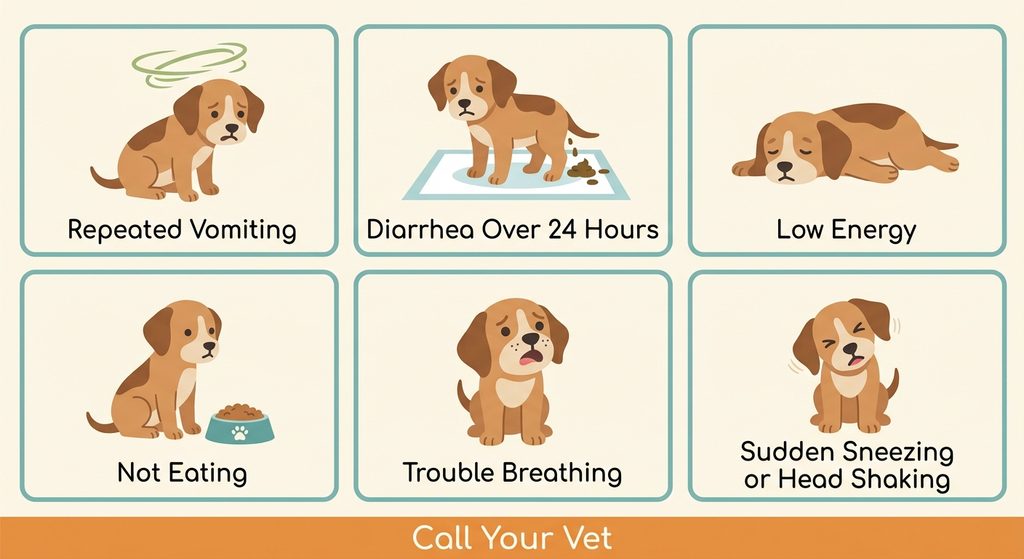
Puppies can go downhill faster than adult dogs because they have less reserve. Call the clinic promptly if you notice:
- Vomiting more than once, or diarrhea lasting more than a day
- Any blood in vomit or stool
- Lethargy, weakness, or refusing food for more than one meal
- Coughing, nasal discharge, or labored breathing
- Pale gums or a swollen belly
- Limping, crying when picked up, or reluctance to move
- Head shaking, pawing at the face, or sneezing fits after a walk
Some upset stomachs are minor, but puppy vomiting and diarrhea should never be brushed off in an unvaccinated pup. And from late spring through summer, check paws, ears, and nose after outdoor time, because foxtails are a frequent cause of sudden sneezing and head shaking in Stockton dogs.
Choosing the Right Vet for Your Puppy
The clinic you choose in year one usually becomes your dog’s medical home for life. When you search for a dog vet near me, look for a practice that pairs vaccines with real exams, explains the full first-year schedule up front, offers in-clinic testing, and makes it easy to reach the team when something seems off. Convenience matters too, because a clinic close to home makes it easier to stay on schedule.
Start Your Puppy’s First Year the Right Way
Affordable puppy care is not about skipping steps. It is about knowing what your dog needs at each age, booking visits before problems start, and keeping vaccines, deworming, parasite prevention, and microchip registration on track. Fremont Animal Clinic is located at 2223 E Fremont St, Stockton, CA 95205. Call (209) 465-7291 or contact our team to schedule your puppy’s first exam and build a first-year plan that fits your family.
Frequently Asked Questions
-
When should my puppy have the first vet visit?
Schedule the first visit within a few days of bringing your puppy home, even if the breeder or shelter says the puppy is healthy. Most puppies start vaccines between six and eight weeks old, so an early exam keeps the series on track. Bring vaccine and deworming records plus a fresh stool sample. The veterinarian will check your puppy from nose to tail, run a fecal test, and lay out the next several visits.
-
How often does a puppy need deworming?
Puppies are usually dewormed every two weeks starting at around two weeks of age, then moved onto a monthly preventive that covers intestinal worms. Your veterinarian will also run fecal tests during the first year to confirm the treatment is working, since some parasites need specific medications. Because roundworms and hookworms can spread to people, consistent puppy deworming protects your whole household, especially young children who play outdoors.
-
What shots does a 12 week old puppy need?
A 12 week old puppy typically receives a booster of the combination vaccine that protects against distemper, adenovirus, parvovirus, and parainfluenza. Many puppies also get the first leptospirosis dose at this visit, and the rabies vaccine is often given between 12 and 16 weeks. The exact plan depends on when the series started, your puppy’s health, and lifestyle factors, so your veterinarian may adjust the schedule to fit your dog.
-
When is the right age to spay or neuter my puppy?
There is no single right age for every dog. Small and medium breeds are commonly spayed or neutered around six months, while some large and giant breeds benefit from waiting until growth plates close, which can be a year or longer. Your veterinarian will consider breed, size, sex, health, and lifestyle before recommending timing. Discuss it at the four to six month visit so you have time to plan.
-
Can my puppy go outside before finishing vaccines?
Yes, with care. Your own yard is generally fine if no unvaccinated dogs visit it. Avoid dog parks, pet store floors, and busy walking routes until your veterinarian confirms the vaccine series is complete. Controlled socialization still matters during this period, so invite vaccinated, healthy dogs over, carry your puppy to new places, and enroll in puppy classes that require vaccine records and keep their space clean.
-
How can I keep puppy care affordable in the first year?
Follow a set schedule so care is spread across planned visits instead of surprise emergencies. Finish every vaccine booster, keep up deworming and monthly parasite prevention, register the microchip, and ask your puppy vet near me which visits can combine services. Puppy-proof your home to prevent poisonings and foreign object ingestion. Most importantly, call early when something seems wrong, because small problems are easier to treat than advanced ones.
A healthy first year builds a healthy dog for life. Plan ahead, stay consistent, and enjoy every stage of puppyhood.