Tracking parvo symptoms day by day is the most practical way to tell when a tired, quiet puppy has crossed into a medical emergency, because canine parvovirus can move from a skipped breakfast to serious dehydration in two or three days. Most owners never see the moment of exposure. What they see is a dog that seems a little off, and then a dog that is very sick. This guide walks through what each day usually looks like, what is happening inside the body, and the specific signs that mean you should stop watching and start driving. If your dog is already showing symptoms, a vet near me that can test and treat on site, such as Fremont Animal Clinic on East Fremont Street in Stockton, is the fastest route to answers.
What Parvo Does Inside a Dog’s Body
Canine parvovirus type 2 is a small, hardy virus that attacks cells that divide quickly. In dogs, that means the lining of the small intestine and the bone marrow. When the intestinal lining breaks down, the gut can no longer absorb water or keep bacteria where they belong. When the bone marrow is hit, white blood cell counts fall, and the body loses the cells it needs to fight those bacteria.
That combination explains why the symptoms of parvo in dogs escalate the way they do. Vomiting and diarrhea drain fluids. A weakened immune system invites infection. Dehydration and infection together push the body toward shock. According to the Merck Veterinary Manual, most dogs show signs within 5 to 7 days of infection, although the range runs from 2 to 14 days.
The virus also survives for months in soil and on surfaces, and it shrugs off most household cleaners. That is why dogs often catch it with no obvious contact with a sick animal.
Before Day 1: The Silent Incubation Window
On a typical parvo symptoms timeline, the first stretch is the one nobody sees. Counting incubation days one by one is not very useful because owners rarely know when exposure happened. What is useful to know:
- Infected dogs start shedding virus in their stool around 4 to 5 days after exposure, often before they look sick.
- A puppy can seem completely normal while carrying and spreading the virus.
- Shedding continues through the illness and for roughly 10 days after recovery.
If your unvaccinated or partially vaccinated dog spent time around a dog that later tested positive, or visited a high-traffic spot such as a dog park, kennel, or pet store floor, call your vet before symptoms start. Early advice on testing and isolation can protect every other dog in your home.
Parvo Symptoms in Dogs: What to Expect Each Day
The timeline below counts from the first day you notice something wrong, not from the day of exposure. Every dog is different. Some puppies compress the whole sequence into 48 hours, while some adult dogs decline more slowly. Use it as a guide to direction, never as a schedule to wait out.
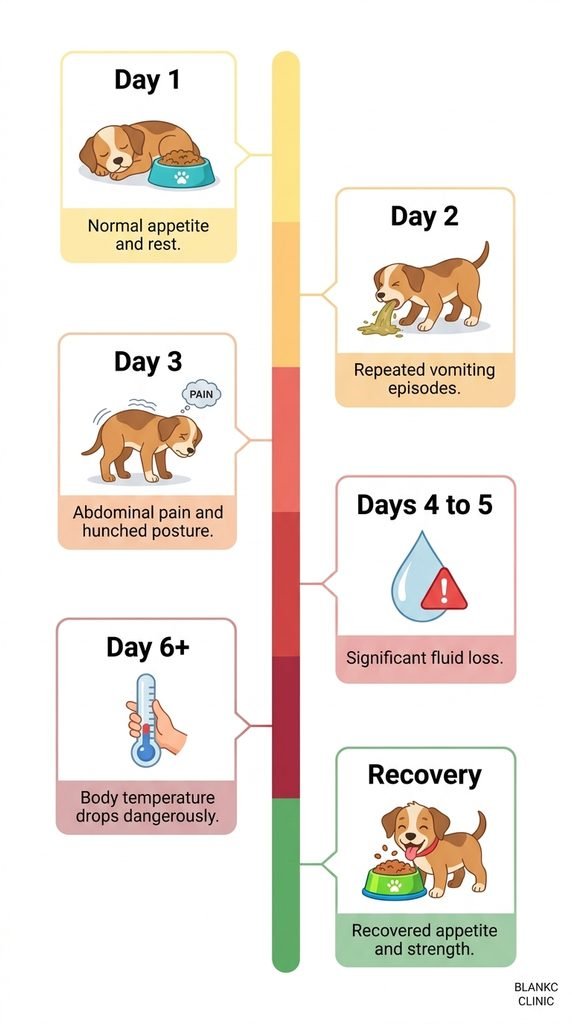
Day 1: Lethargy and a Lost Appetite
The first signs are easy to dismiss. Your dog sleeps more than usual, skips a meal or picks at food, and does not meet you at the door. Some dogs run a fever. Others simply look flat. Nothing about this day looks like an emergency, which is exactly why parvo catches so many owners off guard.
What to do: If your dog is under six months old or not fully vaccinated, a sudden drop in energy plus refusing food is enough reason to call your vet today.
Day 2: Vomiting Begins
Within 24 to 48 hours of that first dull day, vomiting usually starts. It may be foamy, yellow, or clear, and it tends to repeat. Many dogs stop drinking, or drink and bring the water straight back up. The fever may climb.
What to do: Repeated vomiting in a young or unvaccinated dog calls for a same-day exam. Do not wait for diarrhea before acting.
Day 3: Diarrhea, Often Bloody, With a Distinct Smell
Diarrhea typically follows the vomiting. In most dogs it turns watery and bloody, with a strong, sour smell that vets recognize quickly. About one in four dogs with parvo have diarrhea without visible blood, so a normal color does not rule the virus out. Belly pain shows up as a hunched stance, restlessness, or crying when picked up.
What to do: Treat this as an emergency. Fluid loss is now fast and the immune system is weakening.
Days 4 to 5: Dehydration and the Critical Window
Without treatment, the dog is now losing far more fluid than it takes in. Look for dry or tacky gums, sunken eyes, skin that stays tented when gently pinched, and a racing heartbeat. White blood cell counts are often at their lowest here, which raises the risk of gut bacteria entering the bloodstream.
What to do: A dog at this point needs IV fluids and close monitoring. Home care is no longer realistic.
Day 6 and Beyond: Shock or the Turn Toward Recovery
Untreated dogs may develop a low body temperature, pale gums, cold legs, deep weakness, and collapse. These are signs of shock and sepsis. Dogs that reached treatment early usually follow a different path: vomiting eases, appetite slowly returns, and stool firms up over several days of supportive care.
What to do: A cold, collapsed, or unresponsive dog needs emergency care immediately.
Parvo Symptoms at a Glance
| Stage | What You See | What Is Happening Inside | Urgency |
|---|---|---|---|
| Day 1 | Lethargy, poor appetite, possible fever | Virus multiplying in gut lining and bone marrow | Call your vet today |
| Day 2 | Repeated vomiting, refusing water | Intestinal damage, early fluid loss | Same-day exam |
| Day 3 | Watery or bloody diarrhea, belly pain | Gut lining breaking down, white cells falling | Emergency |
| Days 4 to 5 | Dry gums, sunken eyes, weakness | Severe dehydration, infection risk climbing | Emergency, hospital care |
| Day 6+ | Cold body, pale gums, collapse | Shock and possible sepsis | Critical, go now |
Go to the Vet Now: Red-Flag Signs of Parvo
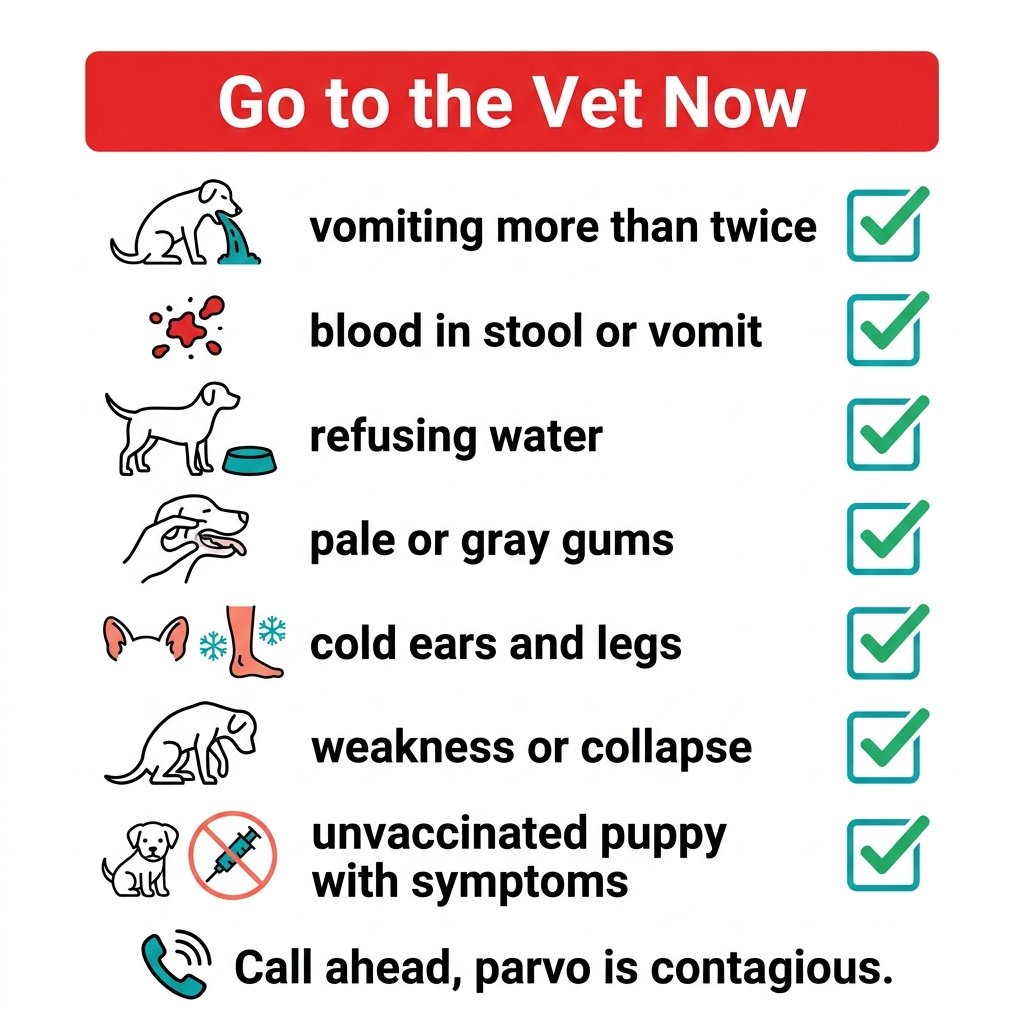
Some signs of parvo mean home monitoring is over. Head to a vet right away if your dog shows any of the following:
- More than two episodes of vomiting within a few hours
- Any blood in vomit or stool
- Refusing water, or unable to keep it down
- Pale, white, or gray gums
- Ears, legs, or belly that feel cold to the touch
- Weakness, stumbling, or inability to stand
- A puppy under 16 weeks with vomiting or diarrhea and an unfinished vaccine series
Call from the car before you walk in. Parvo is highly contagious, and most clinics will ask you to wait outside or use a separate entrance so other puppies are not exposed. If your usual clinic cannot fit you in, look for an urgent care vet near me that can run a test on arrival. For situations outside regular hours, our emergency vet Stockton guide covers what to do when every minute counts.
Signs of Parvo in Puppies vs Adult Dogs
Puppies between 6 weeks and 6 months carry the highest risk. The antibodies they receive from their mother fade before their own vaccine series is complete, leaving a gap the virus exploits. Parvo in puppies also tends to move faster and hit harder, partly because small bodies have little fluid reserve and can develop low blood sugar quickly. You can read more about parvo in puppies and the earliest changes owners notice.
| Factor | Puppies (6 weeks to 6 months) | Adult Dogs |
|---|---|---|
| Speed of decline | Can turn critical within 24 to 48 hours | Often a slower, sometimes milder course |
| Biggest dangers | Rapid dehydration, low blood sugar, infection | Dehydration, secondary infection |
| Usual reason for infection | Incomplete vaccine series | Never vaccinated or missed boosters |
| First sign owners notice | Lethargy and refusing food | Vomiting that looks like an upset stomach |
New puppy owners can lower the risk significantly by following a structured first-year plan. Our affordable puppy care guide lays out vaccines, deworming, and checkups for the first twelve months.
Parvo or Something Else? How the Symptoms Compare
Plenty of conditions cause vomiting and diarrhea, and not all of them are emergencies. This comparison shows how parvo usually differs, although only a test can confirm it.
| Condition | Typical Pattern | Key Clues |
|---|---|---|
| Parvo | Lethargy first, then vomiting, then bloody diarrhea, fast decline | Young or unvaccinated dog, fever, will not eat |
| Dietary indiscretion | Sudden vomiting or loose stool | Dog stays bright and keeps eating between episodes |
| Intestinal parasites | Ongoing soft stool, sometimes visible worms | Gradual onset, dog not seriously ill |
| Toxin ingestion | Vomiting, drooling, tremors | Known access to plants, chemicals, or human food |
| Swallowed object | Repeated vomiting, belly pain | Missing toy or sock, little or no diarrhea at first |
If your dog is alert, eating, and playful between episodes, our article on common causes of dog vomiting and diarrhea can help you sort out what to watch. If your dog is young, flat, and refusing food, assume parvo until a test says otherwise.
How Vets Confirm Parvo
The standard in-clinic parvo test uses a small stool swab to look for viral antigen, and results are ready within minutes. Your vet may also recommend bloodwork to check white blood cell count, protein, electrolytes, and blood sugar. Those numbers guide fluid choices and show how hard the virus is hitting.
No test is perfect. Very early in the illness, a dog may not yet shed enough virus for a positive result, and a puppy vaccinated in the past week or two can occasionally test weakly positive. When the picture does not fit, vets repeat the test or send a PCR sample to an outside laboratory.
At Fremont Animal Clinic, each parvovirus test and the supporting bloodwork run on site, so most results are back during the same visit and treatment can start right away.
What Treatment Looks Like and Why Timing Matters
There is no single pill that cures parvo. Treatment supports the body while the immune system clears the virus, which usually takes around five to seven days. The AVMA notes that prompt, intensive treatment improves a dog’s chance of survival.
Hospital Care
Hospitalized dogs typically receive:
- IV fluids to correct dehydration and electrolyte loss
- Anti-nausea medication to stop the vomiting cycle
- Antibiotics to guard against bacteria crossing the damaged gut
- Pain relief and active warming
- Early nutrition support, often by syringe or feeding tube
- Strict isolation to protect other patients
With aggressive in-hospital care, reported survival is above 90 percent. Some practices also offer a newer monoclonal antibody therapy that targets the virus itself; ask your vet whether it suits your dog.
Outpatient Care When Hospitalization Is Not Possible
Not every family can manage several days of hospitalization. For stable dogs, many vets offer an outpatient protocol: IV fluids at the clinic to correct the initial dehydration, then fluids under the skin, injectable medications, and daily rechecks. It still runs under a veterinarian’s supervision, and dogs that worsen move to hospital care.
Many owners search for parvovirus home treatment after a positive result. A vet-guided outpatient plan is the safe version of that idea. Garlic, sports drinks, and over-the-counter medicines given without supervision are not, and some of them make a sick puppy worse.
Case Study: What Published Research Shows About Parvo Outcomes
Three studies of real dogs offer useful context for owners weighing their options.
| Study | Dogs | Care Type | Survival | Notable Finding |
|---|---|---|---|---|
| Colorado State University randomized trial (Venn et al., 2017) | 40 | Inpatient vs outpatient | 90% inpatient, 80% outpatient | Difference was not statistically significant |
| Pennsylvania SPCA outpatient clinic (Perley et al., 2020) | 95 | Outpatient | 83% | Dogs with low body temperature on arrival were far less likely to survive |
| Florida community clinic (ASPCApro summary) | 113 | Once daily outpatient visits | 74% of known outcomes | Pale gums at the first visit predicted lower survival; three or more visits predicted higher survival |
Two findings stand out when you lay them over the timeline above. The warning signs most tied to poor outcomes, low body temperature and pale gums, are late-stage signs from Days 4 to 6. A dog seen on Day 1 or Day 2 usually has not reached that point. The Florida data also shows that consistent follow-up matters: dogs that came back for three or more visits did better.
Preventing Parvo Before Day 1
The best timeline is the one that never starts. Vaccination remains the most reliable protection.
Vaccination Schedule
Parvovirus is a core vaccine for every dog under the AAHA canine vaccination guidelines. As of 2026, the standard approach is:
- First dose at 6 to 8 weeks of age
- Repeat doses every 2 to 4 weeks
- Final puppy dose at 16 weeks or older
- Booster within one year, then generally every three years
Until the series is complete, keep puppies away from dog parks, pet store floors, and dogs with unknown vaccine history. If your dog is behind and you have been searching for dog vaccinations near me, our Stockton team can bring the schedule up to date, and adult dogs with missed boosters can restart at any age.
Cleaning Up After a Sick Dog
Researchers at Cornell University College of Veterinary Medicine recommend one part household bleach to about 30 parts water for indoor surfaces, bowls, and washable bedding. Outdoors, the virus can persist for months, and bleach should not be used on lawns. Ask your vet how long to wait before bringing a new puppy into a home or yard where a dog had parvo.
When to Call Fremont Animal Clinic
Knowing parvo symptoms day by day only helps if it leads to action, and the right moment to act is the first day something feels wrong, not the day you see blood. If your puppy or dog is lethargic, vomiting, or refusing food, call Fremont Animal Clinic at (209) 465-7291 before you leave home, or book an appointment online. You will find us at 2223 E Fremont St, Stockton, CA 95205, where our team can test, treat, and guide you through every stage of recovery.
Frequently Asked Questions
-
How long after exposure do parvo symptoms appear?
Most dogs show the first signs of parvo 5 to 7 days after infection, though the range can be as short as 2 days or as long as 14. Infected dogs often begin shedding the virus in their stool a day or two before they look sick, so a puppy can spread parvo while seeming healthy. If your dog was exposed, watch closely for two weeks and call your vet at the first sign of lethargy or a skipped meal.
-
What does parvo poop look like?
Parvo diarrhea is usually watery and often bloody, ranging from red streaks to a dark, reddish-brown liquid. Many owners and vets describe a strong, sour smell that is noticeably different from ordinary diarrhea. About one in four dogs with parvo have diarrhea without visible blood, so a normal color does not rule the virus out. Any watery stool in a lethargic, unvaccinated puppy should be tested the same day.
-
What are the last stages of parvo in puppies?
The final stages of parvo are driven by severe dehydration, infection, and shock. Signs include a low body temperature, cold legs and ears, pale or gray gums, a weak or racing pulse, extreme weakness, and collapse. Puppies can also develop dangerously low blood sugar. These signs mean the body is failing and the puppy needs emergency care immediately. Dogs that start treatment before this point have a much better outlook.
-
Can puppies survive parvo?
Yes. With prompt veterinary treatment, most puppies survive parvo. Reported survival ranges from about 70 to 90 percent with supportive care, and above 90 percent for dogs treated aggressively in a hospital. Survival drops sharply without treatment. Outcomes are worse for puppies that arrive with low body temperature or pale gums, which is why getting a vet involved in the first day or two of symptoms makes such a difference.
-
Can vaccinated dogs get parvo?
It is uncommon but possible. Puppies are not fully protected until they finish the complete series, with the final dose at 16 weeks or older, because antibodies from their mother can block early doses. Adult dogs that missed boosters can also lose protection over time. A fully vaccinated adult rarely gets sick from parvo, and when it does happen, the illness is usually milder. Keep records current and ask your vet about booster timing.
-
Is parvo contagious to other dogs in my home?
Yes, very. Parvo spreads through infected stool and anything it touches, including shoes, hands, bowls, bedding, and yard soil. A recovered dog can still shed the virus for about 10 days. Keep the sick dog separated, clean indoor surfaces with diluted bleach, and confirm that every other dog in the home is current on vaccines. Unvaccinated puppies living in the same household should see a vet promptly, even before symptoms appear.
A tired puppy is not always a sick puppy, but with parvo, the safest move is to find out today.