Dog vomiting and diarrhea are two of the most common reasons pet owners in Stockton call or visit a veterinarian, and for good reason. These symptoms can signal anything from a minor stomach upset to a life-threatening emergency. The challenge for pet owners is knowing the difference. A dog that eats grass and throws up once may be fine by dinnertime. A puppy throwing up repeatedly with watery stool and lethargy could be in serious trouble within hours. At Fremont Animal Clinic, our veterinary team sees GI cases daily, and the single biggest factor that determines outcomes is how quickly families recognize the warning signs and act on them.
This guide breaks down the most common causes of vomiting and diarrhea in dogs, explains when these symptoms are truly urgent, and helps Stockton pet owners make confident decisions about when to monitor at home and when to head straight to the clinic.
Why Dogs Vomit and Have Diarrhea: Common Causes
The gastrointestinal system in dogs is surprisingly sensitive, and the list of things that can trigger vomiting, diarrhea, or both is long. Understanding the most frequent causes helps you respond faster and describe the situation more accurately when you do call your vet.
Dietary Indiscretion
This is the number one cause of sudden vomiting and diarrhea in otherwise healthy adult dogs. “Dietary indiscretion” is the veterinary term for what most pet owners simply call “my dog ate something he shouldn’t have.” Table scraps, garbage, spoiled food, sticks, mulch, dead animals in the yard, and sudden food switches all fall into this category.
Most cases of dietary indiscretion resolve within 24 to 48 hours with supportive care. However, fatty foods like bacon grease and butter can trigger pancreatitis, a painful and potentially dangerous inflammation of the pancreas that requires veterinary treatment.
Viral and Bacterial Infections
Parvovirus is the most dangerous viral cause of vomiting and diarrhea in puppies and unvaccinated dogs. Parvo attacks the intestinal lining and white blood cells simultaneously, causing severe bloody diarrhea, relentless vomiting, and rapid dehydration. Without aggressive treatment, survival rates for parvo drop significantly. Our clinic provides comprehensive parvo treatment with in-house diagnostics and intensive supportive care for infected dogs.
Bacterial infections from Salmonella, E. coli, Campylobacter, and Clostridium can also produce acute GI symptoms. Dogs pick up these bacteria from contaminated water, raw food, feces, and contact with infected animals.
Intestinal Parasites
Roundworms, hookworms, whipworms, and Giardia are common in the Stockton and Central Valley area. Puppies are especially vulnerable because they can acquire parasites from their mothers before birth or through nursing. Heavy parasite loads cause chronic diarrhea, weight loss, vomiting, and a dull coat. A routine fecal exam during wellness visits catches these early.
Toxin Exposure and Poisoning
Dogs are indiscriminate eaters, and many common household items are toxic. Chocolate, xylitol (found in sugar-free gum and peanut butter), grapes, raisins, rodent poison, antifreeze, certain houseplants, and many over-the-counter human medications can all trigger vomiting, diarrhea, and organ damage.
If you suspect your dog has ingested something toxic, this is always an emergency. Do not wait for symptoms to appear. Contact your veterinarian or the ASPCA Animal Poison Control Center immediately.
Foreign Body Obstruction
Socks, tennis ball fragments, corn cobs, bones, toys, and rocks are among the most common foreign objects veterinarians remove from dogs’ stomachs and intestines. A partial obstruction may cause intermittent vomiting and diarrhea over several days. A complete obstruction causes repeated vomiting, inability to keep water down, abdominal pain, and eventually shock.
Foreign body removal often requires surgical intervention. The longer an obstruction sits, the greater the risk of intestinal perforation and sepsis. Dogs that vomit repeatedly and stop passing stool need immediate evaluation.
Chronic and Underlying Conditions
Not all vomiting and diarrhea episodes are one-time events. Some dogs deal with recurring GI issues caused by:
- Inflammatory bowel disease (IBD): Chronic inflammation of the intestinal wall
- Food allergies or intolerances: Reactions to specific proteins or ingredients
- Pancreatitis: Inflammation of the pancreas, often triggered by high-fat meals
- Liver or kidney disease: Organ dysfunction that produces nausea and GI disturbance
- Addison’s disease: Adrenal insufficiency causing episodic vomiting, diarrhea, and weakness
Dogs with recurring symptoms need a full diagnostic workup including blood panels, imaging, and potentially specialized testing. Our comprehensive veterinary services include the diagnostics needed to identify these underlying conditions.
Puppy Throwing Up vs. Adult Dog Vomiting: Why Age Matters
A puppy throwing up is more concerning than an adult dog vomiting for several important reasons. Puppies dehydrate faster due to their small body mass, their immune systems are still developing, and they are far more susceptible to parvovirus and other infectious diseases.
Puppy vomiting combined with diarrhea can escalate from mild to critical within six to twelve hours. An adult dog with the same symptoms might tolerate a day of monitoring before the situation becomes dangerous. This does not mean adult dogs should be ignored, but it does mean that puppies throwing up and having diarrhea deserve a much shorter observation window before you contact your veterinarian.
Key differences between puppy and adult presentations:
- Dehydration timeline: Puppies can become dangerously dehydrated in under 12 hours. Adults typically have a 24 to 48 hour window.
- Parvo risk: Puppies between 6 and 20 weeks with incomplete vaccination series are at highest risk. Understanding how vets perform a parvo test can help you know what to expect if your puppy needs evaluation.
- Foreign body likelihood: Puppies chew and swallow objects more frequently than adult dogs.
- Parasite burden: Young puppies often carry heavier parasite loads that contribute to GI symptoms.
When Dog Vomiting and Diarrhea but Acting Normal Is Still a Problem
One of the most common questions our team hears is some version of “my dog has diarrhea and vomiting but seems fine otherwise, should I be worried?” It is a reasonable question. A dog that vomits once, drinks water, wags its tail, and asks for dinner is probably not in immediate danger.
But “acting normal” can be misleading. Dogs are naturally stoic animals. They evolved to hide weakness, which means they can mask pain and discomfort far longer than most pet owners realize. A dog that is vomiting and having diarrhea but still acting normal today could deteriorate quickly if the underlying cause is something progressive like a partial obstruction, early pancreatitis, or a slow toxin exposure.
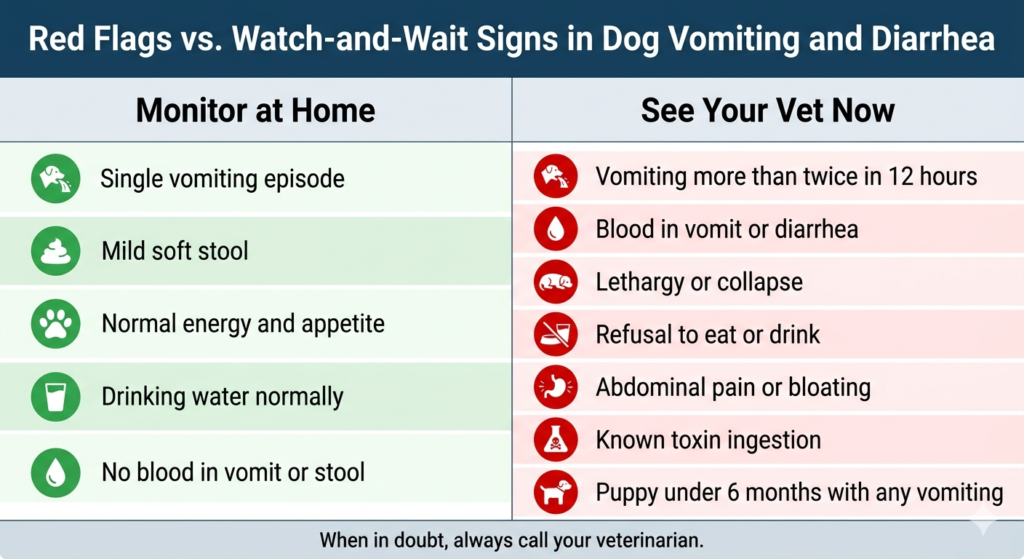
Here is a practical rule for Stockton pet owners: if your adult dog vomits once or has a single loose stool but is otherwise alert, drinking, and eating, you can monitor for 12 to 24 hours. If the vomiting or diarrhea continues beyond that window, if additional symptoms appear, or if there is any change in energy or appetite, it is time to call the vet.
Warning Signs That Require Immediate Veterinary Attention
Certain symptoms alongside vomiting and diarrhea signal a genuine emergency. If your dog shows any of the following, do not wait:
- Blood in the vomit or stool. Bright red blood or dark, tarry stool indicates internal bleeding. Bloody diarrhea in a puppy is one of the hallmark signs of parvovirus.
- Repeated vomiting that does not stop. A dog that vomits three or more times in a few hours and cannot keep water down is at risk of rapid dehydration.
- Abdominal swelling or pain. A bloated, hard abdomen can indicate gastric dilatation-volvulus (GDV), a condition where the stomach twists on itself. GDV is fatal without emergency surgery.
- Lethargy, weakness, or collapse. A dog that cannot stand, will not move, or seems disoriented is in a critical state.
- Unproductive retching. Attempting to vomit but producing nothing, especially in deep-chested breeds, is a classic GDV sign.
- Known ingestion of a toxin or foreign object. Even if symptoms have not appeared yet, time matters. Early intervention prevents escalation.
- Fever above 103.5 degrees Fahrenheit. Elevated temperature alongside GI symptoms points toward infection or systemic inflammation.
Dogs presenting with these signs may need emergency trauma and stabilization care to address the immediate crisis before diagnostics can even begin.
What to Expect at the Vet: Diagnosing the Cause
When you bring a vomiting or diarrhetic dog to the clinic, the veterinary team follows a systematic process to narrow down the cause. Here is what typically happens:
History and physical exam. Your vet will ask about the timeline, frequency, color and consistency of vomit and stool, recent diet changes, access to garbage or toxins, vaccination status, and any medications your dog takes. A thorough physical exam checks hydration status, abdominal tenderness, temperature, heart rate, and gum color.
Diagnostic testing. Based on the initial assessment, your vet may recommend blood work (complete blood count and chemistry panel), fecal examination for parasites, a parvo snap test for puppies and unvaccinated dogs, abdominal X-rays to check for foreign bodies or obstruction, and potentially ultrasound for soft tissue evaluation.
Treatment plan. Treatment depends entirely on the diagnosis. Mild dietary indiscretion may require nothing more than a bland diet and fluids. Parvo demands hospitalization with IV fluids, anti-nausea medication, and antibiotics. A foreign body obstruction requires surgical removal. Pancreatitis needs aggressive pain management, fluid therapy, and dietary modification.
The veterinary team at Fremont Animal Clinic uses in-house diagnostics and advanced technology to deliver results during the same visit, which means treatment starts sooner and outcomes improve.
Vomiting and Diarrhea Causes at a Glance
| Cause | Typical Onset | Severity | Blood Present | Key Distinguishing Feature |
|---|---|---|---|---|
| Dietary indiscretion | Sudden (within hours of eating) | Mild to moderate | Rarely | History of eating something unusual |
| Parvovirus | Gradual over 3-7 days post-exposure | Severe | Often (bloody diarrhea) | Unvaccinated puppy, foul odor, rapid decline |
| Intestinal parasites | Gradual (chronic) | Mild to moderate | Occasionally | Weight loss, dull coat, visible worms in stool |
| Toxin ingestion | Sudden (minutes to hours) | Moderate to severe | Possible | Known or suspected access to toxic substance |
| Foreign body obstruction | Sudden to gradual | Moderate to severe | Possible | Repeated vomiting, inability to keep food or water down |
| Pancreatitis | Sudden (often after fatty meal) | Moderate to severe | Rarely | Hunched posture, severe abdominal pain |
| Inflammatory bowel disease | Chronic and recurring | Mild to moderate | Occasionally | Waxing and waning symptoms over weeks or months |
| Kidney or liver disease | Gradual | Moderate to severe | Possible | Increased thirst, weight loss, changes in urination |
Case Study: A Stockton Puppy’s Recovery from Severe GI Distress
A family in north Stockton brought in their 14-week-old Australian Shepherd mix, Rosie, on a Saturday morning. Rosie had started vomiting the previous evening and had progressed to watery, foul-smelling diarrhea by morning. She refused breakfast and was noticeably less active than usual.
The owners initially assumed Rosie had eaten something in the yard. But when the vomiting continued through the night and a small amount of blood appeared in her stool, they decided not to wait any longer.
On examination, Rosie was approximately 7% dehydrated with pale gums and a temperature of 104.1 degrees. Her vaccination records showed she had received only her first set of puppy shots. A parvo snap test came back positive within minutes.
Rosie was started on aggressive IV fluid therapy, injectable anti-nausea medication, antibiotics to prevent secondary bacterial infection, and was placed in isolation to protect other patients. The first 48 hours were critical. By day three, her vomiting had stopped. By day five, she was eating small amounts of bland food on her own. She was discharged on day six with a clear recovery plan and instructions to complete her full vaccination series once she was strong enough.
Rosie’s case reinforced a pattern our team sees regularly: early presentation made the difference. Families who wait two or three days before bringing a symptomatic puppy in often face longer hospitalizations and lower survival rates. The owners later told our team they almost waited until Monday, and they are grateful they did not.
For a deeper look at the testing process used in Rosie’s diagnosis, our complete guide to pet care in Stockton explains how integrated diagnostics and treatment under one roof lead to faster recovery for critically ill pets.
Home Care vs. Vet Visit: How to Decide
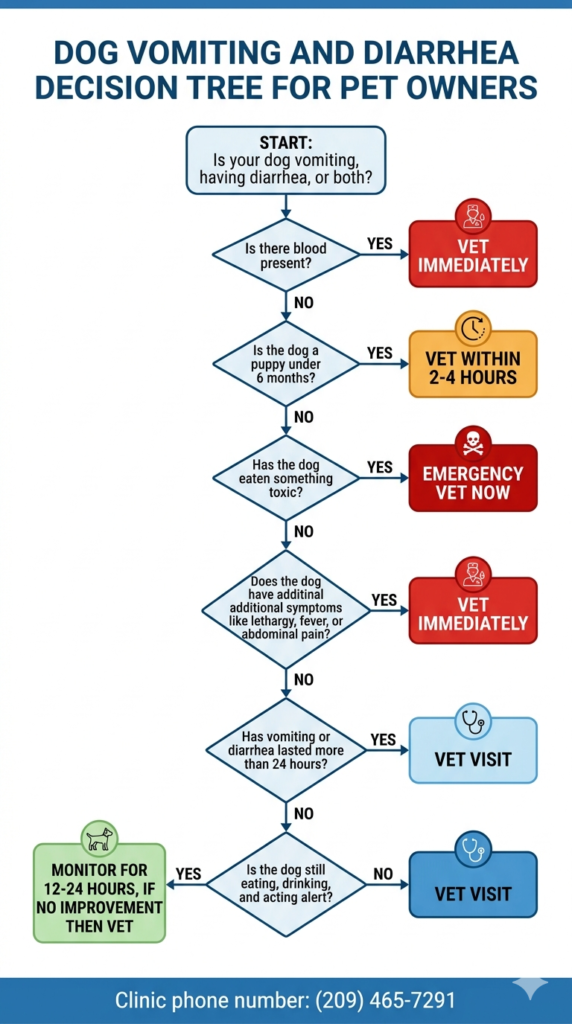
For mild cases where an adult dog vomits once or twice and has soft stool but remains bright, alert, and hydrated, short-term home care is reasonable. Here is what you can do:
- Withhold food for 12 hours (not water) to let the stomach settle. Puppies under 6 months should not be fasted and should see a vet instead.
- Offer small amounts of water frequently rather than letting the dog drink a full bowl at once, which can trigger more vomiting.
- Introduce a bland diet after the fasting period. Plain boiled chicken (no skin, no seasoning) with white rice in a 1:3 ratio is the standard recommendation. Feed small portions four to five times per day for two to three days.
- Monitor stool quality. You should see gradual improvement within 24 to 48 hours on a bland diet. If diarrhea worsens or blood appears, contact your vet.
- Avoid over-the-counter medications unless specifically directed by your veterinarian. Human anti-diarrheal products can be harmful to dogs, and some mask symptoms that your vet needs to see.
If home care does not produce improvement within 48 hours, or if your dog develops any of the red-flag symptoms described earlier, schedule a visit. Our clinic FAQ page covers appointment scheduling and what to bring when your pet needs to be seen.
Stockton pet owners who want to build a long-term relationship with a veterinary team that knows their pet’s history can learn more about how our practice approaches personalized care in our post on why Fremont Animal Clinic is one of the most trusted vets in Stockton.
Dog vomiting and diarrhea will happen to nearly every pet at some point, and the vast majority of cases are minor and self-limiting. But the cases that are not minor can escalate fast, especially in puppies, senior dogs, and animals with unknown vaccination histories. Knowing what to watch for, how long to wait, and when to stop waiting is the most valuable thing a pet owner can learn. If your dog is showing symptoms and you are unsure whether it is an emergency, call your veterinarian. A quick phone conversation could save you hours of worry and could save your dog’s life.
Frequently Asked Questions About Dog Vomiting and Diarrhea
-
What should I feed my dog after vomiting and diarrhea?
After a short fasting period of 12 hours for adult dogs, start with a bland diet of plain boiled chicken and white rice in small, frequent meals. Avoid fatty foods, treats, and your dog’s regular kibble for two to three days. Gradually transition back to their normal diet over the following three to five days by mixing increasing amounts of regular food with the bland diet. If symptoms return during the transition, contact your veterinarian.
-
How long can a dog have diarrhea before I should worry?
A single episode of loose stool in an otherwise healthy adult dog is usually not cause for alarm. However, if diarrhea persists for more than 24 to 48 hours, contains blood or mucus, or is accompanied by vomiting, lethargy, or loss of appetite, schedule a veterinary visit. For puppies throwing up and having diarrhea simultaneously, the threshold is much shorter. Contact your vet within a few hours if a young puppy develops these symptoms together.
-
Can dog vomiting and diarrhea be a sign of parvo?
Yes. Parvovirus is one of the most serious causes of vomiting and diarrhea, particularly in puppies and unvaccinated dogs. Parvo typically causes severe bloody diarrhea with a distinctive foul odor, persistent vomiting, rapid dehydration, and lethargy. If your puppy is showing these signs, seek veterinary care immediately. Early diagnosis through a parvo snap test and aggressive treatment with IV fluids significantly improve survival rates. The AAHA recommends completing the full puppy vaccination series to prevent infection.
-
Is it normal for a dog to vomit yellow bile in the morning?
Occasional yellow bile vomiting, often called bilious vomiting syndrome, happens when a dog’s stomach is empty for too long. The bile irritates the stomach lining and triggers vomiting, usually in the early morning or late evening. Feeding a small snack before bedtime or offering an earlier breakfast often resolves the issue. However, if yellow vomiting becomes frequent or is accompanied by diarrhea, weight loss, or decreased appetite, it may indicate a more serious condition that needs diagnostic evaluation.
-
My dog has diarrhea and vomiting but is acting normal. Should I still see a vet?
Dogs are naturally good at hiding discomfort, so acting normal does not always mean everything is fine internally. If both vomiting and diarrhea are present but your dog remains alert, eating, and hydrated, you can monitor at home for 12 to 24 hours. Beyond that window, or if symptoms increase in frequency or severity, a veterinary visit is warranted. The AKC recommends contacting your vet whenever vomiting and diarrhea occur together, even if the dog appears well.
-
When is puppy vomiting an emergency?
Puppy vomiting becomes an emergency when it occurs more than twice in a short period, contains blood, or is paired with diarrhea, refusal to eat or drink, lethargy, or abdominal pain. Puppies dehydrate much faster than adult dogs because of their small body size, and infections like parvovirus can progress to life-threatening illness in under 24 hours. Any puppy under six months showing repeated vomiting should be evaluated by a veterinarian the same day.