
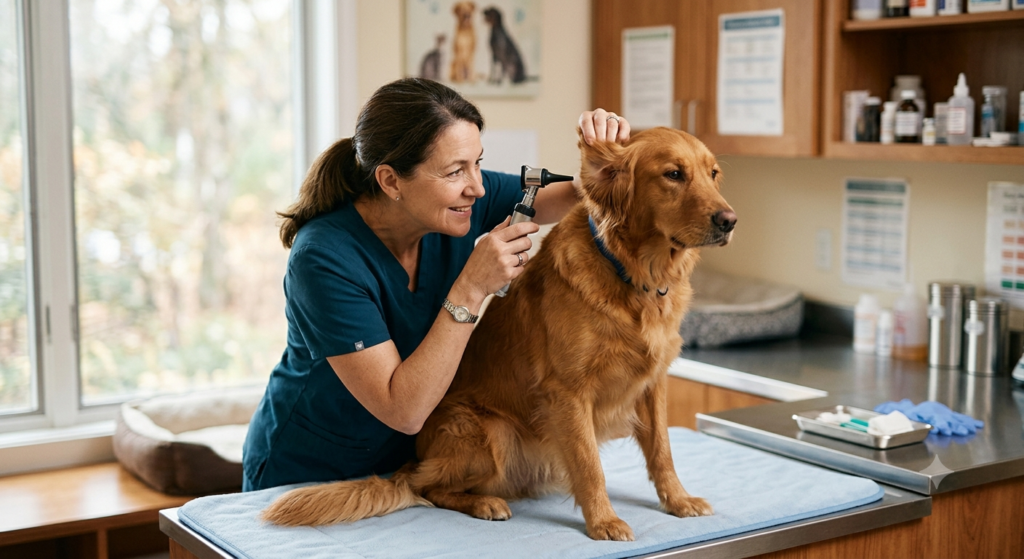
If your dog is shaking its head at 2 a.m. or your cat has suddenly stopped letting you touch one ear, there is a good chance you are dealing with one of the most common problems we see at the clinic: ear infections in dogs and cats. They are uncomfortable, they rarely resolve on their own, and they tend to get worse the longer they go untreated. This guide walks through what causes them, how to recognize the signs early, what actually helps at home versus what needs a veterinarian, and when a same-day visit stops being optional.
What Causes Ear Infections in Dogs and Cats
Ear infections are almost never a random, isolated event. Something changes the environment inside the ear canal first, and bacteria or yeast take advantage of that shift. Identifying the underlying trigger is the difference between a problem that clears up and one that keeps coming back every few months.
Allergies Are the Number One Trigger
Environmental allergies, food sensitivities, and flea allergy dermatitis are behind the majority of chronic ear cases in dogs, and a smaller but still meaningful share of cases in cats. When the skin inside the ear canal becomes inflamed from an allergic reaction, it produces more wax and moisture, which is exactly what yeast and bacteria need to multiply. Pets already being managed for skin allergies through veterinary dermatology services often see their ear flare ups improve once the root allergy is controlled, because treating the infection alone without addressing the allergy behind it tends to bring the problem right back. Our related guide on common skin problems in dogs and cats covers how allergic skin disease and ear infections overlap in more detail.
Ear Mites and Parasites
Ear mites are a more common cause in kittens and puppies than in adult pets, though any age can be affected. Mites irritate the ear canal directly, and the resulting inflammation frequently invites a secondary bacterial or yeast infection on top of the mite problem itself. Fleas and ticks contribute indirectly too, since flea allergy dermatitis is one of the most frequent drivers of the itching and inflammation that starts the whole cycle. Keeping pets current on flea and tick prevention reduces this risk meaningfully, especially during the warmer months in the Central Valley.
Moisture, Swimming, and Grooming Habits
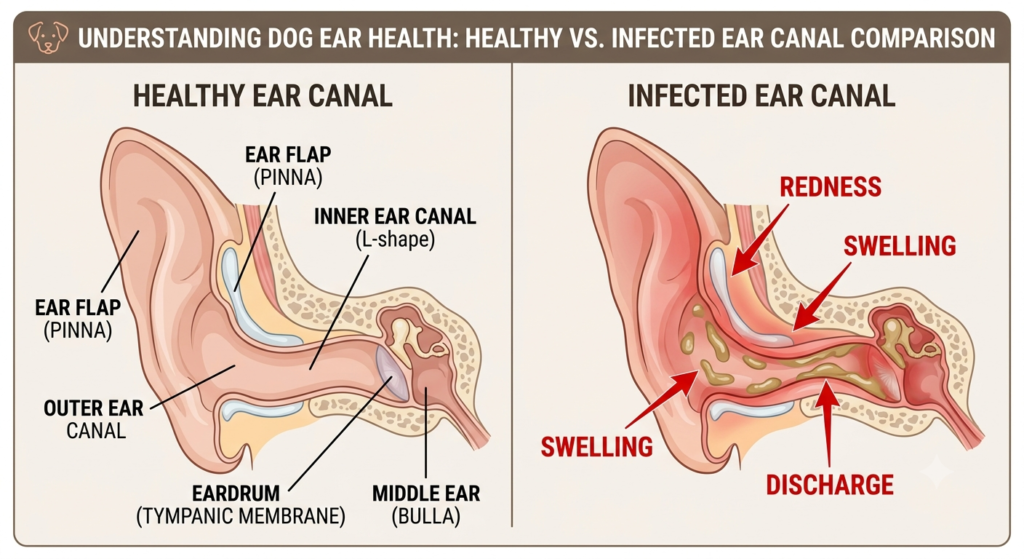
Dogs and cats have an L-shaped ear canal, which means water and debris settle at the bottom instead of draining out easily. Swimming, bathing, and even humid weather can trap enough moisture to shift the ear’s natural balance of bacteria and yeast. Breeds with floppy or heavily furred ears, such as Cocker Spaniels, Basset Hounds, and Labrador Retrievers, are at higher risk simply because airflow to the ear canal is more restricted.
Foxtails and Foreign Objects
Grass awns are a serious seasonal problem across Stockton and the wider Central Valley. A foxtail that works its way into the ear canal causes sudden, intense irritation and can rupture the eardrum if it is not removed quickly. If your pet suddenly starts violently shaking its head after being outdoors, a foreign object should be high on the list of suspects. Our detailed guide on foxtails in dogs walks through how to recognize and respond to this specific risk.
Recognizing the Signs and Symptoms
Ear infections rarely appear out of nowhere. Most pets show a combination of the following, and the earlier these are caught, the simpler treatment tends to be.
- Frequent head shaking or head tilting to one side
- Scratching at the ear, or rubbing the side of the face against furniture or carpet
- A noticeably bad odor coming from the ear
- Redness, swelling, or visible discharge inside the ear flap
- Dark, waxy buildup resembling coffee grounds, which often points to ear mites
- Sensitivity or pain when the ear is touched
- Loss of balance or a persistent head tilt in more advanced cases
These dog ear infection symptoms overlap closely with signs of ear infection in dogs that veterinarians look for during an exam, and cats show a very similar pattern, though they are often better at hiding discomfort than dogs.
Dog Ear Infections vs Cat Ear Infections
While the underlying anatomy is similar, the typical causes and presentation differ enough to be worth comparing side by side.
| Factor | Dogs | Cats |
|---|---|---|
| Most common primary cause | Allergies (environmental, food, or flea related) | Ear mites |
| Breed or type risk | Floppy or hairy ears increase risk | Outdoor or multi-cat households at higher risk |
| Typical discharge | Yellow, brown, or black, often with odor | Dark, crumbly discharge resembling coffee grounds |
| Behavior signs | Head shaking, scratching, rubbing face on furniture | Head shaking, scratching, hiding, reduced grooming |
| Recurrence pattern | Frequent in allergic dogs without allergy management | Common in homes with untreated mite exposure |
Despite these differences, both a cat ear infection and a dog ear infection are diagnosed and treated using the same basic process: identify the cause, clear the active infection, and correct the underlying trigger so it does not return.
Home Care and Its Limits
Many pet owners search for a dog ear infection home remedy hoping to avoid an office visit, and there is a place for supportive home care, just not as a replacement for diagnosis. Gently wiping the visible part of the outer ear with a vet-approved cleaner, keeping the ears dry after baths or swimming, and avoiding cotton swabs deep in the canal are all reasonable habits for a healthy pet. According to Cornell University College of Veterinary Medicine, routine ear cleaning is most useful as a preventive measure and as support alongside prescribed medication, not as a stand-alone treatment once an infection is already active.
The problem with home remedies alone is that bacterial, yeast, and mite infections look almost identical to an untrained eye but require completely different medications. Treating a yeast overgrowth with the wrong product can make things worse, and applying anything into an ear with a ruptured eardrum can cause permanent hearing damage. Once you see discharge, odor, or visible pain, home care becomes a supplement to veterinary treatment rather than a substitute for it.
A Stockton Case Study
A local dog owner brought in a three-year-old Cocker Spaniel named Biscuit after noticing him shaking his head repeatedly for about a week and rubbing his ear along the couch cushions. On otoscopic exam, both ears showed redness, swelling, and a thick brown discharge with a strong odor. Cytology from an ear swab revealed a mixed yeast and bacterial infection in the right ear and yeast alone in the left.
Because Biscuit had a history of seasonal itching around his paws and belly, an underlying allergy was suspected as the root cause. Treatment combined a topical ear medication for two weeks with a recheck cytology to confirm the infection had cleared, alongside a longer-term allergy management plan to reduce the chance of recurrence. Six months later, Biscuit has had no repeat ear infections, which is a strong example of why identifying the trigger, not just clearing the current infection, matters for long-term results.
How Veterinarians Diagnose and Treat Ear Infections
A proper ear infection in dogs treatment plan starts with an otoscopic exam to check the ear canal and confirm the eardrum is intact before any medication is used. Many vets will also collect a sample of the debris for cytology, examining it under a microscope to determine whether bacteria, yeast, mites, or a combination is present. This step matters because the wrong medication for the wrong organism can prolong the infection or mask a more serious problem.
Once the cause is confirmed, treatment typically involves a topical medication applied directly into the ear canal, sometimes combined with an oral anti-inflammatory if the canal is significantly swollen or painful. Chronic or severe cases may need a longer course of treatment, a recheck cytology to confirm the infection has cleared, or referral for allergy testing if infections keep recurring. The American College of Veterinary Surgeons notes that pets with severely calcified or blocked ear canals from long-term untreated inflammation may eventually require surgical intervention, which is one more reason early treatment matters. For pets with recurring allergic ear disease specifically, the AAHA allergic skin disease guidelines outline how topical anti-inflammatory therapy is often used alongside antimicrobial treatment for the best long-term control.
When It’s Time for Urgent Care
Most ear infections are uncomfortable rather than dangerous, but a few warning signs mean you should not wait for a routine appointment. A sudden head tilt that does not go away, loss of balance, visible pain when the mouth is opened, or a strong suspicion of a foxtail or other foreign object lodged in the canal all warrant prompt evaluation. If these symptoms appear outside a normal wait time, our urgent care for pets near me services are set up to evaluate and begin treatment the same day rather than letting a painful ear go untreated for days.
Preventing Future Ear Infections
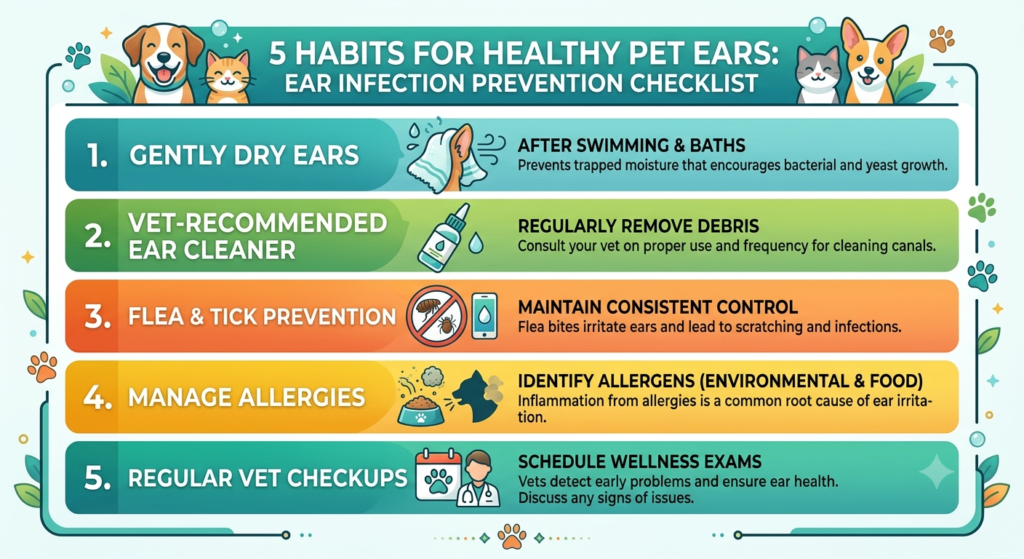
Prevention comes down to a few consistent habits rather than any single product or trick.
- Dry ears thoroughly after baths, swimming, or rainy walks
- Use a vet-recommended ear cleaner on a routine schedule if your pet is prone to infections, without over-cleaning healthy ears
- Stay current on parasite prevention to reduce flea allergy dermatitis and mite exposure
- Manage diagnosed allergies consistently rather than only treating flare ups as they happen
- Schedule regular preventive care visits so early ear changes are caught during a routine exam rather than after they become painful
Pet owners who are still deciding where to establish ongoing care can review our guide on choosing a trusted vet in Stockton for what to look for in a full-service clinic that can handle both routine prevention and same-day problems.
Left unmanaged, ear infections in dogs and cats tend to become chronic, painful, and harder to resolve, but with early recognition, a proper diagnosis, and consistent follow through on the underlying cause, most pets recover fully and stay infection free long term. If you are noticing any of the signs covered here, Fremont Animal Clinic is available to get your pet examined and on the right treatment path.
Frequently Asked Questions
-
What are the earliest signs of an ear infection in dogs?
The earliest signs are usually subtle head shaking, occasional scratching at one ear, and a mild odor you might not notice right away. As the infection progresses, redness, swelling, and visible discharge typically appear. Catching these early signs of ear infection in dogs before they become severe usually means a shorter, simpler treatment course and less discomfort for your pet overall.
-
Can I treat my cat’s ear infection at home without a vet visit?
Gentle outer ear cleaning can support treatment, but it cannot replace a proper diagnosis. A cat ear infection caused by mites needs a different medication than one caused by yeast or bacteria, and using the wrong product can prolong symptoms or irritate healthy tissue. If you notice discharge, odor, or scratching, a veterinary exam confirms the cause before treatment begins.
-
How long does it take to treat a dog’s ear infection?
Most straightforward cases clear within one to three weeks of consistent topical treatment. Chronic or allergy related infections can take longer and often require a recheck appointment to confirm the ear canal and eardrum have fully returned to normal before stopping medication. Stopping treatment too early is one of the most common reasons infections come back shortly after they seem resolved.
-
Are certain dog breeds more prone to ear infections?
Yes. Breeds with floppy, heavily furred, or narrow ear canals, including Cocker Spaniels, Basset Hounds, and Labrador Retrievers, tend to have reduced airflow to the ear canal, which creates a warmer, moister environment where bacteria and yeast thrive. These breeds often benefit from a more consistent ear care routine even when no infection is present, to reduce how often problems develop.
-
What is the difference between ear mites and a bacterial ear infection?
Ear mites usually produce a dry, dark, crumbly discharge resembling coffee grounds and cause intense itching, while bacterial infections tend to produce a wetter, often yellow or brown discharge with a stronger odor. Both require different medications, which is why an in-office exam and sometimes a microscope evaluation of the discharge is the only reliable way to tell them apart before starting treatment.
-
When should I take my pet in for urgent ear care instead of a routine appointment?
A sudden head tilt, loss of balance, visible pain when opening the mouth, or a suspected foreign object like a foxtail in the ear canal are all reasons to seek same-day evaluation rather than waiting. These signs can indicate a ruptured eardrum, a middle ear infection, or an object still lodged in the canal, all of which tend to worsen quickly without prompt treatment.
A shaking head or a scratching paw is rarely nothing, and catching it early is always easier on your pet than waiting it out.