Dental disease in dogs and cats is one of the most common health problems veterinarians see, and also one of the easiest to miss until it is already advanced. Pets do not complain about a sore tooth the way people do. They keep eating, keep playing, and keep hiding pain until the damage underneath the gumline is significant. This guide breaks down how dental disease actually progresses, the warning signs pet owners tend to notice too late, how dogs and cats differ, and why a professional cleaning is about far more than fresh breath.
What Is Dental Disease in Dogs and Cats
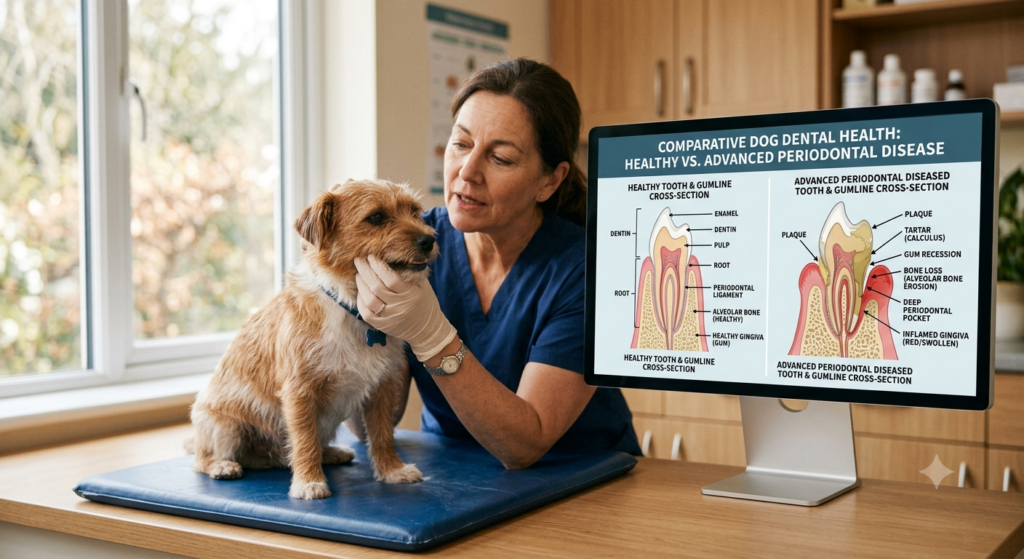
Dental disease starts with plaque, a soft film of bacteria that forms on teeth within hours of eating. Left alone, plaque hardens into tartar within a day or two, and tartar creates a rough surface where more bacteria collect. Once bacteria push beneath the gumline, the body’s inflammatory response kicks in, and that inflammation is what eventually damages the tissue and bone holding teeth in place. This entire process is collectively referred to as periodontal disease, and according to the American Veterinary Medical Association, most pets show some early evidence of it by age three if effective preventive measures have not been taken.
The bacteria involved do not stay confined to the mouth. Once gum tissue is inflamed and bleeding, bacteria have a direct route into the bloodstream, where they can affect organs including the heart, kidneys, and liver over time. This is why veterinarians treat dental care as core preventive medicine rather than a cosmetic afterthought, alongside routine wellness visits and vaccinations covered during regular preventive care visits.
The Stages of Dog Dental Disease
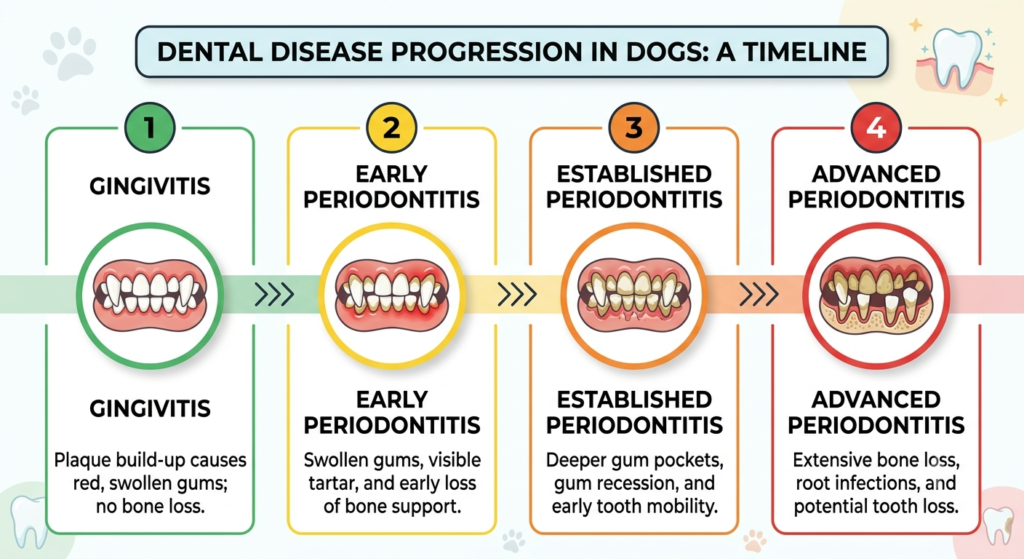
Veterinarians typically describe dog dental disease stages using a four-stage system, and cats follow a very similar progression.
Stage 1: Gingivitis
Gingivitis in dogs is the earliest and only fully reversible stage. The gums appear red or slightly swollen along the edge of the tooth, and mild bleeding may occur during brushing or chewing. At this stage, a professional cleaning combined with consistent home care can restore the gums to a completely healthy state with no lasting damage.
Stage 2: Early Periodontitis
Once inflammation persists, the attachment between the tooth and surrounding tissue begins to weaken. Pockets start forming between the gum and tooth where bacteria hide from normal brushing. Some bone loss may be visible on dental X-rays even though the tooth still looks stable to the naked eye.
Stage 3: Moderate Periodontitis
At this stage, noticeable bone loss has occurred around the tooth root. Teeth may feel slightly loose, gums often recede, and bad breath becomes more persistent and difficult to miss. Treatment usually requires deeper cleaning below the gumline and, depending on severity, may include selective extractions.
Stage 4: Advanced Periodontitis
This is the most severe stage, where significant bone and attachment loss leaves teeth loose or already falling out. Pain at this point is usually constant, even if the pet is still eating. Extraction of affected teeth is typically the only treatment that resolves the infection and discomfort permanently.
Warning Signs to Watch For
Because pets instinctively hide pain, most owners rely on visible or behavioral clues rather than obvious distress. Watch for these signs of dental disease in dogs and cats:
- Persistent bad breath that does not improve after eating or drinking water
- Red, swollen, or bleeding gums, especially along the gumline
- Visible tartar buildup, appearing as a yellow or brown crust on the teeth
- Dropping food while eating, chewing on one side, or preferring soft food over kibble
- Pawing at the mouth or face, or excessive drooling
- Loose teeth or teeth that appear discolored
- A general drop in energy or increased irritability, which owners often mistake for normal aging
Dog bad breath in particular is one of the most reliable early indicators, and it is worth taking seriously the first time you notice it rather than waiting for other symptoms to appear.
Dogs vs Cats: How Dental Disease Differs
Both species develop periodontal disease, but the details of how it shows up and what drives it differ enough to matter for treatment and prevention.
| Factor | Dogs | Cats |
|---|---|---|
| Most common condition | Periodontal disease and tartar buildup | Periodontal disease and tooth resorption |
| Fracture risk | Higher, from chewing hard objects like bones and antlers | Lower, fractures are less common |
| Hiding pain | Moderate, some behavioral changes are noticeable | Very high, cats are especially skilled at masking discomfort |
| Breed or type risk | Small breeds with crowded teeth are at higher risk | Purebreds and older cats show higher rates of resorption |
| Typical first sign | Tartar and bad breath | Subtle drooling or reduced interest in hard food |
Despite these differences, both a fractured dog tooth and feline tooth resorption cause real pain, and both require the same basic response: a proper oral exam, dental X-rays, and treatment planned around what is actually happening beneath the gumline.
Why Bad Breath Is Never Just Normal
Many pet owners assume a certain amount of odor is simply part of having a dog or cat. In reality, healthy mouths do not produce a consistently strong or unpleasant smell. Persistent dog bad breath is caused by bacterial buildup, and it tends to get worse as plaque matures into tartar and pushes beneath the gum tissue. A sudden or worsening odor, especially paired with any of the other warning signs above, is one of the clearest signals that a dental exam is overdue rather than something to wait out.
A Stockton Case Study
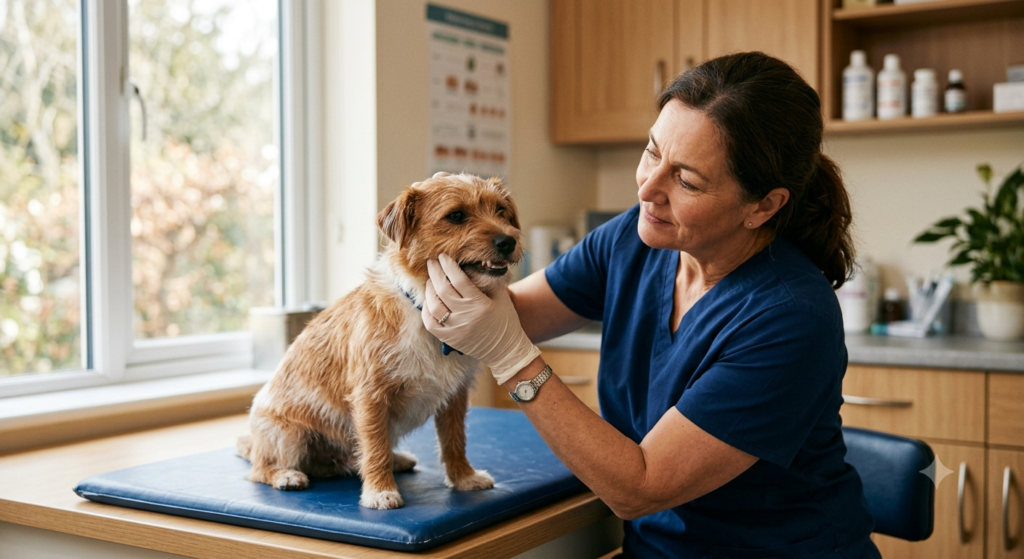
A seven-year-old terrier mix named Otis came in for his annual wellness exam, and his owner mentioned in passing that his breath had “always been kind of bad.” On oral exam, several of his back teeth showed heavy tartar buildup with red, receded gum tissue, and he flinched slightly when the upper right side of his mouth was touched. Pre-anesthetic bloodwork came back clear, so a full dental cleaning was scheduled under general anesthesia the following week.
Dental X-rays revealed bone loss around two molars that appeared only mildly affected on visual exam, both of which required extraction. The remaining teeth were scaled and polished above and below the gumline. Otis went home the same day on pain medication, and within 48 hours his owner reported he was eating with more enthusiasm than he had in months. What looked like “just bad breath” had actually been active, painful periodontal disease for some time, and it is a common pattern that underscores why persistent odor deserves a real exam rather than an air freshener fix.
How Professional Cleanings Work (and Why They Matter)
A proper dental cleaning is not the same as a quick polish. It starts with a full oral exam and typically includes pre-anesthetic bloodwork, similar to the diagnostics run through in-house lab testing, to confirm the pet is a safe anesthesia candidate. Anesthesia itself is necessary, not optional, because it allows a thorough exam of every tooth surface, dental X-rays to evaluate what is happening below the gumline, and ultrasonic scaling that would be impossible to perform safely on an awake, uncomfortable animal.
Our veterinary dental care services include the full scope of this process: oral exams, digital X-rays, ultrasonic scaling and polishing, and treatment for anything found along the way, including extractions when a tooth cannot be saved. When extractions or more involved oral procedures are needed, the same anesthesia monitoring standards used across pet surgery in Stockton apply, with continuous tracking of heart rate, oxygen levels, and body temperature throughout the procedure. According to the American Animal Hospital Association’s 2019 Dental Care Guidelines, this structured, anesthesia-based approach is the standard for effectively diagnosing and treating periodontal disease rather than relying on cosmetic-only or non-anesthetic dental procedures.
Preventing Periodontal Disease at Home
Professional cleanings address existing disease, but daily habits at home determine how quickly plaque returns between visits.
- Brush your pet’s teeth with a pet-safe toothpaste as often as possible, ideally daily
- Choose dental chews, treats, or diets carrying the Veterinary Oral Health Council seal, which confirms the product has been tested for effectiveness against plaque or tartar
- Schedule an oral exam at every wellness visit so subtle changes are caught early
- Watch for changes in eating habits or behavior rather than waiting for obvious pain
- Avoid very hard chew objects like bones, antlers, or hooves, which are a common cause of fractured teeth
Cornell University College of Veterinary Medicine notes that periodontal disease is usually not recognized until it reaches an advanced stage precisely because plaque forms below the visible part of the tooth, which is why daily home care paired with regular professional exams works better than either approach alone.
Dental disease in dogs and cats rarely announces itself the way an injury does, which is exactly why routine exams and early intervention matter so much. Catching gingivitis before it becomes periodontitis can mean the difference between a simple cleaning and a mouth full of extractions years down the road. If you have noticed any of the signs covered here, our full guide on pet care in Stockton and our overview of veterinary services in Stockton can help you understand what a complete wellness plan looks like, and our team is ready to get your pet’s mouth checked and back on track.
Frequently Asked Questions
-
What are the earliest signs of dental disease in dogs?
The earliest sign is usually mild redness or swelling along the gumline, sometimes with slight bleeding during chewing or brushing. Bad breath tends to follow shortly after. These early changes fall under gingivitis, which is fully reversible with a professional cleaning and consistent home care, making early detection especially valuable before any permanent damage develops.
-
Is bad breath in dogs always a sign of dental disease?
Not always, but persistent bad breath is one of the most common early indicators. Occasional odor after eating something unusual is normal, but a consistent, strong smell almost always points to bacterial buildup from plaque or tartar. If the odor does not improve within a few days or is paired with drooling or gum redness, a dental exam is the right next step.
-
How many stages of dental disease are there in dogs?
Veterinarians generally describe four stages, starting with reversible gingivitis and progressing through early, moderate, and advanced periodontitis. Each stage involves increasing bone and attachment loss around the tooth root. Catching the disease in stage one means full recovery is possible, while later stages usually require extractions to resolve pain and infection permanently.
-
Do cats get dental disease the same way dogs do?
Cats develop periodontal disease similarly to dogs, but they also commonly experience tooth resorption, a separate condition where the tooth structure breaks down starting inside the tooth. Cats are also far better at hiding pain than dogs, which means dental problems in cats are frequently more advanced by the time they are noticed during an exam.
-
Why does my pet need anesthesia for a dental cleaning?
Anesthesia allows a thorough, pain-free examination of every tooth surface and enables dental X-rays that reveal problems hidden below the gumline. It also allows safe use of ultrasonic scaling tools that would be dangerous to use on an awake, moving animal. Pre-anesthetic bloodwork is used beforehand to confirm your pet is a safe candidate for the procedure.
-
Can brushing alone prevent periodontal disease in dogs and cats?
Daily brushing significantly reduces plaque buildup and is the most effective home care tool available, but it cannot remove tartar that has already hardened or address problems below the gumline. Brushing works best as part of a routine that also includes regular professional exams and cleanings, rather than as a complete replacement for veterinary dental care.
A little morning breath is normal, but a mouth that smells worse every week is asking for a closer look.