

Flea and tick prevention for dogs and cats is one of the most overlooked parts of pet ownership in Stockton, and it is also one of the most important. Every year, our veterinary team at Fremont Animal Clinic sees dozens of pets suffering from infestations that could have been avoided entirely with consistent, year-round parasite control. Stockton’s warm Central Valley climate creates a near-perfect breeding ground for fleas and ticks, which means pet owners here face a higher and longer risk window than families living along the coast or in the mountains.
This guide covers everything Stockton pet owners need to know about protecting dogs and cats from these parasites, including the types of products available, how to choose between them, what makes the Central Valley uniquely risky, and what steps to take if your pet is already showing signs of an infestation.
Why Parasite Prevention Matters More in Stockton and the Central Valley
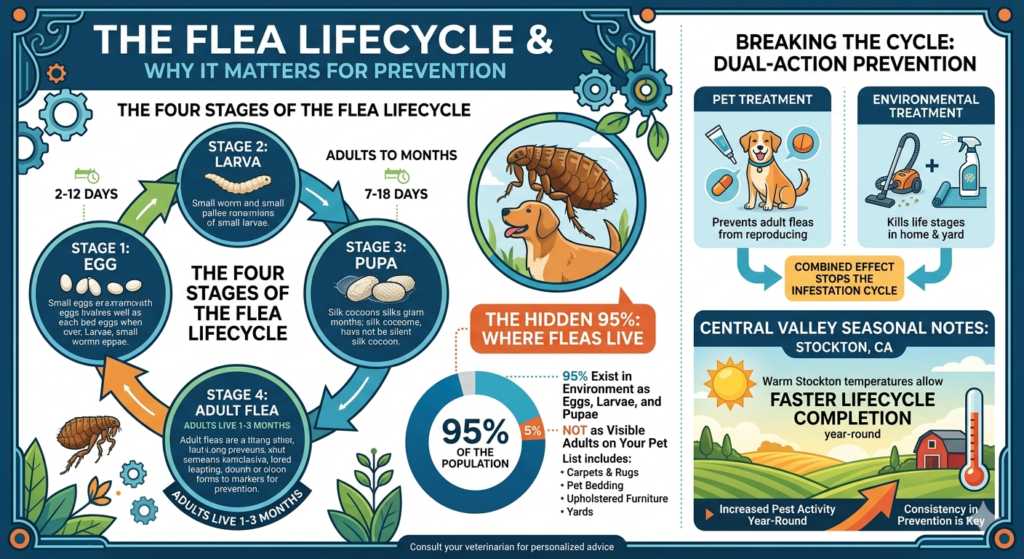
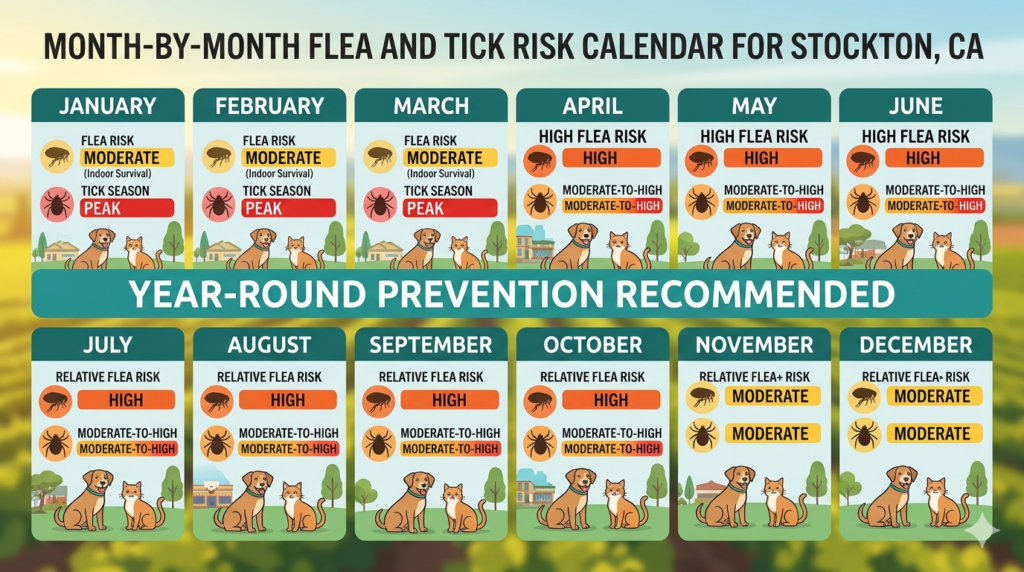
Geography plays a direct role in parasite pressure. Stockton sits in the San Joaquin Valley, where summer temperatures regularly exceed 95 degrees and mild winters rarely produce the sustained freezes that kill off flea and tick populations in other parts of the country. That means the typical “flea season” in Stockton is not a season at all. It runs nearly all year.
Fleas thrive between 65 and 80 degrees Fahrenheit with moderate humidity, and Stockton delivers those conditions across multiple months. Ticks are slightly more seasonal but remain active from early spring through late fall, with the western black-legged tick appearing even in cooler months.
Pet owners who rely on seasonal flea and tick prevention for dogs or treat only during summer often find themselves dealing with full-blown infestations by October. Year-round protection is not optional here. It is the baseline.
Common Fleas and Ticks in the Stockton Area
The Cat Flea
Despite its name, the cat flea (Ctenocephalides felis) is the most common flea found on both dogs and cats in North America. It feeds on blood, reproduces rapidly, and can lay up to 50 eggs per day. A single flea on your pet can turn into thousands within weeks if left untreated.
Cat fleas are also the primary carrier of Bartonella (cat scratch disease) and tapeworm larvae, which means an infestation is not just uncomfortable for your pet. It introduces genuine health risks to your entire household.
Brown Dog Tick and Western Black-Legged Tick
The brown dog tick thrives in warm, dry environments and can complete its entire lifecycle indoors, making it particularly problematic in the Central Valley. The western black-legged tick (Ixodes pacificus) is the primary carrier of Lyme disease in California and tends to appear in grassy, wooded areas around Stockton’s parks and trails.
Both species attach to dogs and cats, though dogs tend to pick up ticks more frequently due to outdoor activity. If your pet spends time in tall grass, fields, or open spaces, a dedicated preventive care plan that includes regular tick checks is essential. Pet owners dealing with similar outdoor risks should also review our guide on foxtails in dogs, another Central Valley hazard that peaks during the same warm months.
How Fleas and Ticks Affect Your Pet’s Health
Diseases Transmitted by Fleas
Fleas are more than a nuisance. They carry and transmit several conditions that can affect both pets and people:
- Flea allergy dermatitis (FAD): The most common skin disease in dogs and cats, caused by an allergic reaction to flea saliva. Even one or two bites can trigger intense itching, hair loss, and secondary skin infections. Pets with persistent skin problems may benefit from a veterinary dermatology evaluation.
- Tapeworm infection: Pets ingest fleas during grooming, and those fleas can carry tapeworm larvae. You may notice small rice-like segments near your pet’s tail or in their stool.
- Anemia in young animals: Heavy flea infestations can cause dangerous blood loss in kittens and puppies, sometimes requiring emergency intervention.
- Bartonella (cat scratch fever): Fleas transmit this bacterial infection to cats, who can then pass it to humans through scratches or bites.
Tick-Borne Diseases in Dogs and Cats
Ticks pose a different but equally serious threat. A single tick bite can transmit:
- Lyme disease: Caused by Borrelia burgdorferi, transmitted by the western black-legged tick. Symptoms in dogs include lameness, joint swelling, fever, and fatigue.
- Ehrlichiosis: Attacks white blood cells and can cause bleeding disorders, weight loss, and organ damage.
- Anaplasmosis: Similar to ehrlichiosis, this infection causes fever, lethargy, and joint pain.
- Rocky Mountain spotted fever: Less common in California but still a concern, particularly for dogs who travel with their owners.
The AVMA recommends discussing all flea and tick prevention products with your veterinarian to determine the safest and most effective choice for each individual pet, especially for animals that are very young, elderly, pregnant, or on other medications.
Types of Dog Tick and Flea Prevention Products
Oral Preventives
Oral flea and tick medications have become the most popular choice among veterinarians and pet owners in recent years. Products like isoxazoline-class chewables (which include well-known brands your vet can recommend) work systemically, meaning the active ingredient circulates through your pet’s bloodstream and kills parasites when they bite.
Oral preventives offer several advantages. They are not affected by bathing or swimming, they cannot rub off onto furniture or children, and they typically provide 30 to 90 days of protection per dose. Your veterinarian can dispense these directly through our in-house pet pharmacy, eliminating the need for separate pharmacy trips.
Topical Spot-On Treatments
Topical treatments are applied directly to the skin between the shoulder blades. They spread across the body through the oil glands and kill fleas and ticks on contact. Some formulations also include insect growth regulators that prevent flea eggs and larvae from developing.
Topicals remain a solid option for pets that resist taking oral medication. However, they require careful application and should not be touched or washed off for 24 to 48 hours after treatment.
Flea and Tick Collars
Modern flea and tick collars have improved significantly compared to older versions. Some now provide up to eight months of continuous protection by releasing active ingredients slowly across your pet’s coat. They work best as a supplementary layer of defense rather than a standalone solution.
Sprays, Shampoos, and Natural Options
Flea shampoos kill existing parasites on contact but provide no lasting prevention. Sprays offer slightly longer protection but require frequent reapplication. Natural products containing essential oils like peppermint or cedarwood can serve as mild deterrents, but the Companion Animal Parasite Council (CAPC) notes that they should not be relied upon as a primary prevention method.
Flea and Tick Prevention for Cats vs. Dogs: What Every Pet Owner Must Know
One of the most dangerous mistakes pet owners make is using dog flea and tick products on cats. Permethrin, a common active ingredient in many dog-specific topical treatments, is highly toxic to cats and can cause tremors, seizures, and death even in small amounts. The ASPCA Animal Poison Control Center receives thousands of calls each year related to permethrin exposure in cats.
This is why flea and tick prevention for cats must always involve cat-specific formulations prescribed or recommended by your veterinarian.
| Feature | Dogs | Cats |
|---|---|---|
| Oral chewables available | Yes, multiple options with 30-90 day coverage | Limited options; topicals are more common |
| Permethrin-based topicals safe | Yes, when used as directed | No. Permethrin is toxic and potentially fatal to cats |
| Tick attachment risk | Higher due to outdoor activity and grass contact | Lower but still present, especially for outdoor cats |
| Flea allergy dermatitis prevalence | Very common; one of the top reasons for vet visits | Equally common; cats often over-groom affected areas |
| Collar options | Widely available with long-lasting formulas | Available but fewer choices; must be breakaway style |
| Average treatment frequency | Monthly (oral) or every 1-3 months (topical/collar) | Monthly (topical) or every 2-3 months depending on product |
Always consult your veterinarian before starting, changing, or combining any parasite prevention products for either species.
Year-Round Prevention: Why Seasonal Treatment Falls Short
Many pet owners assume that flea and tick prevention is only necessary during summer. In Stockton, this assumption leads to preventable infestations every year. Here is why year-round treatment is the standard recommendation:
- Fleas survive indoors through winter. Even if outdoor temperatures drop, heated homes provide an ideal environment for fleas to complete their lifecycle. A pet that goes unprotected in December can develop a full infestation by February.
- Ticks become active earlier than expected. Western black-legged ticks in California are most active during the cooler, wetter months from November through May, which is the opposite of what most people assume.
- Gaps in coverage allow reinfestation. Stopping treatment for even 30 to 60 days gives flea eggs in your carpets, bedding, and yard enough time to hatch and restart the cycle.
- Prevention is far easier than treatment. Eliminating an active infestation requires treating every pet in the household, washing all bedding, vacuuming daily, and sometimes applying professional-grade environmental treatments. Consistent monthly prevention avoids all of this.
Pet owners who keep up with year-round parasite control as part of their pet vaccinations and wellness schedule rarely deal with infestation emergencies.
Case Study: A Stockton Dog’s Struggle with Flea Allergy Dermatitis
A family in south Stockton brought in their four-year-old Labrador mix, Duke, during late September. Duke had been scratching relentlessly for about three weeks, and the owners noticed patches of hair loss along his lower back and tail base. They had used a flea shampoo twice but saw no improvement.
During the exam, our team found reddened, thickened skin along the tail base, flanks, and inner thighs. A skin scraping and in-house lab evaluation confirmed flea allergy dermatitis with a secondary bacterial skin infection. Live fleas were found during a flea comb check.
The treatment plan included a prescription oral flea preventive administered immediately, an antibiotic course for the skin infection, a medicated shampoo protocol, and environmental treatment instructions for the home. Within 10 days, Duke’s itching had decreased significantly. By the six-week follow-up, his coat was growing back and no fleas were found.
The key takeaway from Duke’s case was timing. His owners had stopped flea prevention in August, thinking the worst of summer was over. Six weeks without protection was all it took. Duke has been on uninterrupted monthly prevention ever since, and his skin has remained healthy through two full seasonal cycles.
How to Choose the Right Flea and Tick Prevention Plan
Selecting the right product depends on several factors unique to your pet and household. Here is what to evaluate:
- Species and weight: Dog products must never be used on cats. Dosing is weight-specific.
- Age: Puppies and kittens under a certain age may not be eligible for all products. Ask your vet about safe options for young animals, especially those still completing their early vaccination series.
- Lifestyle and exposure: Indoor-only cats need less aggressive tick prevention than dogs who hike, swim, or play in open fields. However, indoor cats still need flea prevention because fleas enter homes on clothing, shoes, and other pets.
- Health status: Pets with seizure disorders, liver disease, or other chronic conditions may need specific product types. A vet who knows your pet’s full medical history, like the team you will find when choosing a trusted vet in Stockton, can recommend the safest option.
- Multi-pet households: Every dog and cat in the home must be on prevention simultaneously. Treating one pet while leaving others unprotected guarantees reinfestation.
- Ease of administration: If your dog refuses chewables, a topical or collar may work better. If your cat hates topical application, discuss alternatives.
What to Do If Your Pet Already Has Fleas or Ticks
If you discover fleas or ticks on your pet, act quickly. Delaying treatment allows the problem to spread throughout your home.
Start by contacting your veterinarian for a prescription-strength preventive that kills existing parasites and prevents new ones. Over-the-counter shampoos may kill adult fleas on contact, but they do nothing to stop the eggs and larvae already in your environment.
For tick removal, use fine-tipped tweezers to grasp the tick as close to the skin as possible. Pull straight up with steady pressure. Do not twist, squeeze, or burn the tick. Save the tick in a sealed container so your vet can identify the species if needed. Pets showing any signs of lethargy, joint pain, or fever after a tick bite should receive urgent care evaluation promptly.
Treat your home environment simultaneously. Wash all pet bedding in hot water. Vacuum carpets, rugs, and upholstered furniture daily for at least two weeks. Dispose of the vacuum bag or empty the canister outside immediately after each session. For severe infestations, professional pest control may be necessary.
Consistent, veterinarian-guided flea and tick prevention for dogs and cats remains the single most effective strategy for keeping your pets healthy, your home parasite-free, and your family safe from the diseases these pests carry. If you are unsure which product is right for your pet or if you are behind on your prevention schedule, reach out to your veterinary team to get back on track before the next generation of parasites hatches.
Frequently Asked Questions About Flea and Tick Prevention
-
How often should I give my dog flea and tick prevention in Stockton?
In Stockton’s warm Central Valley climate, veterinarians recommend administering flea and tick prevention every month, all year long. Unlike colder regions where parasite activity slows in winter, Stockton’s mild temperatures allow fleas to survive indoors and ticks to remain active during cooler months. Skipping even one or two months creates a gap that can lead to reinfestation and the spread of parasites throughout your home.
-
Can I use the same flea treatment on my dog and cat?
No. Many dog flea and tick products contain permethrin or other ingredients that are highly toxic to cats, potentially causing seizures, tremors, and death. Always use species-specific products and read labels carefully. Even sharing a treated dog’s bed can expose a cat to harmful residue. Your veterinarian can recommend safe options for each pet in your household to ensure proper protection without risk.
-
What are the first signs that my pet has fleas?
The earliest signs include excessive scratching, biting at the skin, restlessness, and small dark specks (flea dirt) in your pet’s coat. Cats may over-groom to the point of creating bald patches. Dogs often develop red, irritated skin along the tail base and lower back. If you notice these symptoms, contact your veterinarian promptly because early intervention prevents infestations from spreading to your home and other pets.
-
Are natural flea and tick remedies effective for prevention?
Natural products containing essential oils like cedarwood, peppermint, or lemongrass may offer mild repellent effects, but veterinary research consistently shows they do not provide reliable or lasting flea and tick prevention. UC Davis School of Veterinary Medicine recommends EPA-registered or FDA-approved products for consistent parasite control. Natural remedies can supplement a veterinary-recommended prevention plan but should never replace it entirely.
-
Do indoor cats need flea and tick prevention?
Yes. Fleas enter homes on clothing, shoes, visiting pets, and even through window screens. Indoor cats are not immune to infestation, and once fleas establish themselves inside, they reproduce quickly in carpet fibers, furniture, and bedding. Indoor cats with flea allergies can develop severe dermatitis from just a few bites. Monthly prevention keeps indoor cats protected and prevents household-wide infestations that are costly and time-consuming to eliminate.
-
When should I start flea and tick prevention for a puppy or kitten?
Most veterinary-approved flea and tick products are safe for puppies and kittens starting at eight weeks of age, though some products require a minimum weight. Starting prevention early is especially important in Stockton, where young animals face immediate exposure to fleas in yards, parks, and even indoor environments. Ask your veterinary team in Stockton about the right product and timing based on your pet’s age, weight, and health status.