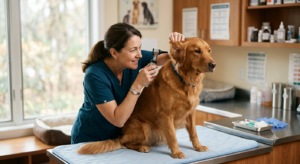
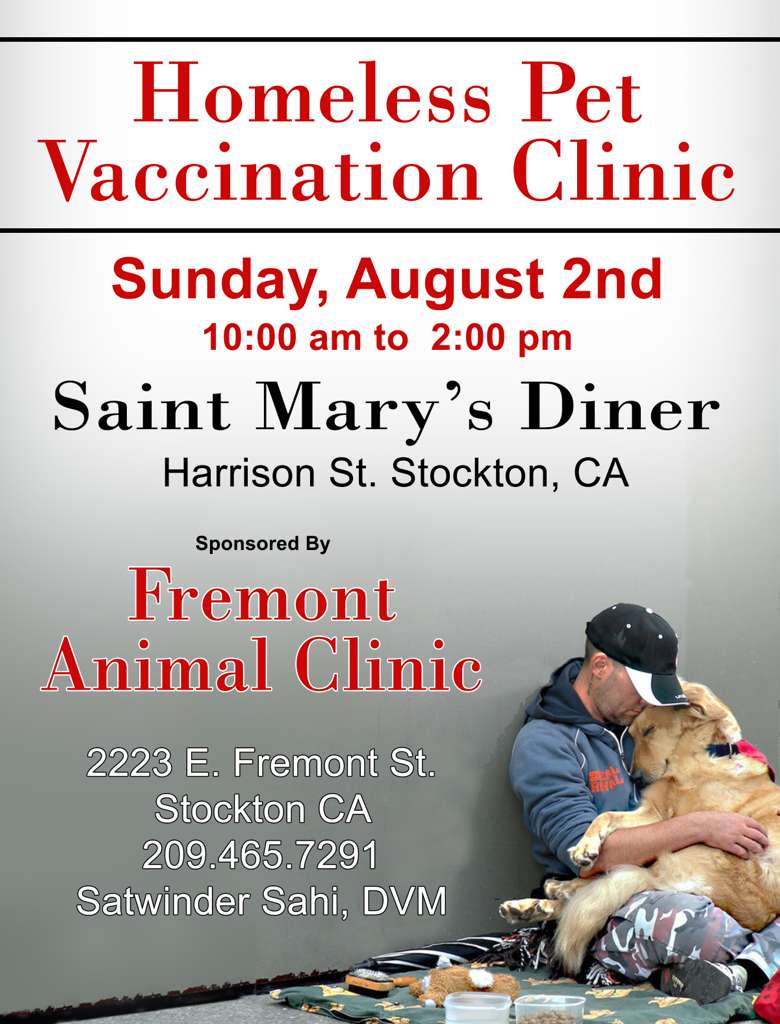
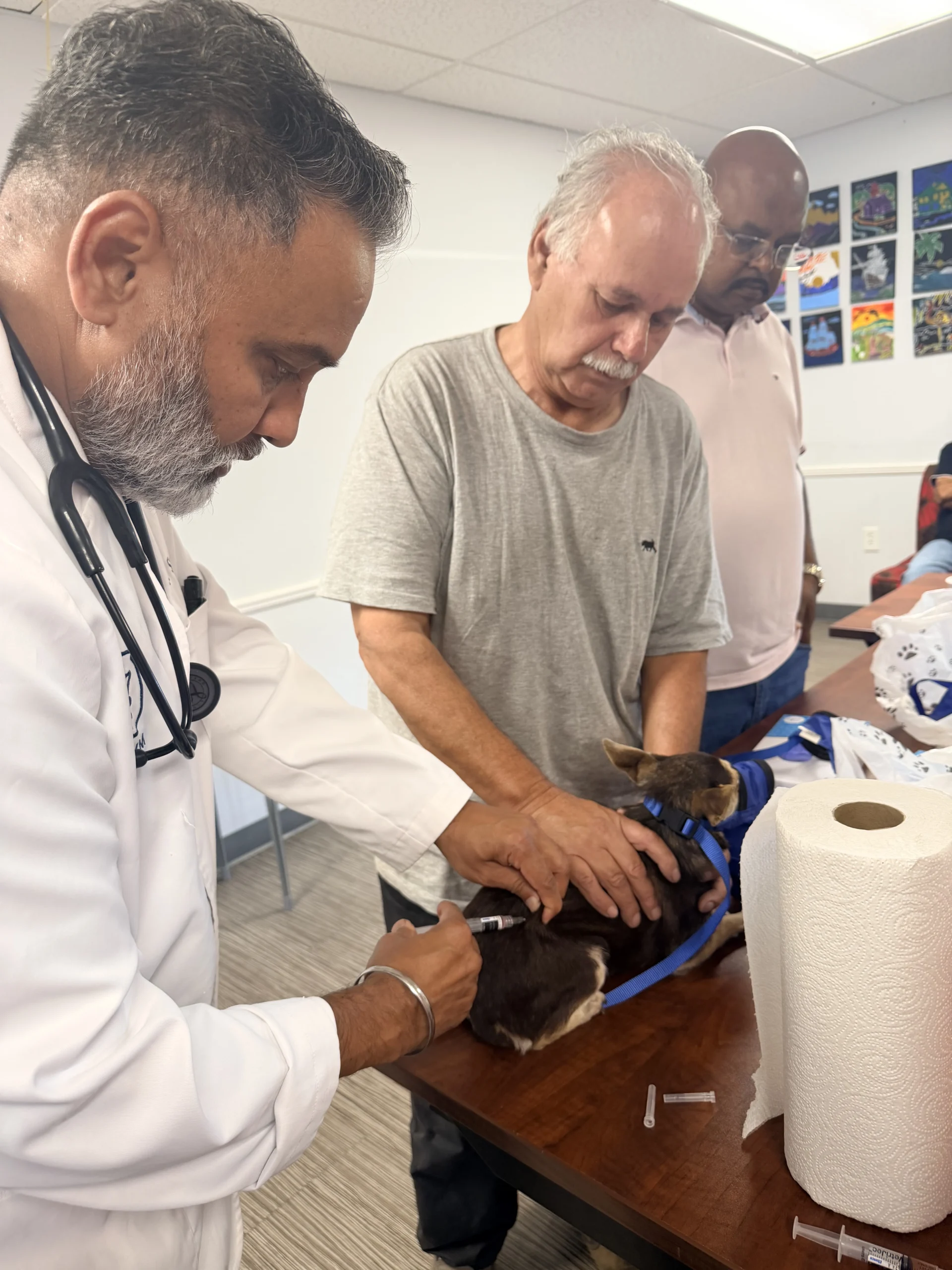
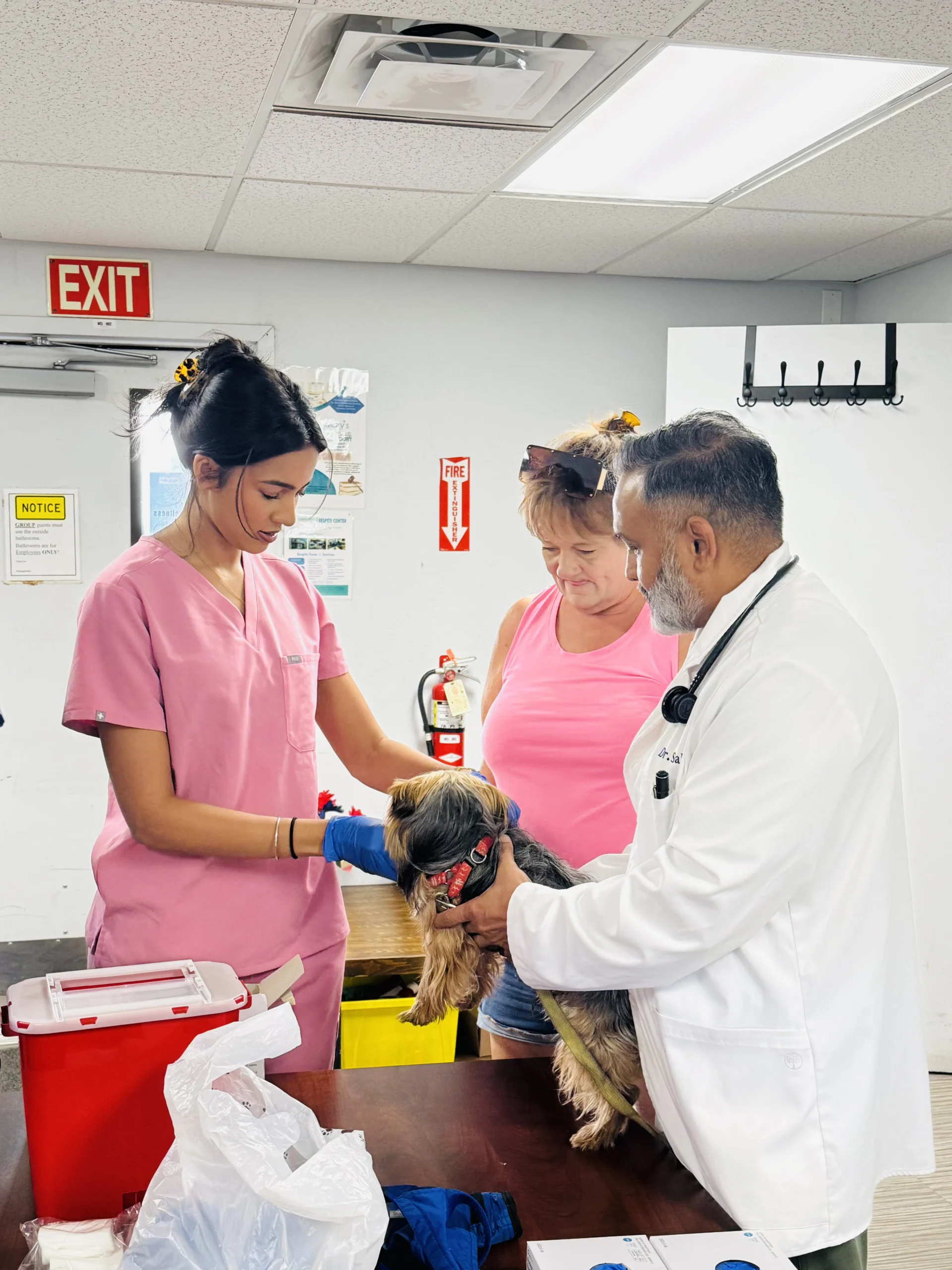
On Sunday, August 2, the team from Fremont Animal Clinic ran a community pet vaccine clinic in Stockton at Saint Mary’s Dining Room on West Sonora Street, vaccinating more than twenty dogs and cats belonging to people experiencing homelessness in our city at no cost to their owners. We packed coolers of vaccine, sharps containers, leashes and intake sheets into the back of a vehicle on a day the clinic is normally quiet, and set up in a borrowed room downtown from 10:00 am to 2:00 pm. This is an account of what happened, why it mattered medically and not just sentimentally, and what we learned about the gap between pets who get veterinary care in Stockton and pets who do not.
How the Day Was Set Up
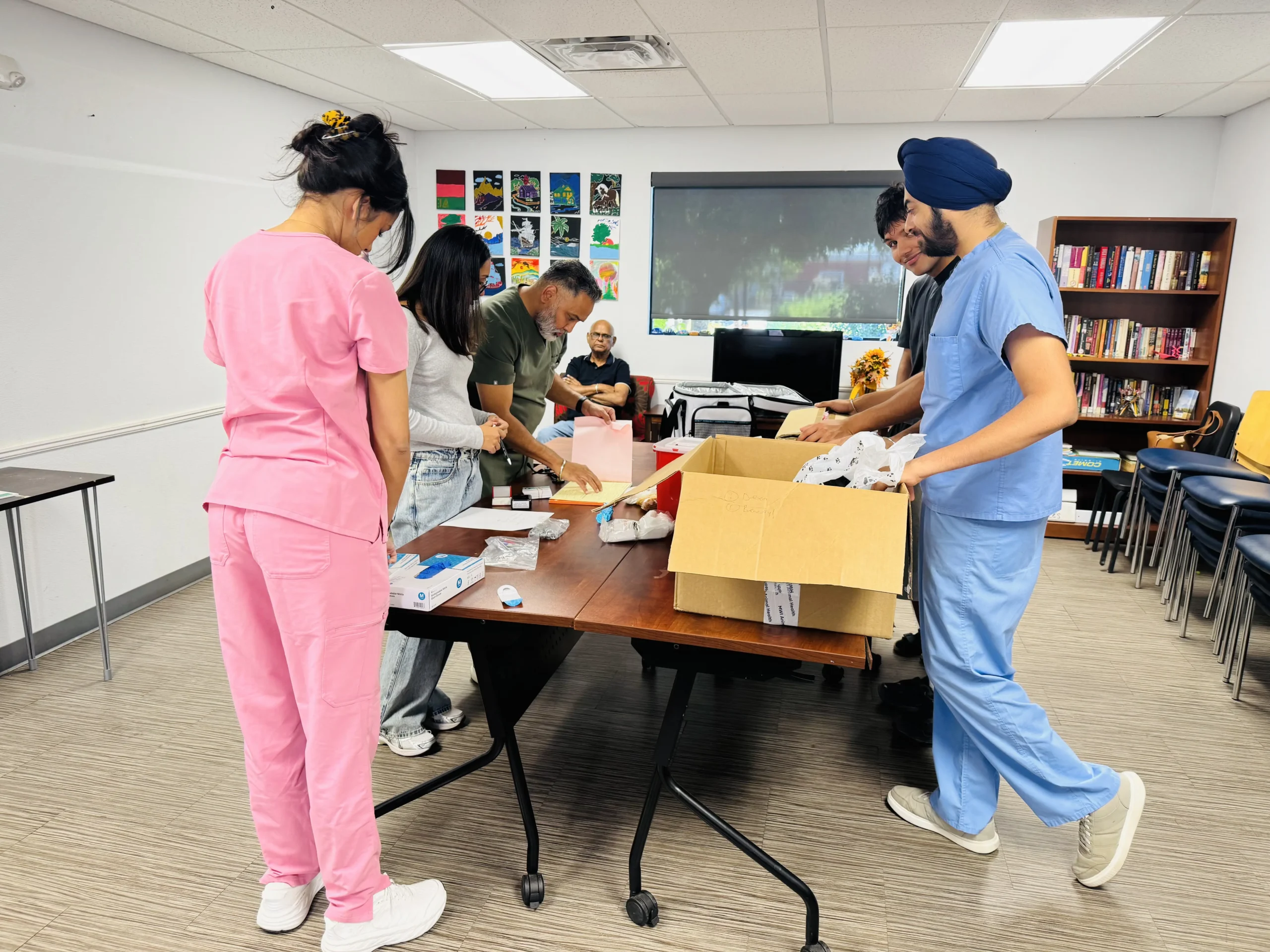
The setup was deliberately simple, because complexity is the enemy of a pop-up clinic. Two folding tables. One job each.
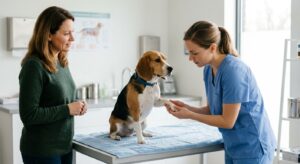
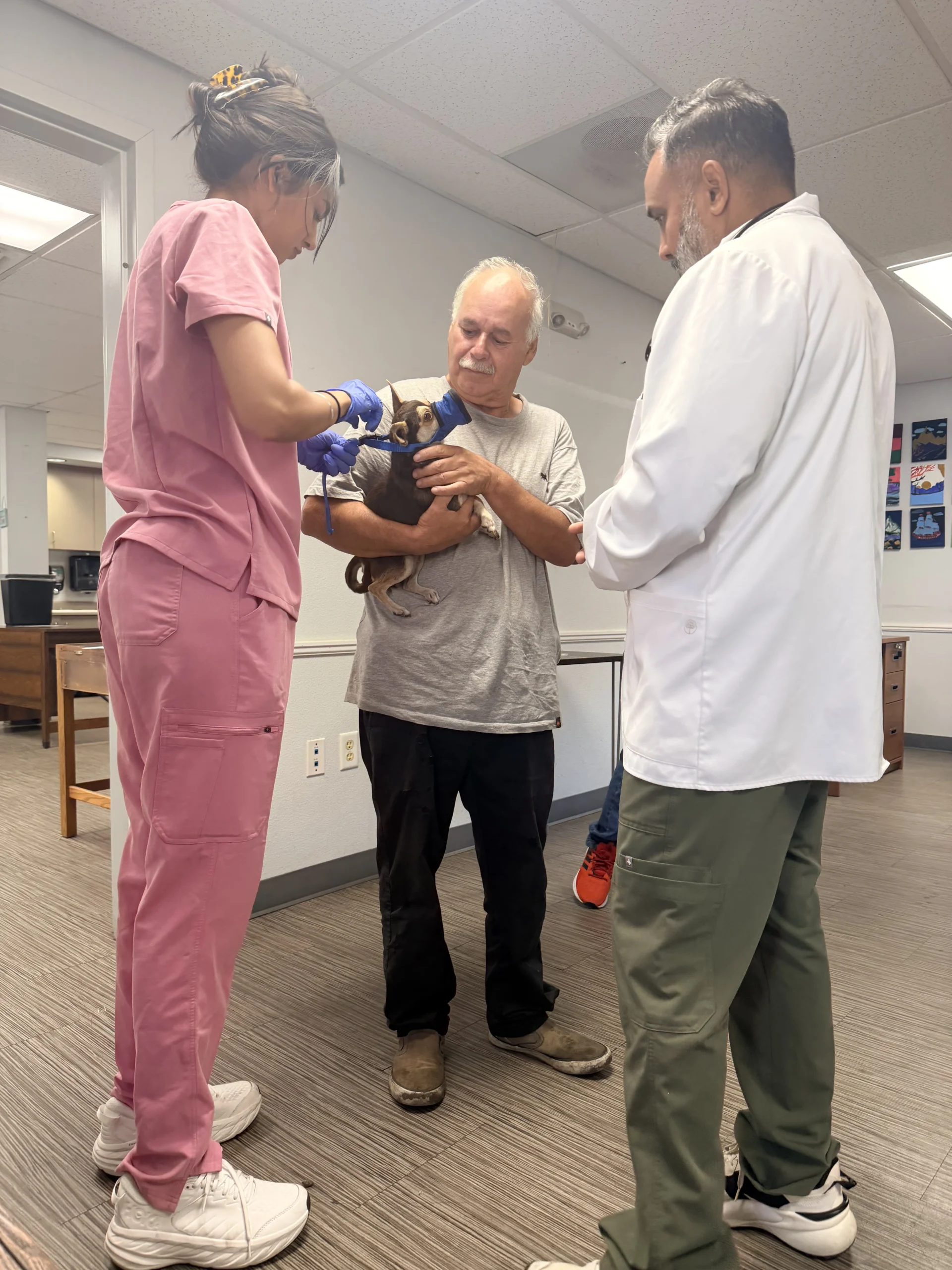
Check-in table. Owners gave their dog’s name, approximate age, and whatever medical history they could recall. Many could recall a great deal. People who live outside with a dog tend to know that dog’s habits, appetite and gait better than most owners with a fenced yard, because they are with the animal every hour of every day.
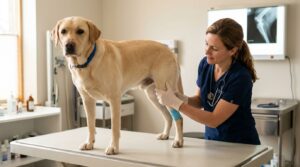
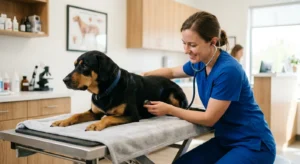
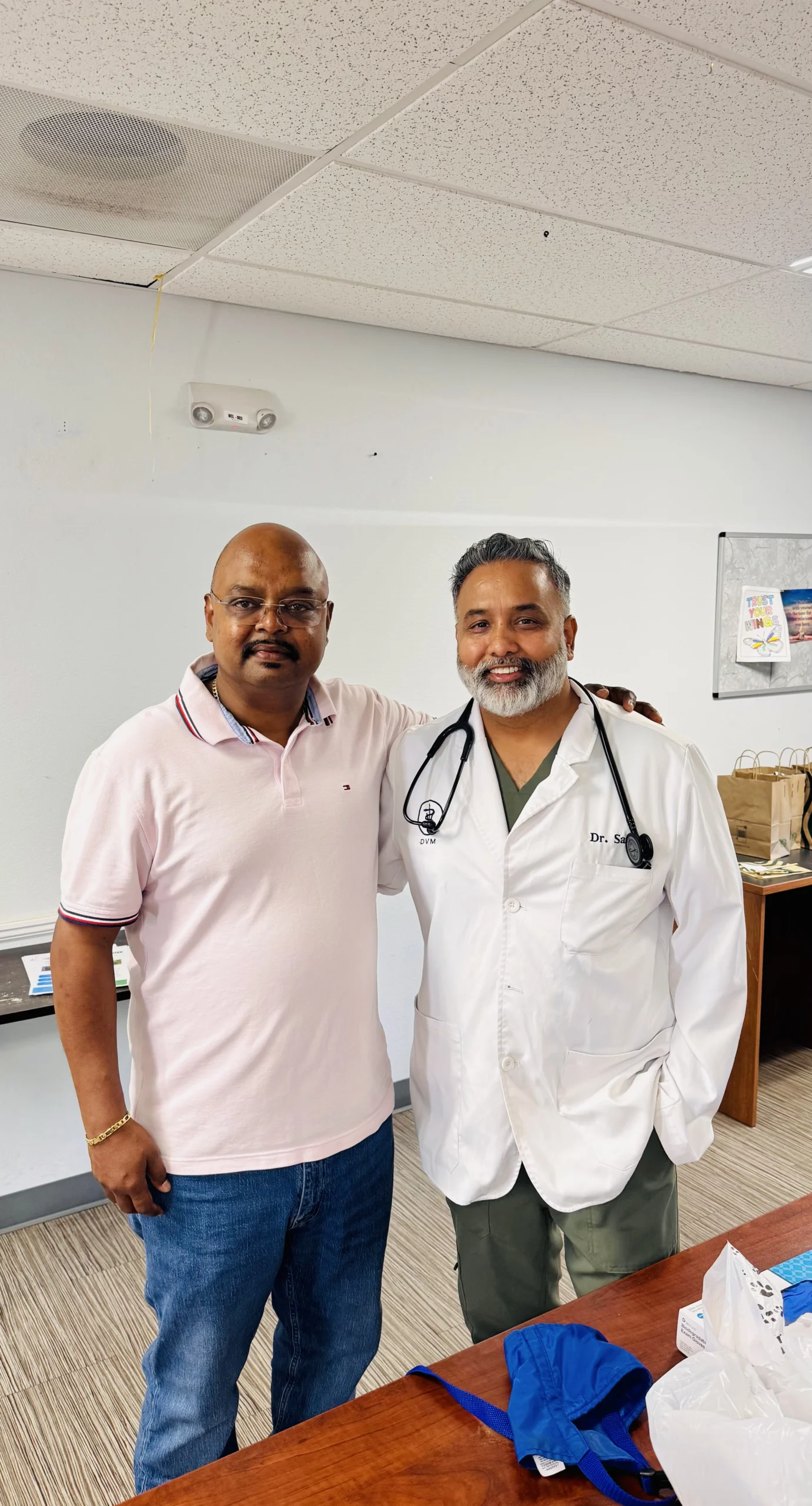
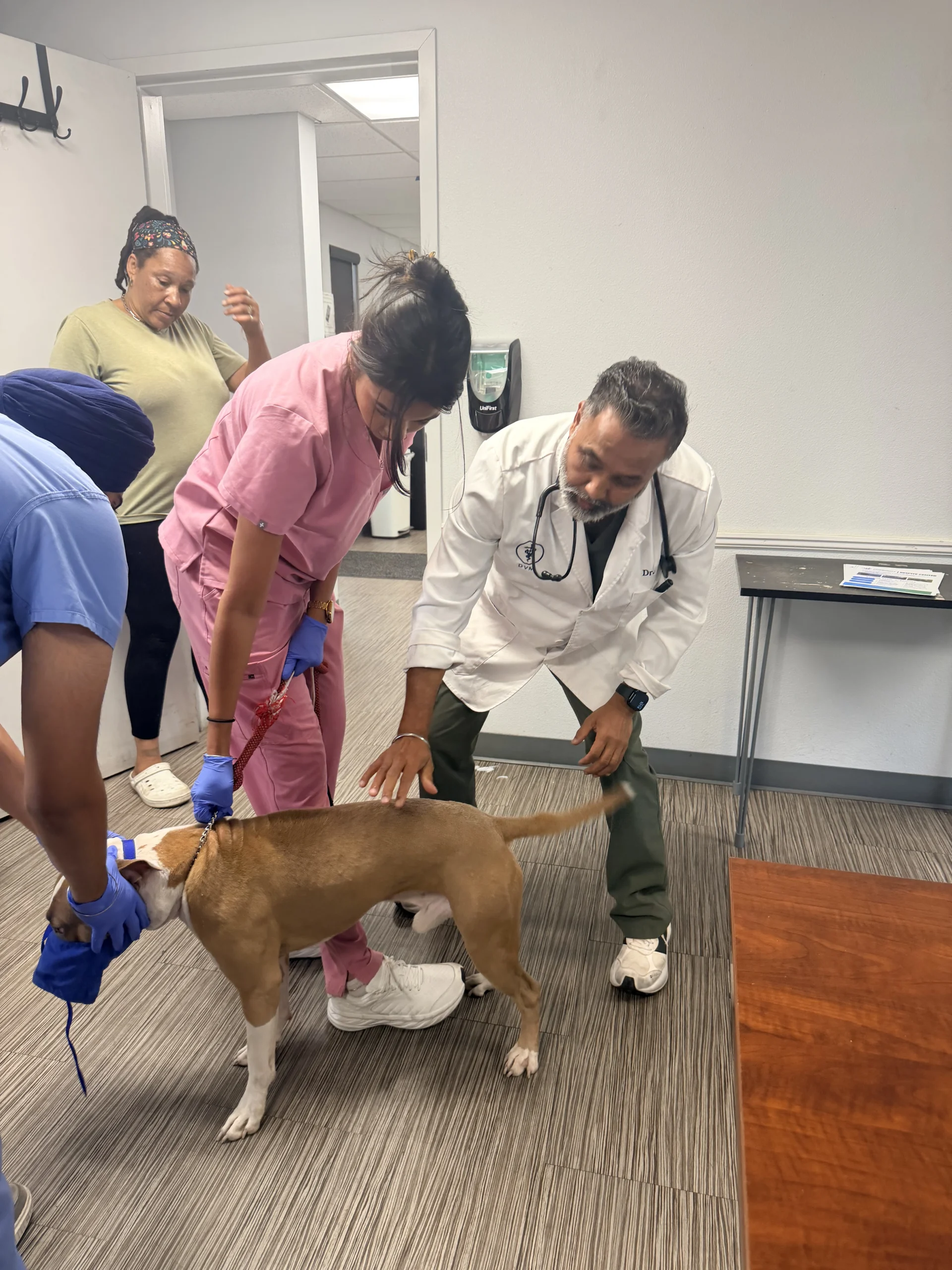
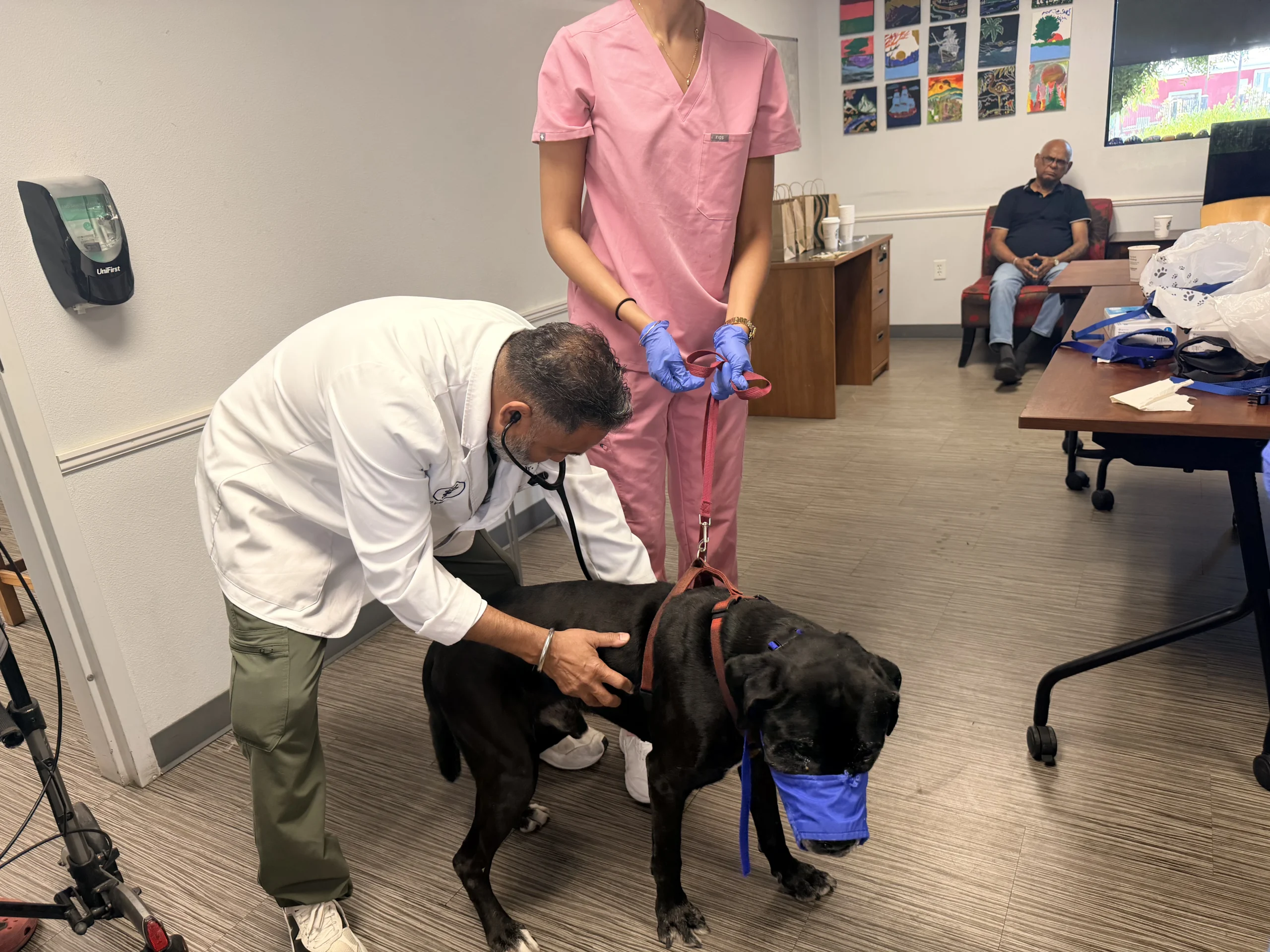
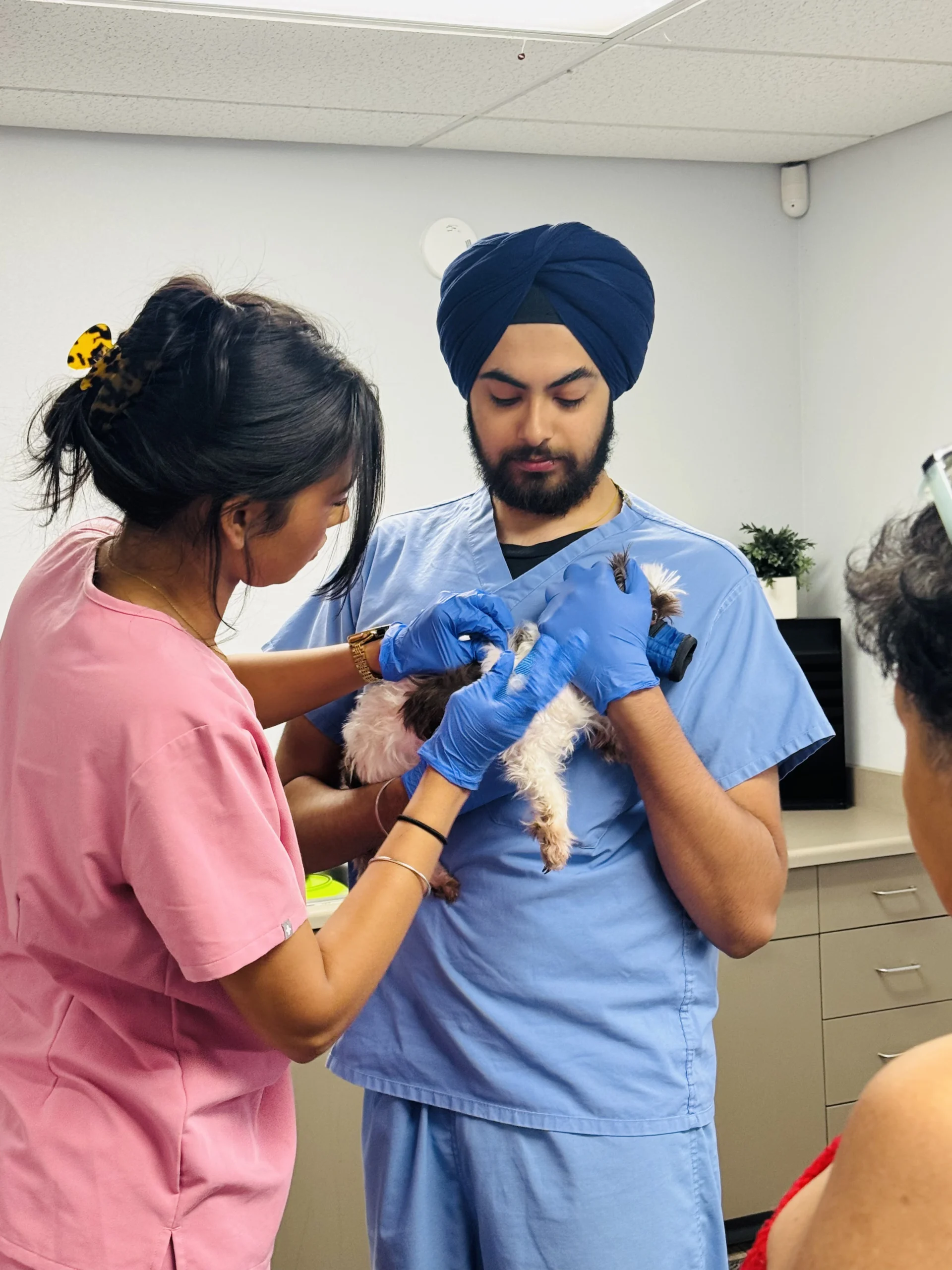
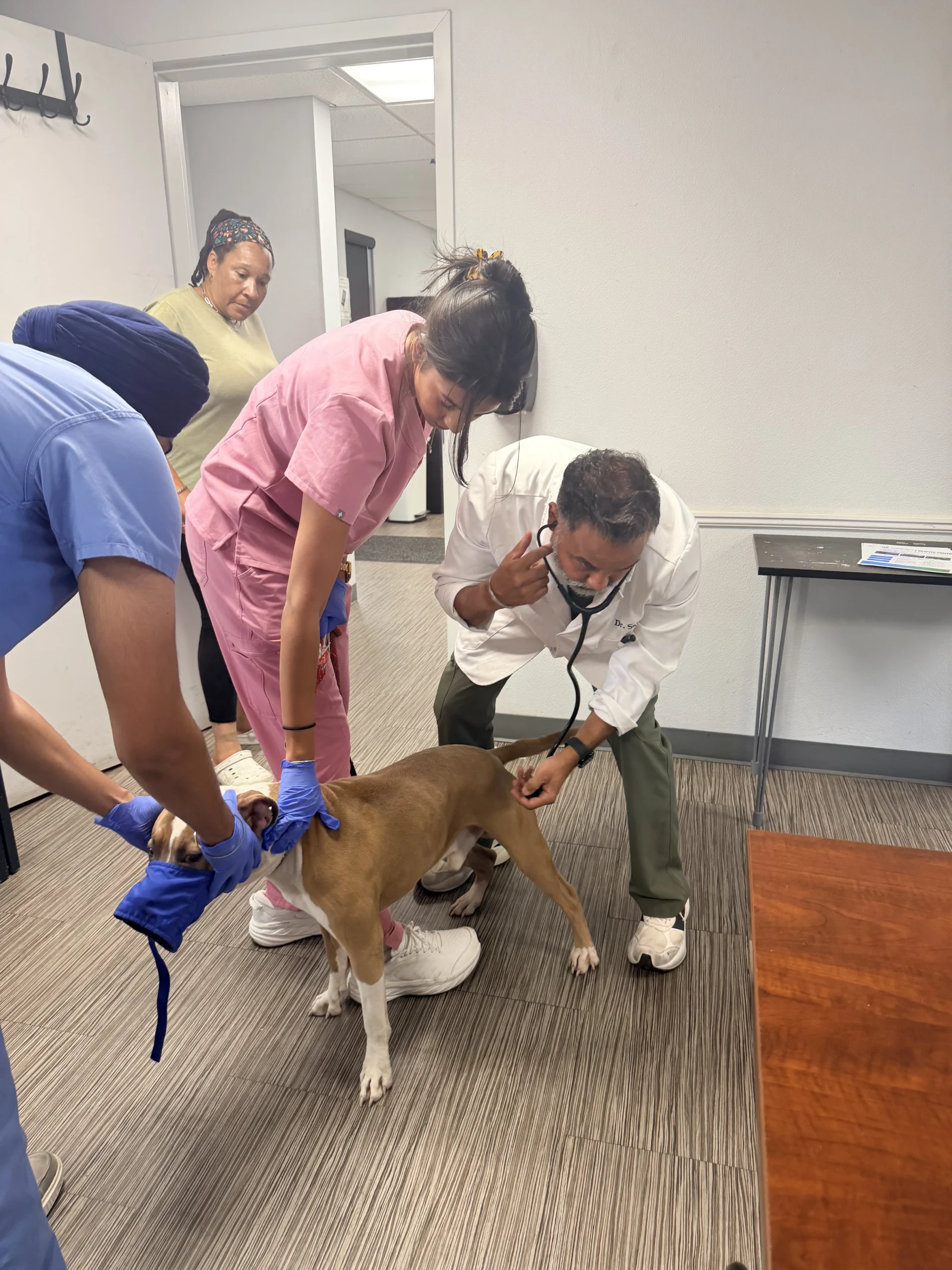
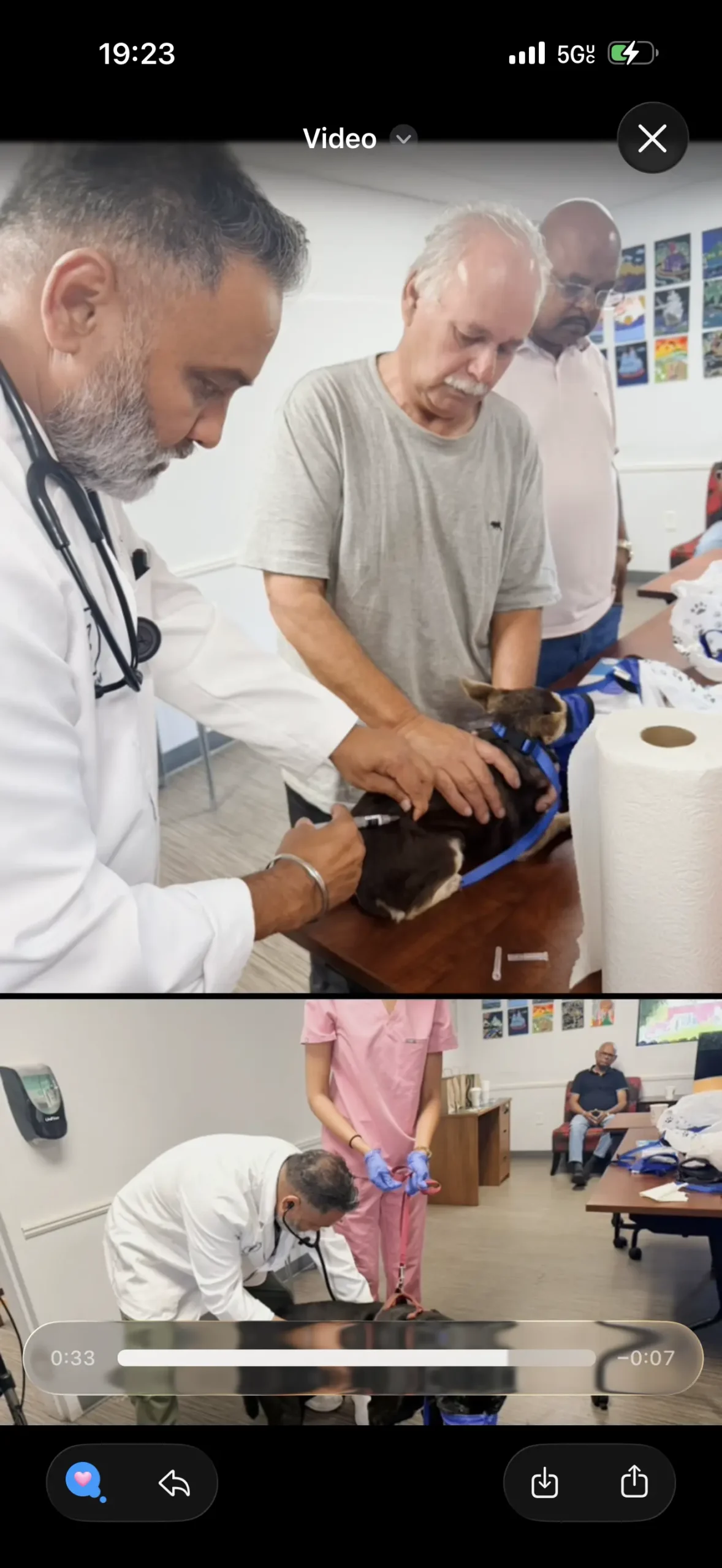
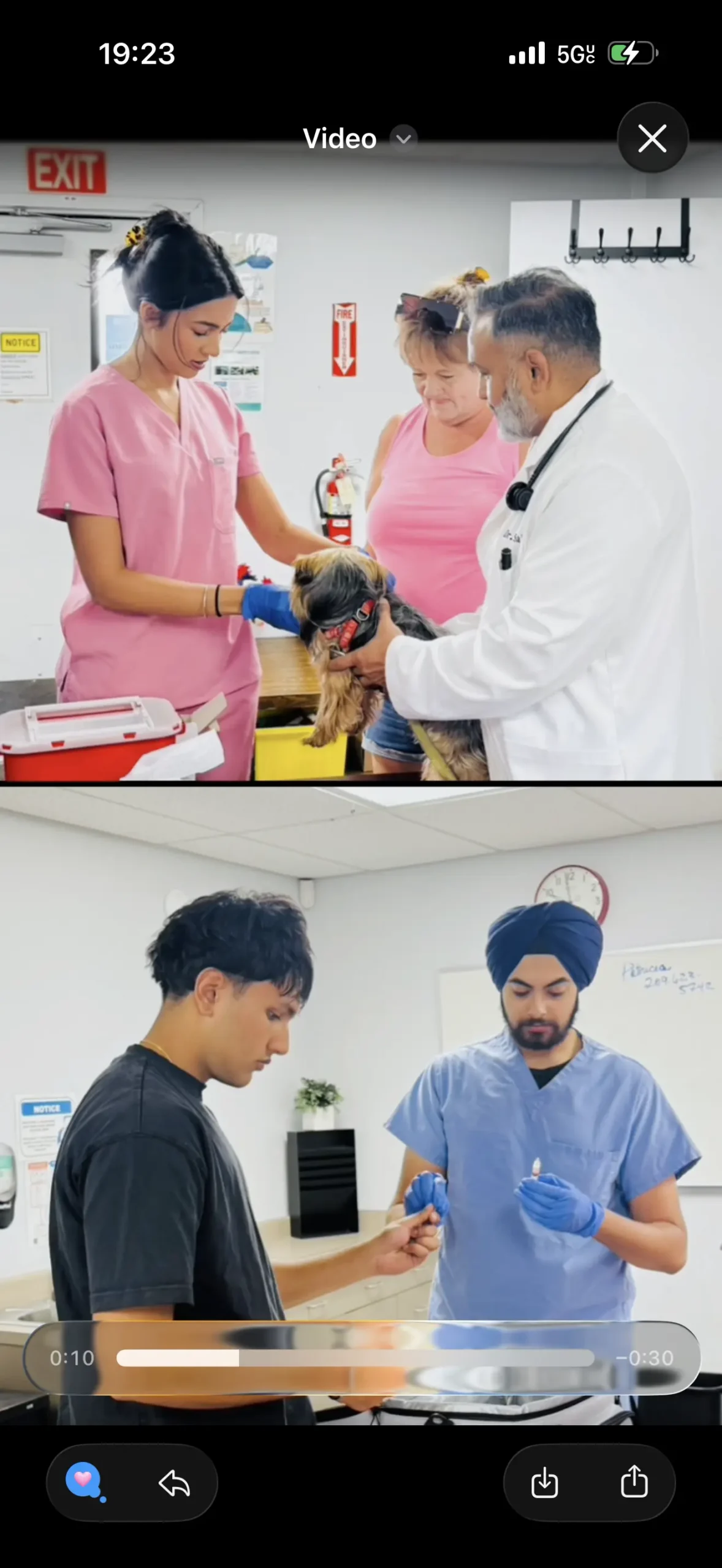
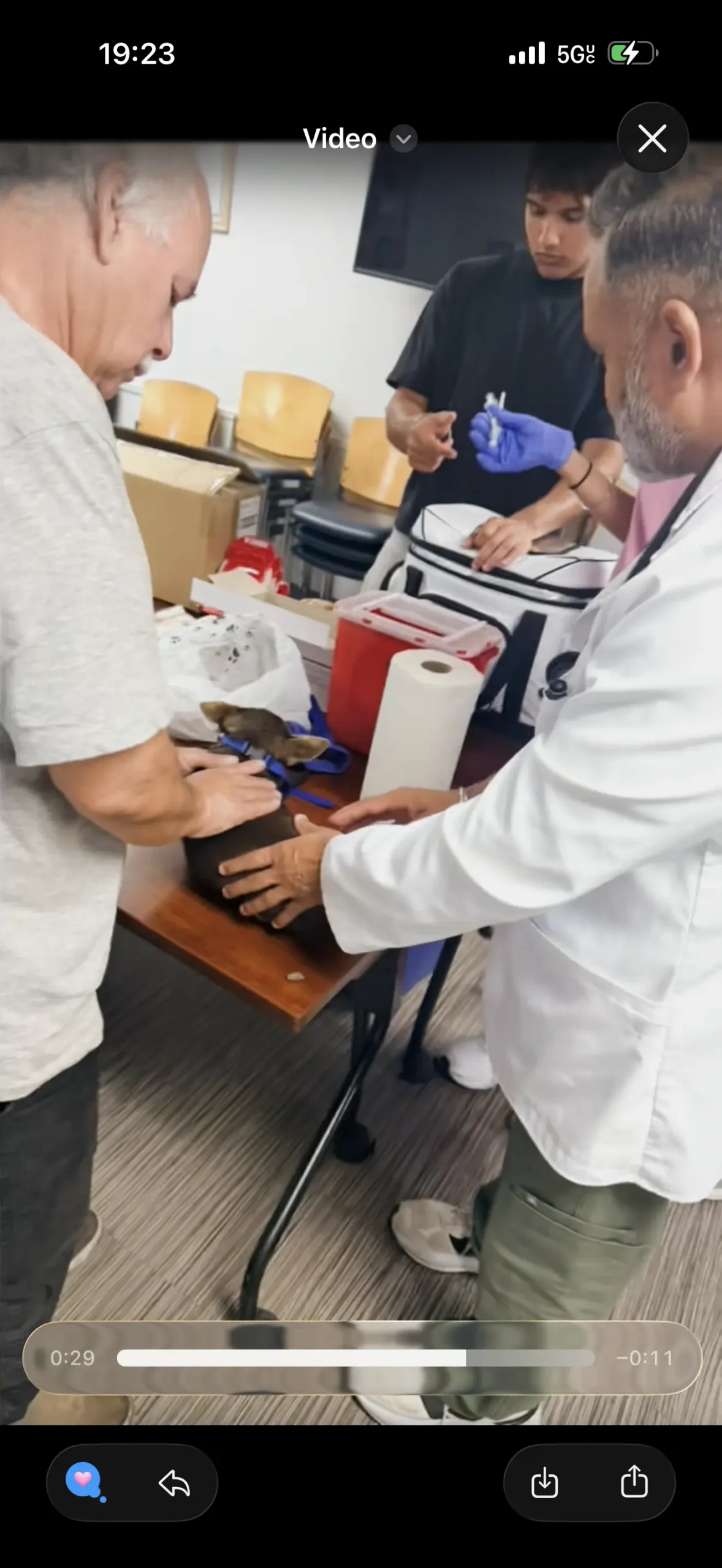
Exam table. Dr. Satwinder Sahi listened to hearts and lungs, checked coats and teeth, and answered questions while technicians drew up doses and volunteers held leashes.
That was the entire operation. No waiting room, no computer system, no schedule beyond the order people arrived in.
The Patients
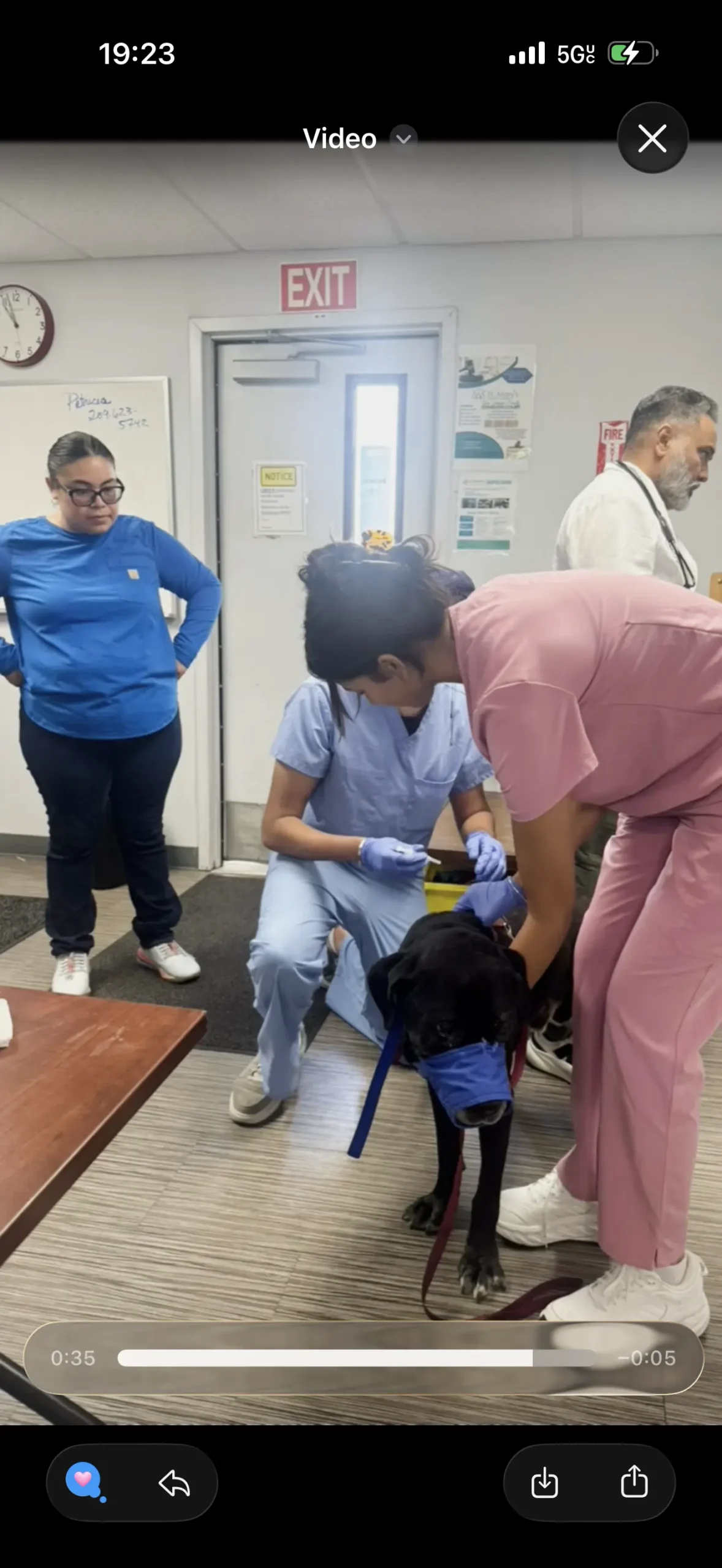
Some dogs were regulars at the shelter and walked into the room already knowing it, tails moving, going straight for the people they recognized. Others had never been handled by a stranger in a clinical setting and were frightened by the smell of alcohol swabs and the sound of a room full of animals. The cats that came through were carried in, mostly in arms rather than carriers, and were examined quickly and quietly away from the dogs.
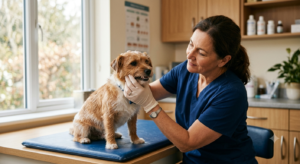
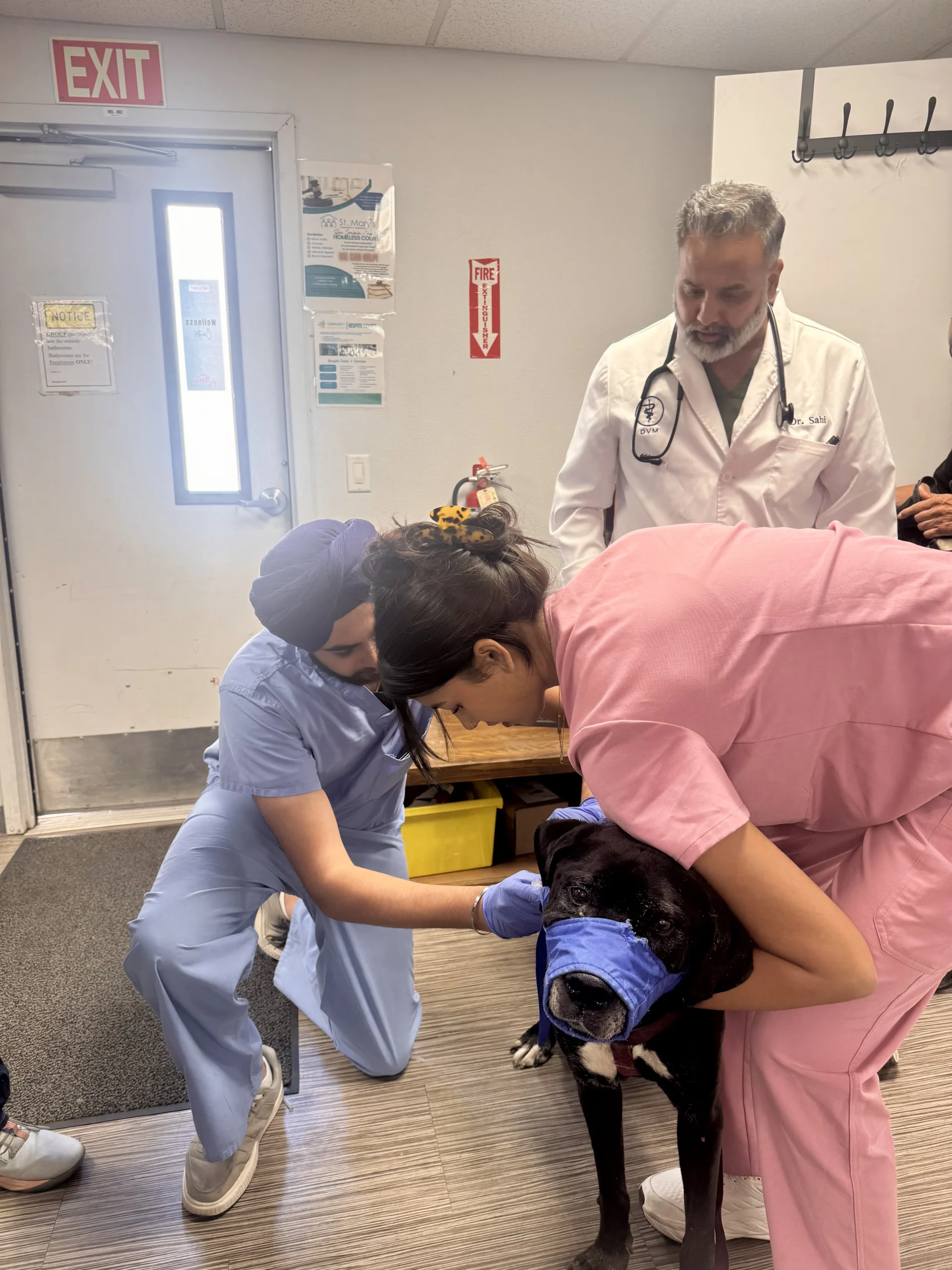
Those dogs got a muzzle and a few minutes of quiet before anything happened. Nobody was rushed. That decision is worth stating plainly because it is the part of a free clinic most likely to get cut when volunteers are watching the clock: a frightened dog restrained badly is a bite risk, a welfare problem, and a guarantee that the owner never brings that animal back to a veterinarian again. Time spent letting a dog settle is not a courtesy. It is clinical technique.





Why This Was a Public Health Event, Not Just a Kind One
For a lot of these owners, this was the first time their dog had seen a veterinarian in years. That gap has consequences that extend past the individual animal.
Rabies Protection Is Community Protection
Rabies is close to universally fatal once clinical signs appear, in animals and in people, and vaccinating dogs is the intervention that breaks the transmission chain. The AVMA’s rabies resources frame animal vaccination as a frontline public health measure rather than an individual pet decision, and the CDC’s guidance for veterinarians describes the quarantine and observation protocols that follow when an unvaccinated animal is exposed or bites someone.
That second point is the one most people miss. An unvaccinated dog involved in a bite incident faces a far harsher legal outcome than a vaccinated one. For an owner with no fixed address, no income and no way to fund a lengthy quarantine, that difference can mean losing the animal permanently. A rabies vaccine is not only medicine. It is legal protection for the bond between a person and the only companion they have.
Distemper and Parvo Move Fast in Close Quarters
Dogs living in encampments, shelters and vehicle communities exist in exactly the conditions infectious disease favors: dense populations, shared ground, limited sanitation, and low vaccination coverage. Canine parvovirus survives in soil for months and spreads through fecal-oral contact, which means one unvaccinated dog shedding virus can seed an outbreak across an entire block.
Parvo is already the single most searched pet health topic in this region, and we treat it constantly. If you want the clinical detail, we have written separately about the early signs of parvo in puppies, about how vets test for parvo, and about what hospitalization involves on our parvo treatment page. Every dose of DHPP given in that room on August 2 was a dose that reduces the chance of a puppy dying of something entirely preventable three months from now.
What Core Vaccination Actually Covers
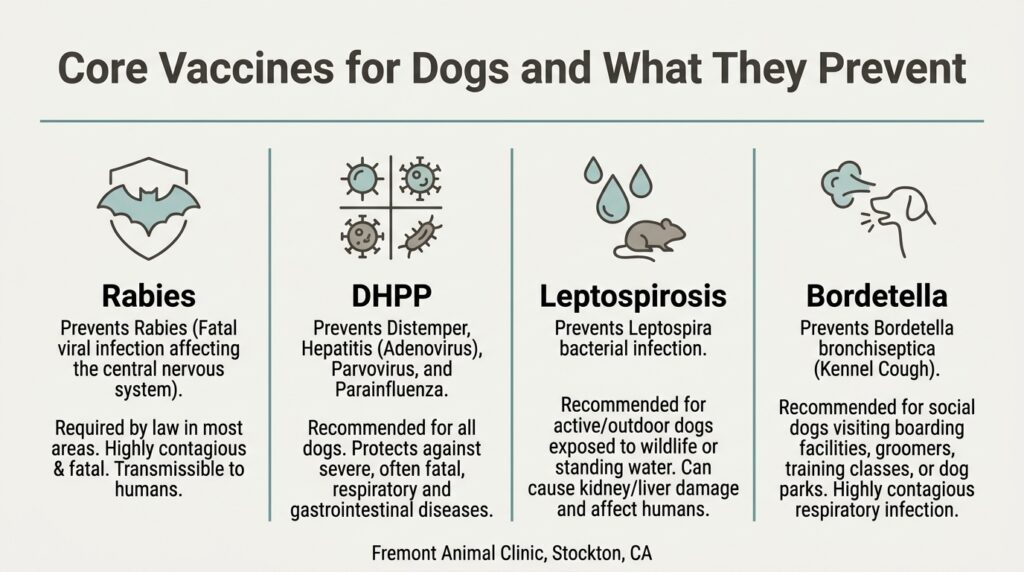
Vaccine conversations get muddled by acronyms. Here is the plain version, aligned with the AAHA canine vaccination guidelines, which were updated in 2024 to move leptospirosis into the core category for all dogs.
| Vaccine | Protects Against | Why It Matters for a Dog Living Outdoors | Status |
|---|---|---|---|
| Rabies | Rabies virus | Legally required, fatal once symptomatic, protects owner and public; determines outcome after any bite incident | Core, required by law |
| DHPP | Distemper, adenovirus (hepatitis), parainfluenza, parvovirus | Covers the four diseases most likely to spread in dense, unsanitary or shared-ground conditions | Core |
| Leptospirosis | Leptospira bacteria | Spread through standing water, puddles and rodent urine, all unavoidable outdoors; also transmissible to humans | Core as of the 2024 update |
| Bordetella | Kennel cough complex | Recommended where dogs congregate closely, including shelters and encampments | Noncore, risk-based |
The important nuance: core does not mean identical protocol for every dog. Age, prior history and health status all change the schedule, and for a dog whose vaccine history is unknown, the approach differs from a dog with records. That individualized assessment is the same one we apply during routine pet vaccinations near me appointments at the clinic.
The Barriers That Keep Pets Out of Exam Rooms
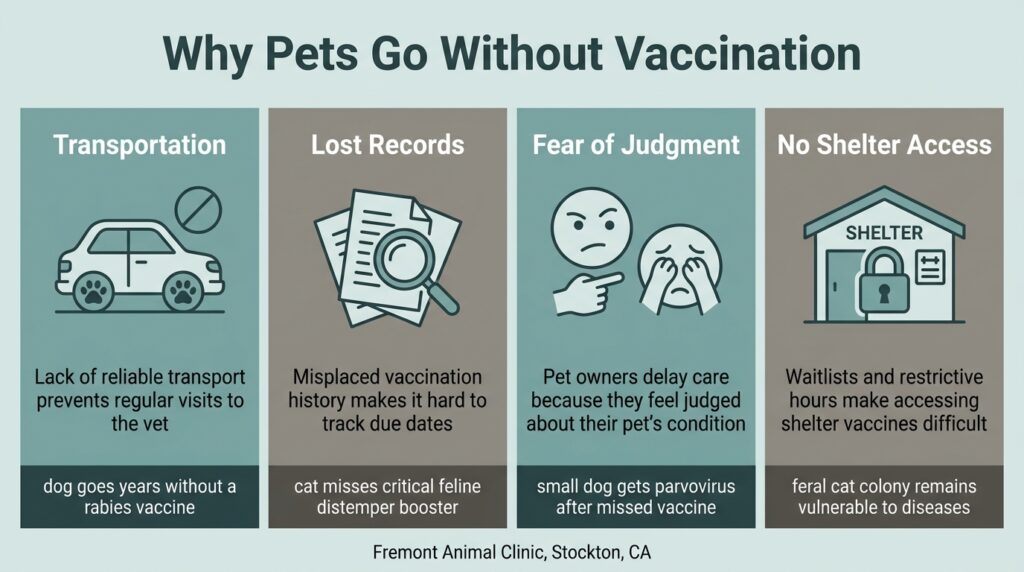
Running a clinic in a borrowed room makes visible what is usually invisible. The reason these dogs had not seen a veterinarian was rarely indifference. It was structural.
Transportation. A veterinary clinic requires getting there. Without a vehicle, with a large dog, in Central Valley summer heat, that is not a small obstacle. It is often an impossible one.
Documentation and records. Vaccine history lives on paper that is easily lost when a person’s belongings are repeatedly moved or discarded. Starting from zero every time is discouraging, and it means dogs get revaccinated or undervaccinated based on guesswork.
The expectation of judgment. Several owners said some version of the same thing: they had avoided veterinary settings because they expected to be treated as unfit to keep the animal. That fear is the most damaging barrier of the three, because it delays care until a treatable problem becomes an emergency.
Where the animal goes during human crisis. Many shelters and hospitals cannot accommodate pets, which means people routinely decline services, including medical care for themselves, rather than surrender an animal.
National organizations have been working this problem for years. Feeding Pets of the Homeless runs wellness clinics on exactly this model, held at locations that already serve the population, with veterinarians donating time and the organization underwriting supplies. The logic is simple and correct: bring the medicine to where the people already are, rather than expecting people in crisis to navigate their way to the medicine.
What the Volunteers Did
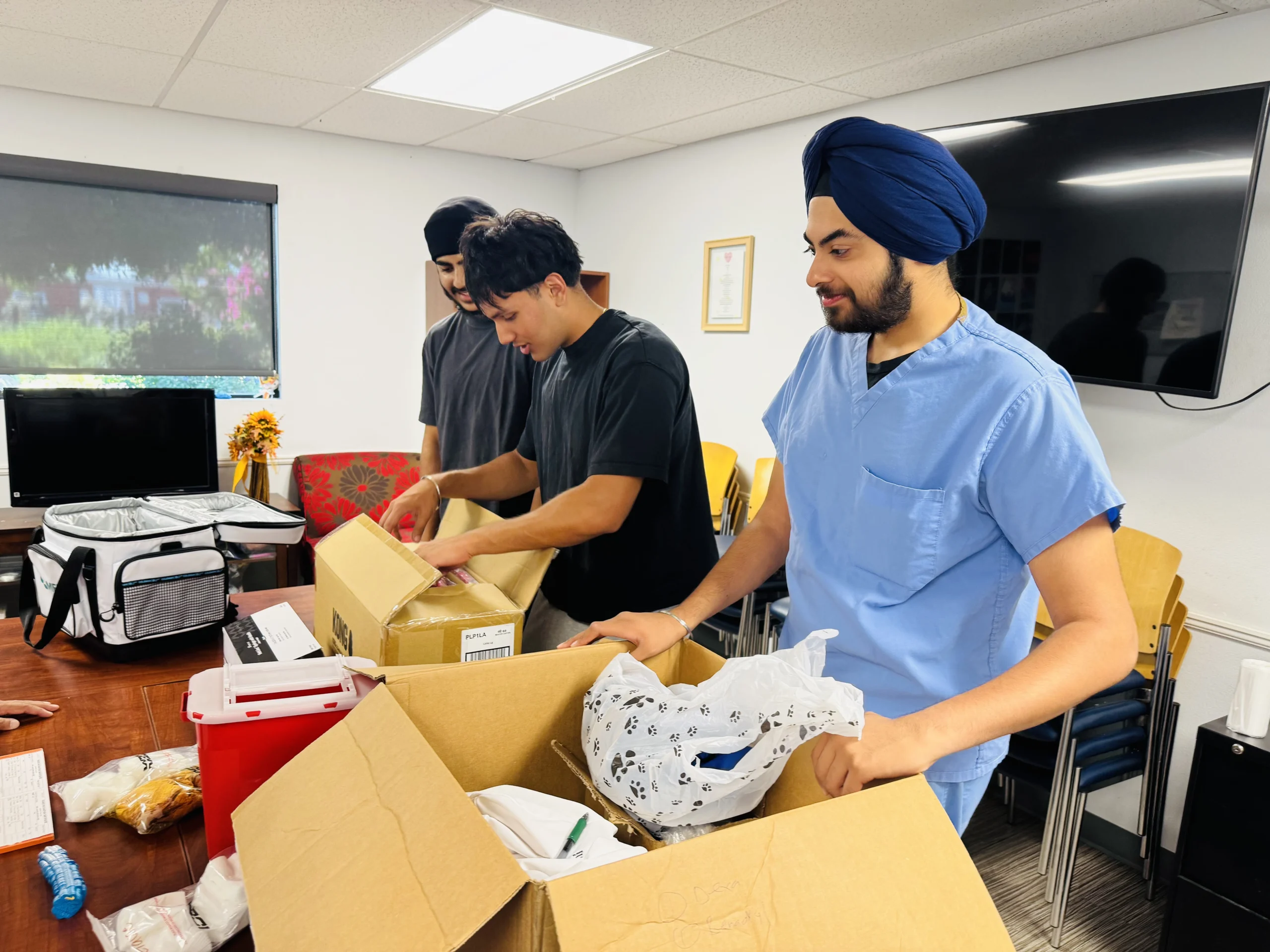
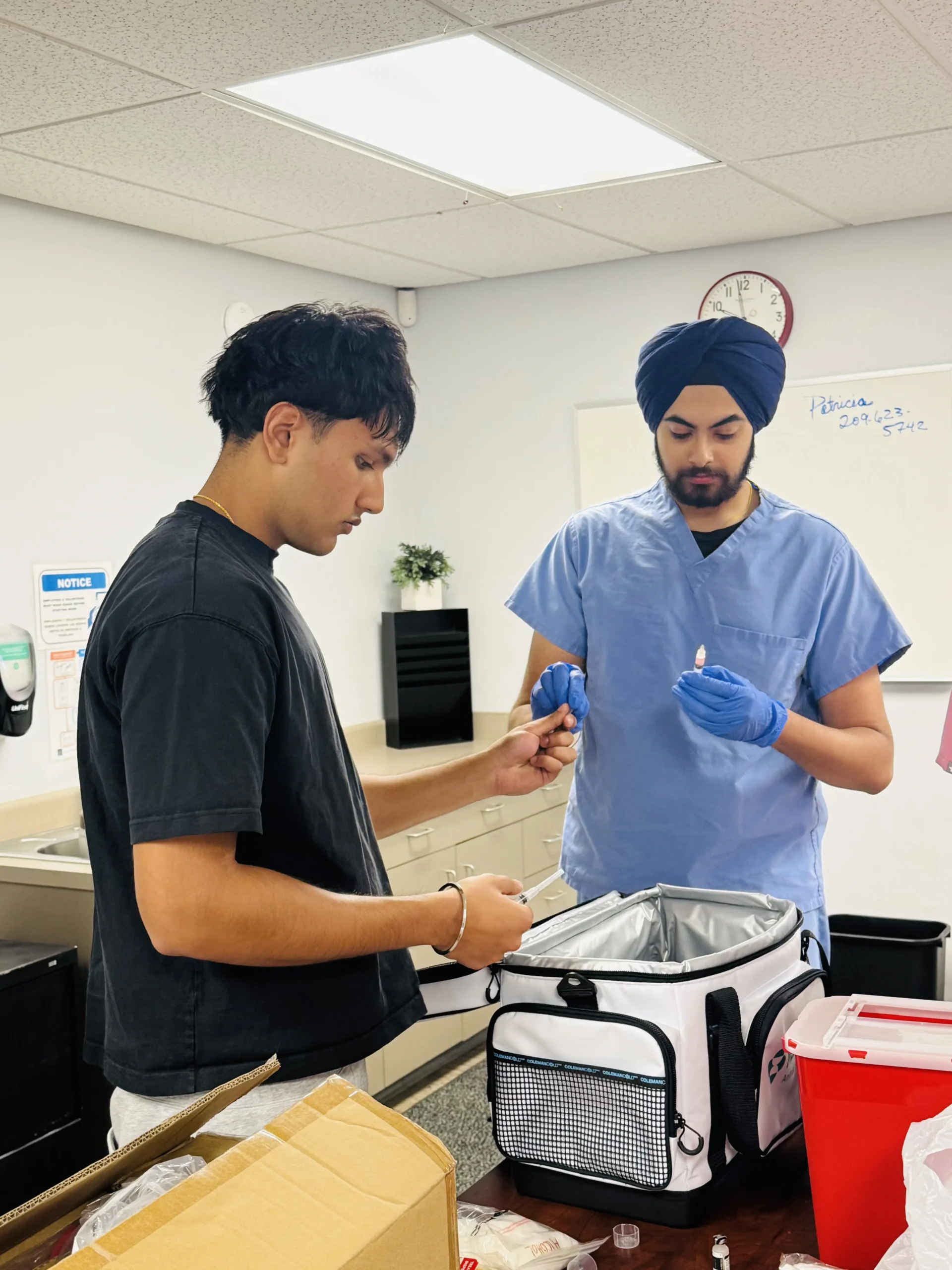
The clinic was staffed by our own team alongside volunteers who gave up their Sunday. They unpacked supplies, ran intake, held leashes and cleaned up afterward. That is unglamorous work, and on a day like this it is most of the work.
For anyone considering veterinary medicine as a career, a clinic like this shows a side of it that does not appear in a textbook: vaccines given in a borrowed room, with limited supplies and no equipment beyond what fits in a cooler, for owners who care about their animals every bit as much as any client walking through our front door. It teaches working under constraint, and it teaches that a history taken patiently from someone who expects to be dismissed is worth more than any test you cannot run.
Vaccination Care in Stockton
A single day of vaccination is a start, not a substitute for ongoing care. Dogs and cats vaccinated on August 2 will need the rest of the series and boosters after that, and the same is true for any pet in the city.
For pet owners across Stockton, a few things are worth knowing:
- Vaccination schedules are individual, not generic. Age, lifestyle, exposure risk and prior history all shape the protocol, which is reviewed at each visit rather than set once. That review is part of preventive care for pets in Stockton.
- Identification works alongside vaccination. A vaccinated pet that gets lost and cannot be identified is still a pet that may never come home. Microchipping is a single quick procedure, and it matters most for animals that spend the most time outdoors.
- Choosing a practice is easier before you urgently need one. We have written a fuller comparison for owners searching for the best veterinarian near me in Stockton and trying to tell a full-service clinic from a limited one.
- Bring whatever records exist, even partial ones. A hand-written card, a photograph of a label, a rough date. All of it narrows the guesswork.
If You Would Like to Help
A day like this comes together when supplies, hands and a room line up. Anyone interested in contributing to community vaccination work of this kind can reach us at 209.465.7291, and the things that make the most difference are straightforward: vaccine and syringes, sharps containers, leashes and slip leads, and time on the day itself. No veterinary background is needed for most of the volunteer work.
Fremont Animal Clinic has served this city from 2223 E. Fremont Street for many years, and outreach like this is part of that. A community pet vaccine clinic in Stockton does not solve access to veterinary care, and we would not claim otherwise. What it does is put a rabies tag on a dog that did not have one, start a vaccine record for an animal that had none, and show an owner who expected to be judged that their pet will be handled with the same care as any other patient.
Frequently Asked Questions
-
What is a community pet vaccine clinic?
It is a temporary veterinary clinic set up at a location that already serves a community, such as a shelter, dining hall or food pantry, rather than at a veterinary hospital. A veterinary team brings vaccines and supplies to the site and provides core vaccinations and basic exams on the spot. The model removes transportation and cost barriers that otherwise keep pets from receiving any preventive care at all.
-
Which vaccines do dogs actually need?
Core vaccines are recommended for every dog regardless of lifestyle: rabies, DHPP covering distemper, adenovirus, parainfluenza and parvovirus, and leptospirosis, which moved into the core category in the 2024 guideline update. Bordetella is risk-based and recommended where dogs congregate closely. The specific schedule depends on your dog’s age, health and vaccine history, which is why protocols are set individually rather than applied uniformly.
-
Why does rabies vaccination matter if my dog never leaves my side?
Rabies vaccination is legally required for dogs in California, and the requirement exists for public health reasons rather than individual risk assessment. Exposure can happen through wildlife contact in seconds. The practical consequence matters too: if an unvaccinated dog is involved in a bite incident, the mandated quarantine and legal outcome are significantly harsher than for a vaccinated dog, which can put the owner at risk of losing the animal.
-
How often should an adult dog be revaccinated?
It depends on the vaccine and the individual dog. Rabies is typically given as a one-year vaccine followed by a three-year interval, subject to state and local law. Core DHPP boosters are generally given every three years in adult dogs following a complete initial series, while leptospirosis and Bordetella require annual boosters. Your veterinarian sets the interval based on your dog’s history and exposure risk.
-
My dog has no vaccine records at all. What happens?
Nothing punitive, and it is a common situation. When history is unknown, the safest clinical approach is to treat the dog as unvaccinated and begin an appropriate series based on age and health status. Revaccination of a dog that turns out to have been previously vaccinated carries minimal risk, whereas leaving a genuinely unprotected dog uncovered carries considerable risk. Bring any partial information you have.
-
Can pet owners who are unhoused use a community vaccine clinic?
Yes. Clinics of this kind exist specifically to reach pet owners who cannot get to a veterinary practice, and no one is asked to prove income, address or housing status to have an animal vaccinated at one. Owners are asked only for the pet’s name, rough age and whatever vaccine history they can recall. Nothing further is required, and partial information is normal rather than a problem.
The dogs seen that Sunday were not different from the ones we see every weekday. Only the room was.