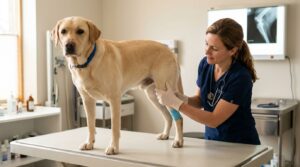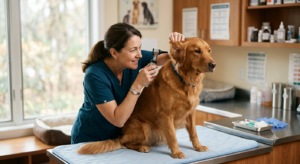

Most dog owners ask the same question at some point: why spay or neuter your dog when your pet seems perfectly healthy and happy already? The answer has less to do with today and everything to do with the next ten to fifteen years. Fremont Animal Clinic has performed thousands of these procedures for Stockton families, and the pattern is consistent. Dogs who are spayed or neutered at the right age tend to live longer, face fewer emergency surgeries later in life, and settle into calmer, more predictable behavior.
This guide walks through what the procedures actually involve, the health benefits behind them, the best age to schedule surgery, and what happens medically when families wait too long.
What Does It Mean to Spay or Neuter a Dog?
Spay and neuter are surgical sterilization procedures, but they are not interchangeable terms. Spay refers to females, neuter refers to males, and each surgery targets different reproductive organs.
The Spay Procedure Explained
Spaying, medically known as an ovariohysterectomy, removes a female dog’s ovaries and uterus. Interestingly, the word traces back to the Latin spatha, referring to a broad blade, a nod to the surgical instruments historically used for the procedure. Once the ovaries are removed, the hormonal cycle that drives heat, mating behavior, and pregnancy risk stops permanently.
The Neuter Procedure Explained
Neutering, or castration, removes a male dog’s testicles. This eliminates sperm production and significantly lowers testosterone-driven behaviors such as roaming, marking, and mounting. Both procedures are performed under general anesthesia with continuous vital sign monitoring, and most healthy dogs go home the same day.
Why Spay or Neuter Your Dog: The Health Benefits
The health case for sterilization is well documented across veterinary medicine, and it applies differently depending on your dog’s sex.
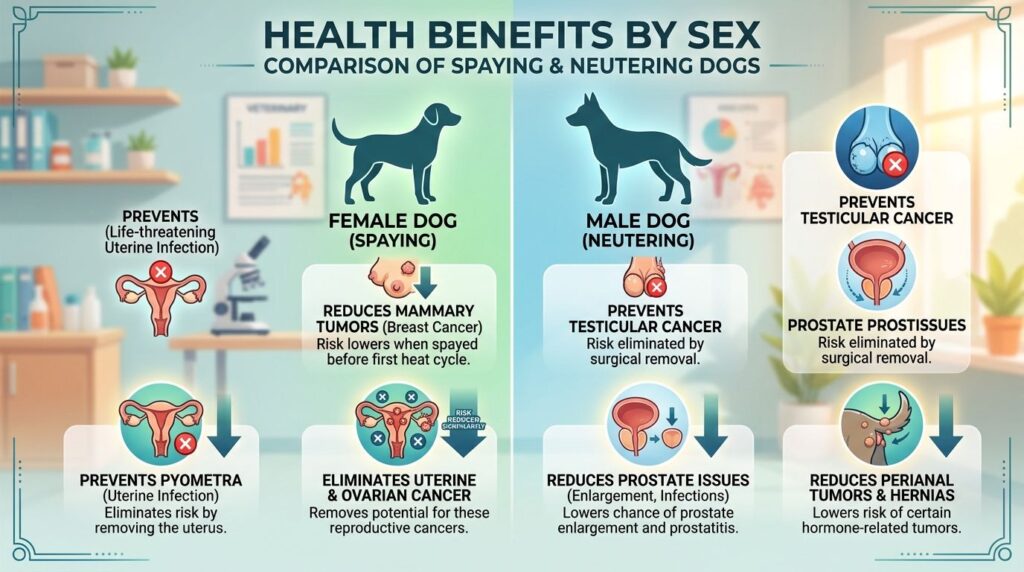
Benefits for female dogs:
- Eliminates the risk of pyometra, a life-threatening uterine infection that often requires emergency surgery
- Sharply reduces the risk of mammary tumors, especially when performed before the first heat cycle
- Removes the mess and behavioral changes that come with heat cycles twice a year
Benefits for male dogs:
- Eliminates the risk of testicular cancer entirely
- Lowers the risk of prostate disease later in life
- Reduces roaming, territorial marking, and same-sex aggression driven by testosterone
According to Cornell University’s Riney Canine Health Center, pyometra is entirely preventable through spaying and is far safer to address proactively than as an emergency. Families searching for a spay and neuter clinic in Stockton often come to us specifically because a family member’s older, unspayed dog developed this condition later in life.
Spay vs Neuter: Key Differences at a Glance
Pet owners frequently search for the difference between spay and neuter before scheduling a consultation. While both procedures accomplish the same broad goal of sterilization, the surgery, recovery, and hormonal effects differ.
| Factor | Spay (Female) | Neuter (Male) |
|---|---|---|
| Organs removed | Ovaries and uterus | Testicles |
| Surgical complexity | Moderate, abdominal incision | Simpler, shorter procedure |
| Average recovery time | 10 to 14 days | 7 to 10 days |
| Prevents | Pyometra, mammary tumors, heat cycles | Testicular cancer, prostate issues, roaming |
| Typical anesthesia time | Slightly longer | Shorter |
If you want a deeper breakdown of surgical steps and recovery expectations for each sex, our guide on the difference between spay and neuter covers both procedures in detail.
Best Age to Spay or Neuter Your Dog
Timing is where most of the confusion happens, largely because the recommended age depends on your dog’s projected adult size, not a single universal number.
General timing guidelines:
- Small breed dogs under 45 pounds are generally spayed or neutered around five to six months of age, ideally before the first heat cycle in females
- Large breed dogs often benefit from waiting until growth plates close, typically between nine and fifteen months of age
- Puppies can safely be sterilized as young as eight weeks in many cases, though this is usually reserved for shelter and rescue situations
The American Animal Hospital Association publishes size-specific life stage guidelines that many veterinarians, including our team, use as a starting framework before adjusting for breed, lifestyle, and individual health history.
One question we hear often is whether neutering is easier than spaying. Generally, yes. Neutering is a shorter, less invasive procedure with a faster recovery window, since the testicles sit outside the abdominal cavity while a spay requires entering the abdomen to remove internal organs.
The Risks of Waiting Too Long
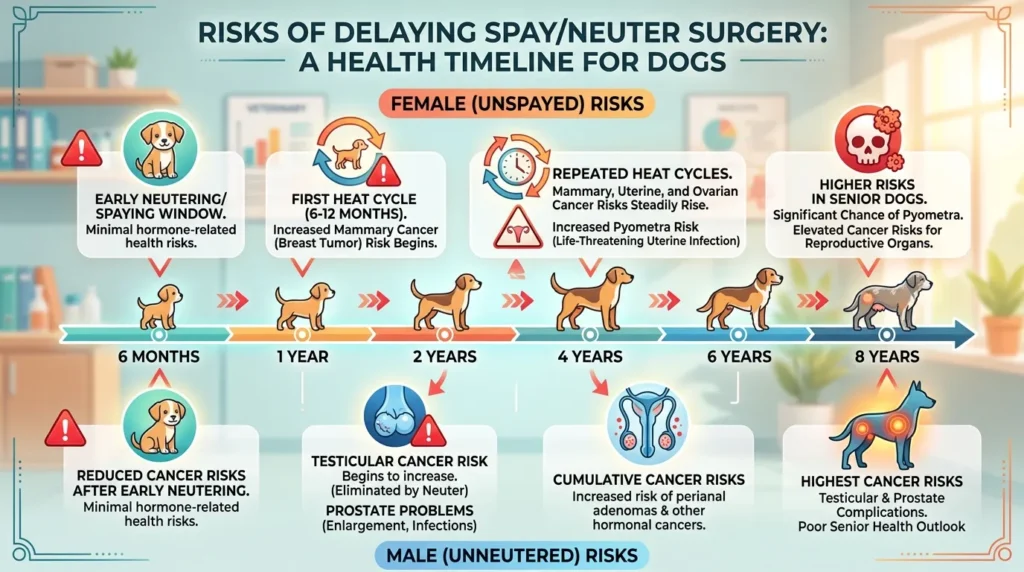
Delaying spay or neuter surgery past the recommended window carries real medical consequences, not just theoretical ones.
For female dogs, every heat cycle that passes without spaying increases the cumulative risk of mammary tumors. Waiting until later adulthood also raises the odds of pyometra, which typically presents suddenly and requires urgent emergency pet surgery rather than a routine, scheduled procedure. An emergency spay on a sick, older dog carries meaningfully higher anesthesia and surgical risk than a planned surgery on a healthy young dog.
For male dogs, waiting increases the window during which unwanted behaviors like roaming and marking become learned habits rather than hormone-driven ones, meaning neutering later may reduce but not fully reverse the behavior. Intact males also remain at risk for testicular cancer and prostate enlargement indefinitely.
Real Patient Story: Bella’s Pyometra Scare
Bella, a seven-year-old Labrador mix, had never been spayed. Her family adopted her as an adult and had planned to schedule the procedure eventually, but life kept getting in the way. One evening, Bella stopped eating, became lethargic, and developed a distended abdomen. Her family brought her to Fremont Animal Clinic the same night.
An exam and bloodwork confirmed pyometra, a severe uterine infection. Bella needed emergency surgery within hours to remove the infected uterus and ovaries, a far more complex procedure than a routine spay performed on a healthy young dog. She recovered fully, but her family later described the experience as the moment they understood why veterinarians push so hard for early sterilization. What could have been a straightforward, low-risk outpatient procedure at age one became a life-threatening emergency at age seven.
Bella’s case is not unusual. It is one of the most common preventable emergencies our surgical team sees in unspayed female dogs over the age of five.
Finding Spay and Neuter Services Near You in Stockton
If your dog is due for surgery, timing and provider choice both matter. Look for a clinic that performs pre-surgical bloodwork, uses continuous anesthesia monitoring, and provides clear aftercare instructions for pain management and activity restriction.
Fremont Animal Clinic offers full spay and neuter services in Stockton, including consultations to help determine the right age for your dog’s breed and size. Families searching for a dog neutering near me or cat spay near me option in the Stockton area can schedule a pre-surgical exam to review anesthesia protocols and recovery expectations.
For families weighing cost alongside timing, our guide on low cost spay and neuter near me options in the Stockton area, including programs similar to a free spay and neuter clinic Stockton model, breaks down what to expect from different types of providers. To learn more about our surgical team and safety standards, read our overview of why Fremont Animal Clinic is a trusted vet in Stockton.
What to Expect Before, During, and After Surgery
Preparing for your dog’s spay or neuter appointment is straightforward when you know what to expect at each stage.
Before surgery:
- A pre-surgical exam and bloodwork to confirm your dog is healthy enough for anesthesia
- Fasting instructions, typically no food after midnight the night before
- A discussion of any breed-specific anesthesia considerations
During surgery:
- Continuous monitoring of heart rate, oxygen levels, and blood pressure
- Pain management protocols applied before, during, and after the procedure
- A dedicated technician managing anesthesia throughout
After surgery:
- Most dogs go home the same day with a cone or recovery suit to prevent licking
- Activity restriction, including no running or jumping, for the recommended healing period
- A follow-up check to confirm the incision is healing properly
For a broader look at how surgical procedures are handled at our hospital, our page on types of pet surgery in Stockton walks through anesthesia safety and recovery protocols across procedure types. You can also review our spay and neuter FAQs for answers to common pre- and post-surgical questions. According to the ASPCA, spaying and neutering do not cause weight gain on their own, activity level and diet management remain the deciding factors in a dog’s healthy weight after surgery.
Ultimately, understanding why spay or neuter your dog matters comes down to protecting long-term health, preventing life-threatening disease, and giving your companion the best possible quality of life for years to come.
Frequently Asked Questions
-
Why should I spay or neuter my dog if she seems healthy?
Reproductive organs can develop disease silently for years before symptoms appear. Spaying prevents pyometra and sharply lowers mammary tumor risk, while neutering eliminates testicular cancer entirely. A healthy-looking dog today does not mean the risk goes away with age. Scheduling surgery while your dog is young and healthy is safer than waiting until a problem forces an emergency procedure later in life.
-
What is the difference between spay and neuter?
Spay refers to the surgical sterilization of female dogs through removal of the ovaries and uterus. Neuter refers to male dogs and involves removing the testicles. Both procedures prevent reproduction and reduce hormone-driven health risks and behaviors, but they involve different organs, different surgical complexity, and slightly different recovery timelines. Your veterinarian can explain which terminology applies to your specific pet.
-
What is the best age to spay a dog?
Small breed dogs are generally spayed around five to six months, ideally before their first heat cycle. Large breed dogs often benefit from waiting until closer to nine to fifteen months so growth plates can close first. The right age depends on your dog’s projected adult size, breed, and overall health, which is why a pre-surgical consultation is recommended before scheduling.
-
Is neutering easier than spaying?
Yes, in most cases. Neutering removes the testicles, which sit outside the abdominal cavity, making it a shorter and less invasive procedure. Spaying requires entering the abdomen to remove the ovaries and uterus, which takes longer and involves a slightly more involved recovery. Both procedures are routine and considered very safe when performed by an experienced surgical team.
-
What happens if I wait too long to spay or neuter my dog?
Waiting increases the risk of pyometra and mammary tumors in females, and testicular or prostate issues in males. Unwanted behaviors like roaming and marking also become more habitual over time in unneutered males. Older, unsterilized dogs facing emergency surgery generally carry higher anesthesia risk than younger dogs undergoing a planned, routine procedure.
-
Are there low cost spay and neuter options near me in Stockton?
Yes, several programs and clinics in the Stockton area, including options resembling a free spay and neuter clinic model, aim to make sterilization more accessible. Availability and eligibility vary by provider and household circumstances. Our guide on affordable spay and neuter options in Stockton outlines what to expect from different providers so you can compare services before scheduling.
Deciding why spay or neuter your dog matters is ultimately a decision about the years ahead, not just the appointment itself.