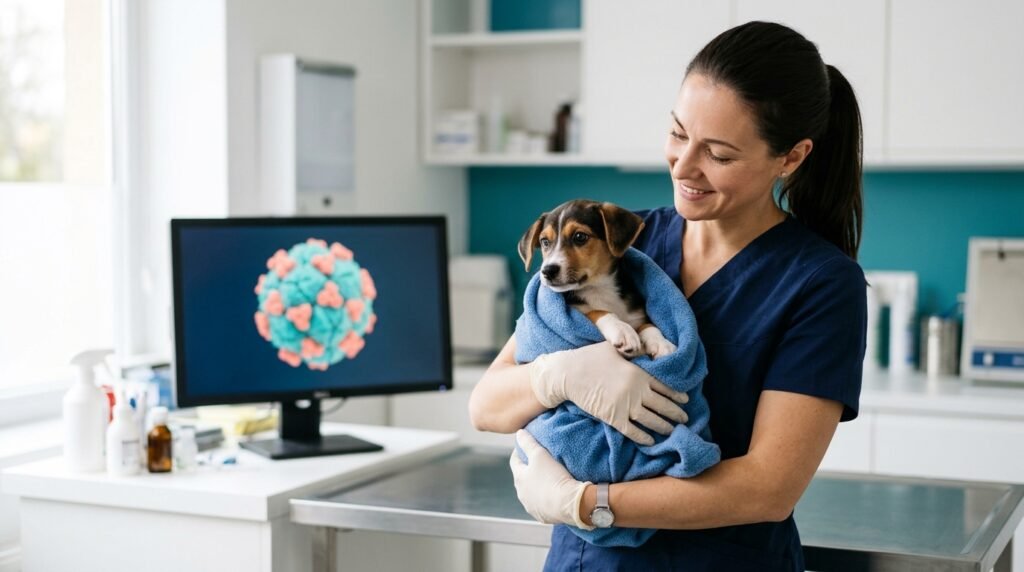
What is parvo in dogs, and why do veterinarians treat it as one of the most urgent illnesses a puppy can face? Parvo is a highly contagious virus that destroys the lining of the intestines and wipes out the white blood cells a dog needs to fight infection, often within days. It is also one of the most preventable serious diseases in veterinary medicine. This guide explains what the virus is, how it spreads, which dogs are most at risk, what treatment involves, and what survival really looks like, so you can act early instead of guessing. If you suspect your dog is sick right now, call a veterinarian near me such as Fremont Animal Clinic in Stockton before reading any further.
What Is Parvo? A Plain Definition
Parvo is the common name for canine parvovirus type 2, usually shortened to CPV-2. It is a tiny DNA virus without the fatty outer coat that makes many viruses fragile, which is why it survives heat, cold, and most household cleaners. Canine parvovirus first appeared in 1978, most likely evolving from the feline panleukopenia virus that affects cats, and spread worldwide within about two years.
The early outbreaks were devastating. Researchers at Cornell developed the first vaccine by 1979, and as the Cornell Chronicle reports, derivatives of that work are still used today. Parvovirus never disappeared, though. It remains common anywhere puppies go unvaccinated.
Parvo Strains in the United States
The original CPV-2 virus was replaced over time by three variants: CPV-2a, CPV-2b, and CPV-2c. A published prevalence study notes that CPV-2c has been reported as the most prevalent variant in the United States since 2007, making up roughly half to three quarters of tested samples. The good news for owners is practical: current vaccines protect equally well against all known strains, and no strain has been linked to more severe disease.
How Parvovirus in Dogs Attacks the Body
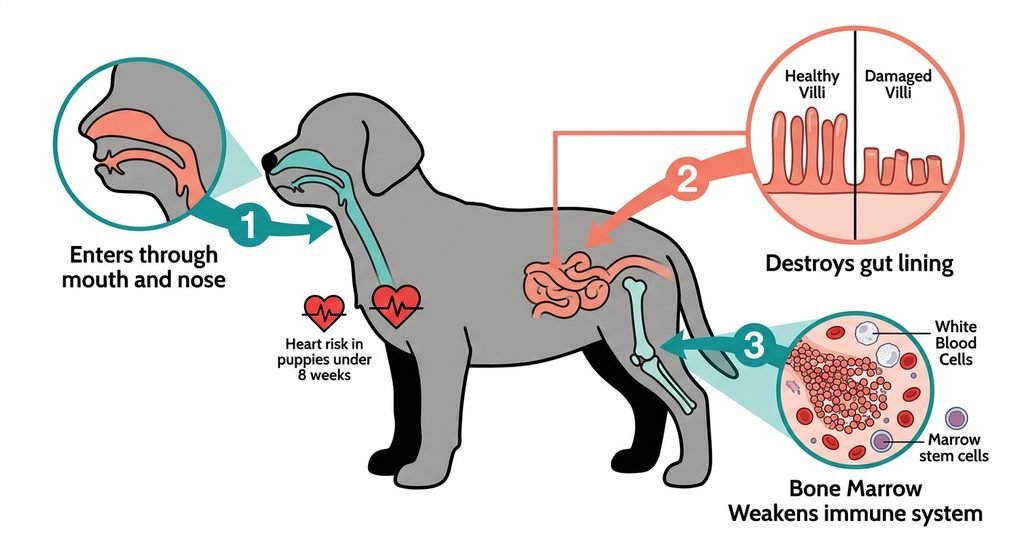
Parvovirus targets cells that divide quickly. That single preference explains almost every symptom you will see.
Step 1: Entry Through the Mouth and Nose
A dog sniffs or licks contaminated stool, soil, or an object. The virus first multiplies in the lymph tissue of the throat, then enters the bloodstream and travels through the body.
Step 2: The Gut Lining Breaks Down
The virus settles in the crypts of the small intestine, where new lining cells are made. As those cells die, the finger-like villi that absorb nutrients and water shrink. The result is vomiting, severe diarrhea that is often bloody, and a damaged barrier that lets gut bacteria leak into the bloodstream.
Step 3: The Immune System Collapses
At the same time, the virus attacks the bone marrow and lymph tissue. White blood cell counts drop sharply, so the dog loses its defense at the exact moment bacteria are escaping the gut. Dehydration plus infection is what pushes severe cases into shock.
Heart Damage in Very Young Puppies
Puppies infected before birth or before 8 weeks of age can develop inflammation of the heart muscle. This form is uncommon today because most mother dogs pass protective antibodies to their litters, but it explains why parvo can cause sudden heart failure in very young pups.
What Causes Parvo in Dogs and How It Spreads
Parvo spreads through infected feces. A sick dog can shed enormous amounts of virus, and only a tiny amount is needed to infect another dog. Direct contact is not required. The virus travels on shoes, hands, bowls, leashes, crates, grooming tools, and car mats.
According to the Merck Veterinary Manual, the virus stays infectious indoors at room temperature for at least two months. Outdoors, shaded from sunlight and drying, it can persist for many months and possibly years. That is why a yard, park, or kennel can stay dangerous long after a sick dog has gone.
| Place | Risk for Unprotected Puppies | Why |
|---|---|---|
| Dog parks and trails | High | Heavy foot traffic, unknown vaccine history, stool in soil |
| Shelters and breeding kennels | High | Many young dogs in close quarters |
| Pet store floors | Moderate to high | Constant visits from dogs of all ages |
| Grooming and boarding | Moderate | Shared tools, crates, and surfaces |
| Your own yard | Varies | Risk rises if a sick dog has been there |
| Shoes and clothing | Moderate | Carry virus home from all of the above |
Which Dogs Are Most at Risk of Parvo?
Any unvaccinated dog can catch parvo, but certain dogs face much higher odds.
- Puppies between 6 weeks and 6 months: Antibodies from the mother fade before the puppy’s own vaccine series is finished.
- Unvaccinated or overdue adults: Protection does not last forever without boosters.
- Certain breeds: Rottweilers, Doberman Pinschers, English Springer Spaniels, German Shepherd Dogs, and pit bull type dogs show higher rates of severe disease.
- Dogs recently from shelters or breeders: Crowding and stress raise exposure and severity.
- Dogs with intestinal parasites or other infections: Worms, Giardia, and bacterial infections can make parvo far worse.
- Intact males over 6 months: Merck reports they are more likely than intact females to develop the disease.
If your dog fits more than one of these groups, vaccine timing and early vet visits matter even more.
Parvo Symptoms in Dogs and Puppies
The first signs are subtle: low energy, less interest in food, and sometimes a fever. Within a day or two, most dogs begin vomiting, followed by watery diarrhea that is frequently bloody and carries a strong, sour odor. Dehydration, belly pain, weakness, and a low body temperature follow if the illness is not treated.
Our full guide to parvo symptoms breaks down what each day typically looks like and the exact signs that mean you should go to a vet immediately. Keep in mind that vomiting and diarrhea have many causes, including toxins; our guide to common pet poisons covers household and garden hazards that can look similar early on.
Can Cats or People Catch Parvo?
This is one of the most common questions owners ask once a dog in the home tests positive.
| Virus | Who It Infects | Can It Spread to Dogs? | Can It Spread to People? |
|---|---|---|---|
| Canine parvovirus (CPV-2a, 2b, 2c) | Dogs, and occasionally cats | Yes | No |
| Feline panleukopenia virus | Cats | No meaningful risk | No |
| Human parvovirus B19 | People | No | Yes, person to person only |
The newer canine variants can replicate in cats, as documented by the CDC’s Emerging Infectious Diseases journal, although illness in cats from canine strains is uncommon. People cannot catch canine parvovirus. The parvovirus that causes “fifth disease” in children is a completely different virus.
How Vets Diagnose Parvo
Diagnosis usually starts with a fecal antigen test, a quick in-clinic test using a stool swab. Your vet will often add bloodwork to measure white blood cells, protein, electrolytes, and blood sugar, since those results shape the treatment plan. When the test result and the dog’s signs do not match, a PCR test can confirm infection.
Parvo Treatment and Survival Odds
There is no antiviral pill that cures parvo. Treatment keeps the dog alive and stable while its immune system clears the virus, which usually takes about five to seven days.
Supportive Care
- IV fluids to replace lost water and electrolytes
- Anti-nausea medication to stop the vomiting cycle
- Antibiotics to protect against bacteria leaking from the gut
- Pain control and active warming
- Early nutrition by syringe or feeding tube
- Strict isolation from other patients
Once a dog goes home, medications and recovery diets can be dispensed through our in-house pharmacy, so you leave with everything in hand.
Monoclonal Antibody Therapy
A canine parvovirus monoclonal antibody has received conditional approval. It binds to the virus directly. In an experimental study, none of the antibody-treated dogs died, while 57 percent of dogs given only saline did. Larger clinical studies are still needed, so ask your vet whether it suits your dog.
Survival Rates by Type of Care
| Type of Care | Reported Survival | Notes |
|---|---|---|
| Aggressive hospital treatment | Above 90% | 24-hour monitoring, IV fluids, injectable medications |
| Supportive care overall | 70% to 90% | Varies with how early treatment starts |
| Vet-supervised outpatient protocol | About 80% | Daily rechecks, fluids under the skin |
| No veterinary treatment | Poor | 57% died without active therapy in one controlled study |
Cost worries should never be the reason a puppy goes untreated. Ask about payment options before you decide, and read how we approach care as an affordable vet in Stockton without cutting corners. Unsupervised home remedies cannot replace IV fluids or bloodwork, and some of them make dehydration worse.
Life After Parvo: Recovery and Aftercare
Most dogs that respond to treatment start eating within a few days and go home on a bland, easily digested diet. Expect soft stool for a short while as the gut lining rebuilds. Recovered dogs can still shed virus for about 10 days, so keep them away from unvaccinated dogs, clean up stool immediately, and wash bedding and bowls with diluted bleach. Dogs that survive parvo generally develop strong, lasting immunity, but your vet will still recommend keeping their vaccine schedule current.
Case Study: How a 1978 Outbreak Shaped Parvo Prevention Today
Parvo’s history offers a clear lesson for today’s owners.
| Year | Milestone | What It Means for Your Dog |
|---|---|---|
| 1978 | Canine parvovirus emerges and spreads worldwide | Hundreds of thousands of dogs, mostly puppies, died before a vaccine existed |
| 1979 | Cornell researchers develop the first vaccine | Vaccines built on that work still protect dogs today |
| 2000s | CPV-2c identified and becomes common in the U.S. | Current vaccines still protect against it |
| 2025 | Cornell study maps how puppy antibodies neutralize parvo | Explains why puppies need several doses, not one |
The 2025 Cornell research found that puppies produce only two or three dominant antibodies after infection, and that antibodies from the mother can block a vaccine given too early. That is the scientific reason behind the multi-dose puppy series. A puppy that stops after one or two shots may have no real protection at all.
How to Prevent Parvo in Dogs
Complete the Puppy Vaccine Series
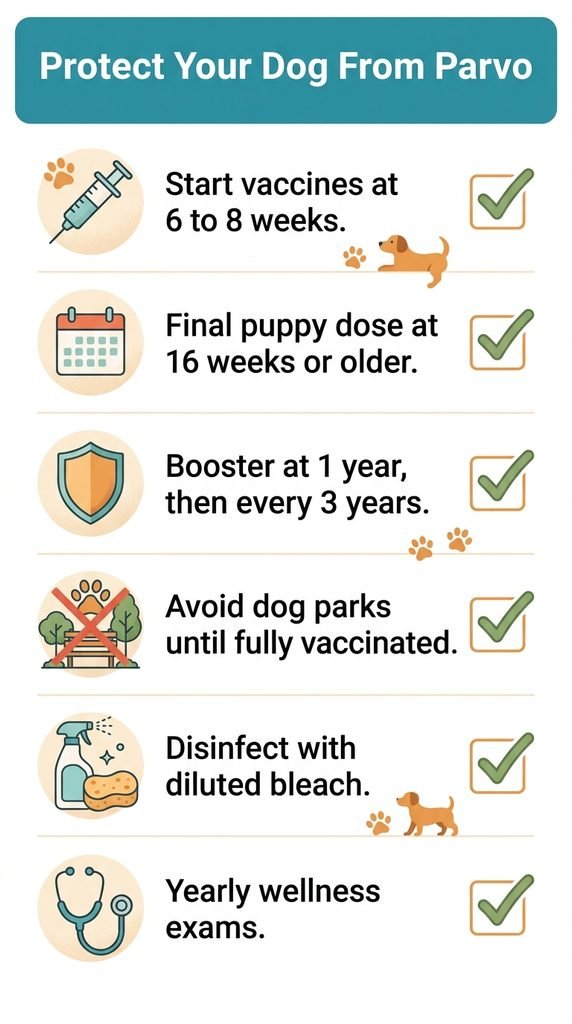
The AVMA recommends starting the series at 6 to 8 weeks, with the final puppy dose at 16 weeks or older, a booster within a year, and boosters about every three years after that. If you are looking for a pet vaccination clinic near me in Stockton, our team can map out a schedule from your puppy’s first visit.
Keep Adult Boosters Current
Adult dogs that miss boosters slowly lose protection. Our article on pet vaccinations explains why core vaccines matter for dogs of every age, and overdue dogs can restart at any time.
Limit Exposure Until Protected
Until the series is finished, carry puppies in public places, skip dog parks and pet store floors, and only arrange playdates with healthy, fully vaccinated dogs.
Schedule Regular Wellness Visits
Routine preventive care catches intestinal parasites and other problems that make parvo more severe, and keeps vaccine records on track.
Parvo Care for Stockton Dogs at Fremont Animal Clinic
Our team, including Dr. Satwinder Singh Sahi, treats young and unvaccinated dogs across Stockton, and parvo cases tend to rise in summer and early fall, when many new puppies are out and about. Knowing the answer to what is parvo in dogs is only the start; the dogs that do best are the ones whose owners call at the first sign of trouble. Reach us at (209) 465-7291, visit 2223 E Fremont St, Stockton, CA 95205, or contact our team online. Please call ahead if you suspect parvo so we can bring your dog in safely without exposing other patients.
Frequently Asked Questions
-
What is parvo in puppies, and why is it worse for them?
Parvo in puppies is the same canine parvovirus that infects adult dogs, but puppies between 6 weeks and 6 months are hit hardest. Their mother’s antibodies fade before their own vaccines take full effect, leaving a window with little protection. Puppies also have small fluid reserves and can develop low blood sugar quickly, so dehydration and shock set in faster. That is why vets treat any vomiting, unvaccinated puppy as a possible parvo case.
-
How do dogs get parvo?
Dogs get parvo by swallowing or sniffing the virus from infected stool, either directly or from contaminated soil, shoes, hands, bowls, crates, or grooming tools. A dog does not need to meet a sick dog to catch it. The virus can survive indoors for at least two months and outdoors for many months in shaded areas. Unvaccinated puppies visiting parks, pet stores, or kennels face the greatest exposure risk.
-
Is there a cure for parvo?
There is no medication that simply cures parvo, but it is very treatable. Veterinary care focuses on IV fluids, anti-nausea drugs, antibiotics, nutrition, and warmth while the immune system clears the virus over roughly five to seven days. A newer monoclonal antibody therapy that targets the virus directly has conditional approval. With aggressive hospital treatment, more than 90 percent of dogs survive, so early care makes a major difference.
-
Can humans get parvo from dogs?
No. Canine parvovirus does not infect people. The human parvovirus B19, which causes “fifth disease” in children, is a separate virus that spreads only between people. You can, however, carry canine parvovirus on your hands, shoes, and clothing to other dogs. Wash your hands, change clothes, and clean shoes after handling a sick dog, especially if you have unvaccinated puppies at home or visit friends with young dogs.
-
How long does parvo live in a yard or house?
Parvo is unusually tough. Indoors, it stays infectious at room temperature for at least two months. Outdoors, in shaded and damp soil, it can last many months and possibly longer. Clean indoor surfaces, bowls, and bedding with diluted household bleach, since many ordinary cleaners do not kill it. For yards, sunlight, drying, and time reduce the risk. Ask your vet before bringing a new puppy into a home where parvo occurred.
-
Can a dog get parvo twice?
It is rare. Dogs that recover from parvo usually develop strong immunity that lasts for years, often for life. Even so, vets still recommend keeping recovered dogs on their regular vaccine schedule, because protection levels vary between individual dogs and boosters carry very little risk. If a previously infected dog develops vomiting and diarrhea, do not assume it cannot be parvo; let your vet test to be sure.
Parvo is serious, but it is also preventable and treatable, and the earlier you act, the better your dog’s odds.